
If you’ve been pricing shipping containers this spring, you’ve already seen it: the gap between new and used units is widening fast, and tariff policy out of Washington is about to widen it further. For buyers planning a storage purchase, modification project, or container home build in 2026, the smart money is moving toward used inventory before the next price wave hits.
The good news is that this isn’t a 2020-style crisis. Container availability has improved. Steel prices have stabilized. Delivery lead times in the Northeast and Mid-Atlantic are back to normal. The story for 2026 is timing, not scarcity, and buyers who understand the moving pieces can lock in real savings before the window closes.
What the Numbers Are Saying
The Containerized Freight Index climbed to 2,140 on May 15, 2026, up 9.5% in a single day and roughly 45% higher than the same week last year, according to Trading Economics data. That spike reflects an early peak shipping season and carrier surcharges, but the bigger story for U.S. buyers is what’s happening on land — at the resale yard.
Used 20-foot containers are now averaging $1,786 nationwide, with retail pricing stretching from $999 on the low end to nearly $4,900 in tight markets, per Container Sales Group’s 2026 pricing guide. All three of the most common sizes — 20-foot standard, 40-foot standard, and 40-foot high cube — are trending modestly upward year over year, between 2.6% and 3.3%, a sign that resale supply is tightening even as new container availability improves.
That divergence matters. When new and used inventory move in opposite directions, the price-per-cubic-foot math shifts under buyers’ feet. Six months ago, the premium on a one-trip 20-foot unit over a wind-and-watertight used one was hovering around $1,500. Today, depending on the market, that gap is closer to $2,000 — and headed wider.
Tariffs Are the Wild Card
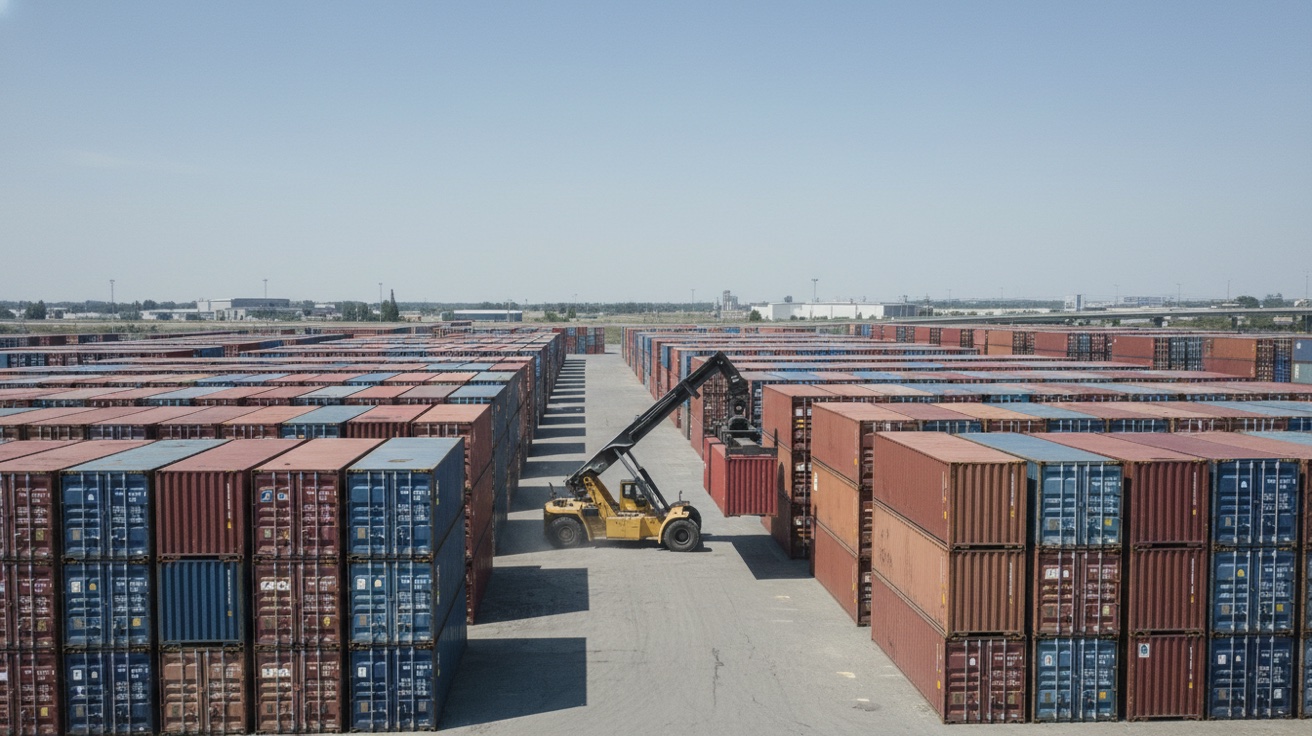
The biggest unknown for the rest of 2026 is tariff policy on Chinese-manufactured containers. China produces the overwhelming majority of new shipping containers sold in the United States, which means a 20% to 30% tariff increase — a range industry analysts are openly modeling — would flow straight into the sticker price of every new one-trip unit on a U.S. lot.
Industry trackers including Conexwest and Spinnaker Equipment both flagged this in their 2026 outlooks. If tariffs land as proposed, new 40-foot high cube units that sell today for $5,500 to $7,000 could see prices climb meaningfully — and the secondary effect is what matters most for buyers. As new container costs rise, demand spills over to used inventory, which tightens resale supply and pushes those prices up too. The buyers who move first benefit. The buyers who wait pay both increases.
This is the dynamic we covered in our overview of the key trends shaping the shipping container sales industry earlier this year, and the trajectory hasn’t changed. If anything, the trade-policy noise out of Washington has only sharpened it.
What This Means for Storage and Modification Buyers
For most use cases — on-site construction storage, retail overflow, agricultural cold storage, or the first cuts of a container home or office build — a wind-and-watertight used container does the job at roughly half the cost of a one-trip unit. The conditions where new makes more sense haven’t changed: showroom-quality builds, restaurant or hospitality conversions where appearance matters, and long-haul resale where cosmetic wear shortens the next owner’s interest.
That used-versus-new decision is the single biggest cost lever in the whole purchase. Our guide on what to look for when buying a shipping container walks through the inspection checklist — corner posts, door gaskets, roof seams, floor condition — that separates a $2,000 unit that lasts twenty years from a $1,400 unit that needs $3,000 in welding by year three. If you’re new to the market, that read is worth twenty minutes of your time before you call any dealer.
For buyers doing modifications, the used-unit math gets even better. Once you’re cutting in windows, doors, vents, or partitions, paint scratches and minor dings on the original skin become irrelevant — the modification process resurfaces most of what would have driven a cosmetic upgrade to new. The detailed walk-through in our shipping container customization overview and modification options page covers the most common add-ons: roll-up doors, insulation packages, electrical, HVAC, and paint.
Three Things Worth Doing Now
If a purchase is anywhere on your 2026 calendar, three actions move the math in your favor before the next tariff news cycle.
First, lock in pricing on used inventory before the policy noise gets louder. Reputable dealers will hold a quote for a defined window — usually 14 to 30 days, sometimes longer for larger orders. If you’ve been waiting for a clear signal to commit, the combination of tariff exposure on new units and tightening used supply is that signal. Negotiation still matters, and our guide on negotiating prices for shipping containers is a useful primer on what’s actually flexible versus what isn’t.
Second, decide between 20-foot and 40-foot footprints based on the site, not the unit cost. The price-per-square-foot math almost always favors 40-foot, but delivery access is the real constraint — and it’s the thing buyers most often get wrong. A 40-foot unit needs roughly 100 feet of straight-line clearance for tilt-bed delivery, level ground for placement, and overhead clearance free of low branches and power lines. Our shipping container dimensions page lays out the exact footprints for 20-foot, 40-foot standard, and 40-foot high cube units so you can measure your site honestly before you commit.
Third, settle your delivery and placement plan before the container hits the truck. Tilt-bed delivery is how every container is placed, but ground conditions, slope, and obstructions can complicate a site — which can affect cost and requires its own access window. We walk the site first so there are no surprises. The delivery and placement guide on the site covers the prep checklist most buyers wish they’d read before the truck arrived. Uneven ground costs you more in leveling and shimming than the unit itself in a bad case.
The Use-Case Picture for 2026
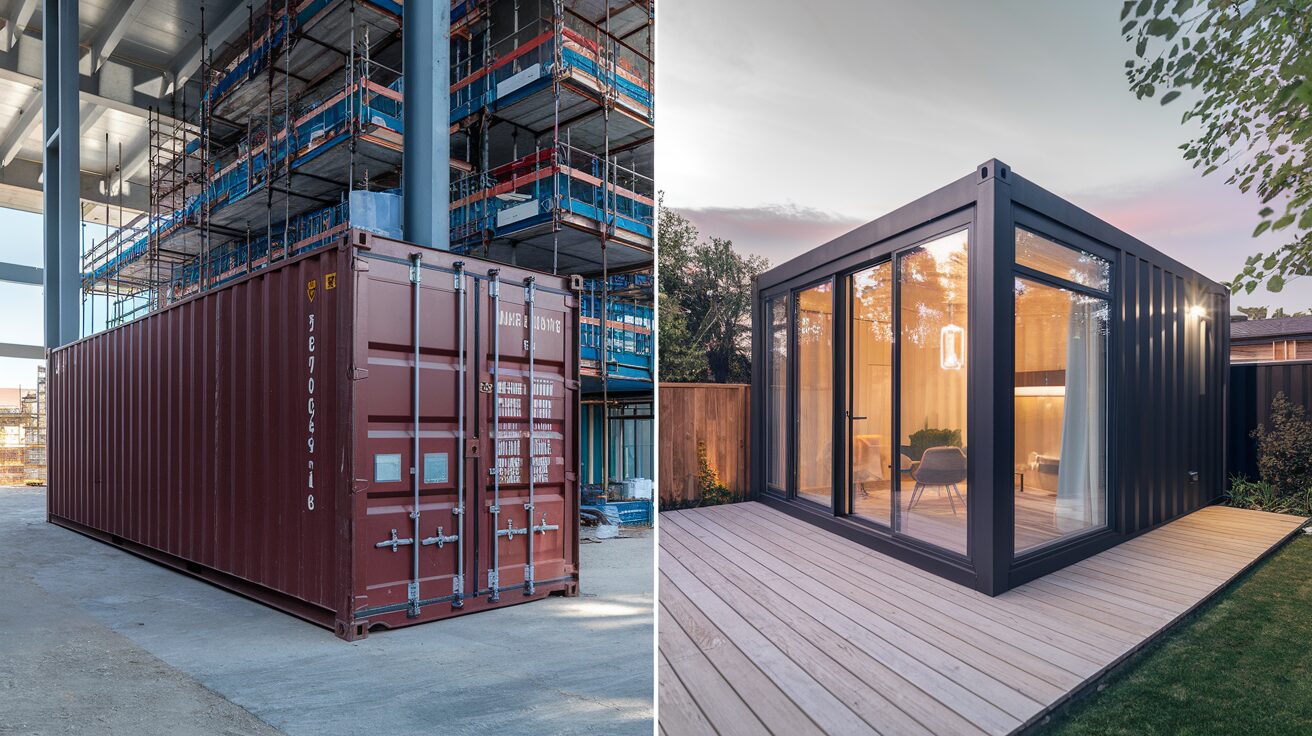
Demand for shipping containers for storage keeps expanding across construction, retail, agriculture, and small business — the secular drivers haven’t softened. Construction firms continue to use containers as on-site lockable storage that beats anything portable on the market for security and weather resistance. Retailers and event organizers are running pop-up footprints out of converted units. Manufacturers and distributors are leaning on portable storage for overflow inventory rather than signing long-term warehouse leases at current rates.
Container homes and alternative living spaces continue to draw interest, particularly in markets where traditional construction costs have stayed elevated. The broader category of repurposing — pop-up retail, mobile offices, food and beverage builds, equipment shelters, and the innovative reuse projects gaining traction in commercial and residential design — keeps pulling units off the resale market that would have gone to straight storage a few years ago. That secondary demand is part of why used resale prices are inching up even as new-container supply loosens.
For first-time buyers in particular, the combination of a tightening used market and tariff uncertainty on new units means doing the homework matters more than it did a year ago. Our overview of affordable options for buying shipping containers and the practical guide on where to buy used shipping containers cover the questions worth asking any dealer before you put money down: where the unit was last in service, what the inspection process looks like, whether the dealer holds title, and what the realistic delivery window is for your market.
For buyers shopping the Northeast and Mid-Atlantic specifically, regional availability is still solid. The New York, New Jersey, Pennsylvania, Ohio, Rhode Island, Connecticut, and Texas markets all have current inventory in both used and new condition, and tilt-bed delivery is available across the service area.
The Bottom Line
The 2026 shipping container market isn’t a crisis story — it’s a timing story. Steel prices stabilized. Container availability improved. But tariff policy and a tight resale market mean the favorable buying window for used units is narrower than it looks. Buyers who have been waiting for a clear signal have one now. Buyers who hesitate may be looking at a different price sheet by Q3.
If you’re sizing up a container for storage, modification, or alternative living in 2026, our team can walk you through current new and used inventory, delivery logistics, and modification options for your specific use case. Request a quote today and lock in 2026 pricing while the window is open.