
Revolutionizing Architecture: Innovative Approaches to Shipping Container Reuse
Imagine walking through an urban landscape where the traditional brick and wood give way to the industrial charm of steel shipping containers, repurposed into vibrant living spaces, bustling coffeehouses, and even serene art galleries.
Costing out a reuse project this fall? See which container purchases should move now and which can wait — the new and used halves of the market have decoupled, and the gap is widest right now.
One of the fastest-growing reuse applications this year is the backyard pool — see our breakdown of shipping container pools and the 2026 buyer’s math for what a container pool really costs and why the steel box underneath makes or breaks the build.
The trend has real numbers behind it now — see why small businesses are converting containers into offices, cafés, and pop-ups in 2026, a $17.77 billion market growing about 9% a year.
For a live regional example of container reuse at tournament scale, our latest piece covers how NY/NJ businesses are deploying container pop-ups for the 2026 World Cup — vendor villages, food-service builds, and the timeline math before the July 19 final at MetLife.
One of the fastest-growing reuse categories in 2026 is the backyard accessory dwelling unit — see our coverage of what the Northeast’s 2026 ADU wave means for shipping container buyers for the regulatory and pricing context.
One of the fastest-growing reuse cases is hydroponic farming — our guide to container farming costs for Northeast growers in 2026 walks through the economics of turning a box into a working grow room.
One reuse case is surging in 2026: containerized cold rooms that put refrigerated capacity right where farms and food businesses need it — a practical read for anyone weighing a temperature-controlled build.
This isn’t a scene from a futuristic movie; it is the reality of a sustainable, creativity-driven movement in modern architecture.
By transforming shipping containers previously destined for landfills, architects and builders are tapping into a world of construction opportunities, reducing carbon footprint and challenging the conventions of traditional building.
As these steel giants assume new roles, from emergency shelters to chic retail hubs, they speak volumes about the resilience and innovation embedded in contemporary design.
Keep reading to explore how these robust vessels of cargo are steering the future of eco-friendly architecture and community spaces.
Key Takeaways
- Shipping Container Architecture Offers an Innovative and Sustainable Approach to Building, Reducing Both Carbon Footprint and Construction Waste
- Container Homes and Commercial Spaces Merge Eco-Friendly Practices With Creative Design, Providing Cost-Effective, Energy-Efficient Living and Work Environments
- Repurposing Shipping Containers for Public Use Creates Adaptable, Quickly Deployable Community Centers, Educational Facilities, and Emergency Shelters
- Mastery of Construction Techniques and Creative Vision Are Vital for Successful Shipping Container Modification and Customization
- Container-Based Construction Projects Such as Container City and Keetwonen Underline the Potential for Large-Scale, Community-Focused Developments
Unveiling the Potential of Shipping Containers in Modern Living
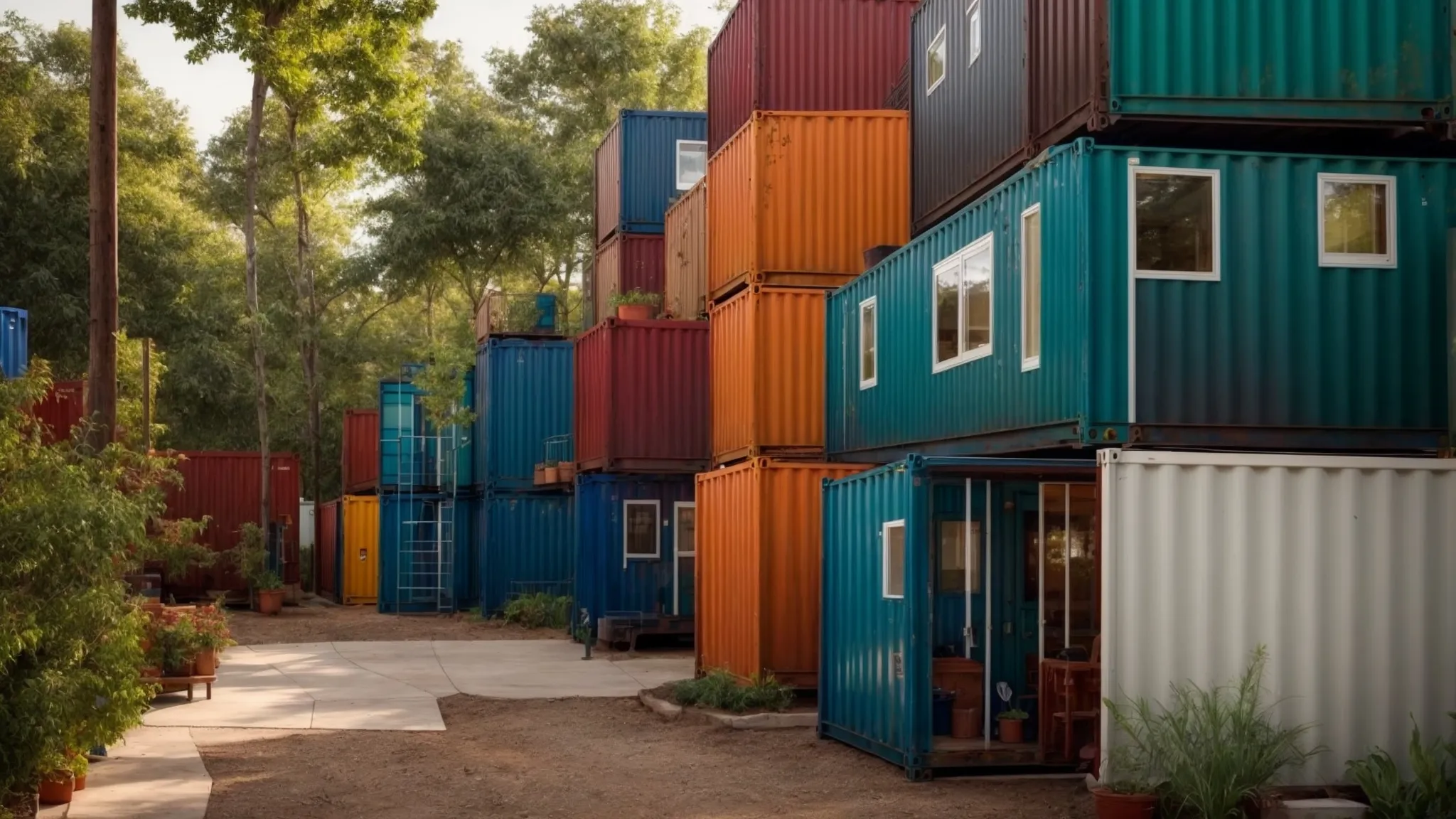
Imagine transforming the stark metal of shipping containers into cozy, cost-effective homes nestled within the suburban fabric.
You are about to embrace an era where innovation intersects with sustainability, where steel boxes once used for cargo become cornerstones of affordable living.
By examining container homes, not only do you explore an accessible housing solution, but you also contribute to a greener planet, cutting down greenhouse gas emissions from construction.
Integrating these versatile structures into residential areas reshapes not just your landscape but also the concept of community.
As you delve into container-based living spaces, understand that comfort and safety are paramount, each design marrying durability with warmth to create sanctuaries that support your well-being.
Examining Container Homes as an Affordable Housing Solution
Peer into the burgeoning world of container homes and discover how these modular marvels are altering the landscape of affordable housing. Clever design choices enable these robust steel units to deliver the comforts of traditional homes without the crippling mortgage that often accompanies brick and wood constructions.
Your journey toward owning a home need not be laced with financial strain; shipping container architecture offers a cost-effective alternative, deftly avoiding the excessive waste of resources and energy typical in conventional building practices. This approach keeps your budget in check and minimizes your ecological footprint, making a statement of economic and environmental consciousness.
Integrating Containers Into the Suburban Landscape
Consider the serene, suburban landscape, traditionally an expanse dominated by wood and brick structures, now peppered with the sleek lines of shipping container homes. Your neighborhood evolves, embracing an innovative housing trend that repurposes these robust steel units into comfortable, eco-friendly residences.
Picture a community where each home tells a story of sustainability and creativity, its architecture seamlessly integrating into the local fabric. By choosing a container home, you boldly state that you treasure design ingenuity and the commitment to an environmentally friendly lifestyle.
- Spot how reclaimed shipping containers beautifully transform into elegant homes, challenging the norms of suburban aesthetics.
- Witness the revolution in housing as steel boxes previously destined for the landfills find new purpose under the skilled hands of architects.
- Take pride in your eco-conscious choice, knowing your home significantly reduces greenhouse gas emissions compared to traditional construction.
Ensuring Safety and Comfort in Container-Based Living Spaces
As you consider the switch to container-based living, rest assured that safety and comfort are at the forefront of this architectural evolution. From weathering steel that battles the elements to specialized insulation techniques, these homes stand as fortified sanctuaries, offering you a fortress against extreme weather and the peace of knowing your family is secure.
Every room within your container abode undergoes meticulous design, ensuring structural integrity and a haven of warmth and repose. Engineers and architects collaborate to outfit these spaces with modern plumbing and climate control systems, creating an experience that rivals, or perhaps even surpasses, traditional homes in creating a comfortable, serene living environment for you and yours.
As we uncover the remarkable versatility of shipping containers in residential settings, let’s shift our gaze to the urban jungle. These robust steel boxes are sparking a revolution, transforming ordinary spaces into bustling hubs of commerce and creativity.
Revitalizing Urban Spaces With Shipping Container Shops
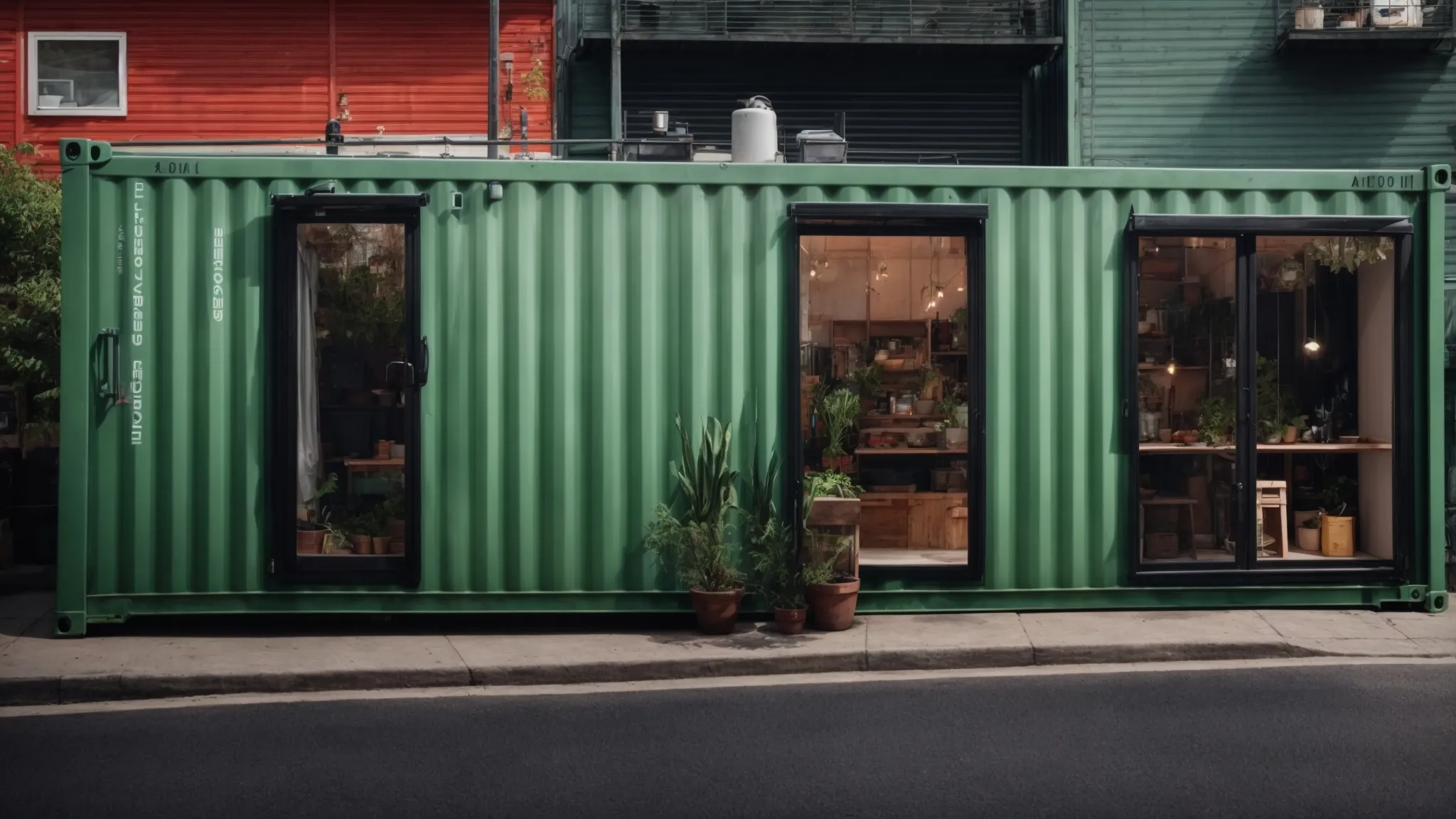
Step off the beaten path of conventional structures and cross the threshold into a world where old shipping containers emerge as sleek, chic retail spaces.
Your next venture could be housed within the corrugated walls of these repurposed gems, leading the charge in ecological urban renewal.
Envision the possibilities as we outline the transformation process of these rugged industrial units into bespoke storefronts.
Balance steel’s raw, textural appeal with the finesse of modern design to captivate passersby.
Along your journey, you’ll navigate the labyrinth of zoning laws and permit requirements, a crucial step in legitimizing your pioneering business premises.
This revitalization reshapes your local urban landscape and signals your dedication to sustainability and intelligent space utilization.
Outlining the Process of Converting Containers Into Retail Spaces
Embarking on the transformation from a mere steel box to a bustling retail hub starts with thoroughly assessing the container’s structure. Ensure it is devoid of contaminants from its shipping days, and consult with an architect to tailor the space to your unique retail vision, effectively capturing the essence of your brand within the container’s compact dimensions.
Next, securing permits is your gateway to repurposing shipping containers into legitimate commercial venues. Navigating the regulations requires persistence, but it paves the way for installing essential utilities — electricity, plumbing, and internet — transforming the container into a fully functional, customer-ready space that aligns with security and privacy laws, all while keeping sustainability at its core.
Balancing Aesthetics and Functionality in Container Storefronts
In crafting your container storefront, it’s vital to marry the industrial charm of metal with the sophistication users expect from a retail experience. Your creative use of glass, light fixtures, and color optimizes the space for customer comfort and showcases your brand’s unique character within the compact steel frame.
Your shipping container shop becomes an emblem of innovation as you effectively incorporate technology, from advanced point-of-sale systems to sustainable energy sources like solar power. These elements aren’t just for show – they demonstrate a real commitment to functionality and environmentally friendly practices, setting your venture apart in a competitive landscape.
Navigating Zoning and Permits for Container-Based Business Premises
Embarking on developing a container-based shop requires you to engage with city planners and understand the zoning laws specific to your location. With your innovative concept, collaborate with an architect to ensure compliance with local construction codes, cementing the firm’s legal foundation, which your retail endeavor necessitates.
Amidst the legal terrain, acquiring the proper permits is critical to transitioning from concept to reality. Engage with authorities early and often, presenting clear plans and the sustainable advantages of your proposed structure to expedite the permit process and avoid potential roadblocks on your journey to opening day.
Revitalization through innovation doesn’t stop at urban renewal. It paves the way for pioneering eco-friendly structures celebrating the art of reusing containers.
Pioneering Eco-Friendly Structures With Reused Containers

Embark on a transformative journey where the allure of sustainability aligns with cutting-edge architectural practices.
Picture a landscape punctuated by the innovative repurposing of shipping containers, once simple vessels of freight transport, now reimagined as dynamic, eco-friendly structures enriching our communities.
Your engagement with these steel canvases of creativity marks the dawn of a resilient, green approach to building—a bold endeavor that reduces both your carbon footprint and the relentless accumulation of waste associated with typical construction methods.
As you delve deeper, you’ll encounter the seamless integration of renewable energy technologies within these unconventional homes and businesses, genuinely encapsulating the essence of modern eco-conscious living.
Analyzing the Environmental Impact of Shipping Container Reuse
Embrace the transformative power of shipping container reuse, an endeavor ripe with ecological promise. By repurposing these steel vessels, long associated with intermodal freight transport, you actively reduce the environmental toll of new construction, simultaneously slashing carbon and energy footprints.
Your commitment to reusing shipping containers channels the driving spirit of upcycling, where each converted unit represents a significant diversion of waste from landfills. You also mitigate the extensive greenhouse gas emissions tied to producing traditional building materials, underpinning a future where sustainability is woven into the very fabric of architecture.
Highlighting Sustainable Practices in Container Architecture
The shift towards shipping container architecture is not just a trend; it’s a sustainable paradigm, blending aesthetics with eco-conscious sensibilities. Each container-turned-habitat or commercial space reflects an immersion into environmentally friendly practices, reducing reliance on energy-intensive materials like brick and wood.
Through innovative design, architects are pioneering energy-efficient solutions within container structures: insulation to moderate temperature extremes, solar panels for renewable power, and strategic window placement for natural lighting. These thoughtful adaptations mark a significant stride in sustainable architecture:
- Solar panels crown these structures, harnessing renewable energy and diminishing grid dependence.
- Insulation innovation holds sway over temperature fluctuation, conserving heating and cooling energy.
- Large, skillfully positioned windows infuse spaces with sunlight, lessening the need for artificial lighting.
Combining Renewable Energy Technologies With Container Structures
Imagine the symbiosis of industrial durability and green energy as you fuse solar power technology with the rugged framework of a shipping container. This merging propels your living space towards self-sufficiency and is a testament to your investment in a sustainable future.
You’ll experience the satisfaction of integrating cutting-edge renewable energy systems into the steel confines of your container structure. Tailoring your abode to tap into the earth’s natural resources minimizes your reliance on the grid, enveloping you in efficiency and eco-responsibility.
Imagine taking bold strides toward sustainability, transforming once-static cargo holders into dynamic hubs of creativity and production. Now brace yourself as we explore how shipping containers are breaking the mold as inventive workspaces.
Shipping Containers as Innovative Workspaces

Picture your next workstation not within the confines of a concrete jungle but inside the innovative repurposing of shipping containers sculpted into vibrant workspaces.
You’re not just choosing a place to conduct business but stepping into architectural imagination—a realm where design bridges functionality with creativity.
Shipping containers are swiftly becoming the cornerstone for a new office space tailored to enhance productivity, collaboration, and the gig economy’s dynamic nature.
Whether orchestrating design brilliance in a solo container studio or synergizing in a coworking space, you’re at the forefront of a workspace revolution.
Prepare to discover how modular container offices can transform your workflow and inspire your daily grind.
Designing Creative Offices Using Shipping Containers
Step into the future of workspace design with shipping containers, where sustainability and innovation create environments that spark creativity and productivity. Embrace the transformation of these steel structures into offices that resonate with your dynamic work needs, fostering an ambiance of focus and collaboration.
Imagine your new office as a shipping container turned enterprise hub, with the potential to customize and brand your creative workspace. Tailored to inspire, these containers are poised to become the backdrops for your company’s next chapter of growth and innovation, blending technology and eco-responsibility with a keen eye for design.
Enhancing Productivity With Modular Container Workspaces
Discover the productivity perks of modular container workspaces; they’re not just compact and cost-effective but designed for the modern professional. Embrace the tranquility and singular focus these work environments provide away from the noisy distractions of traditional office landscapes.
Your shipping container office goes beyond the expected, equipped with intelligent storage solutions and cutting-edge technology, establishing an oasis of efficiency. Labor smartly, surrounded by the essentials, in a space where every inch is optimized for your workflow, allowing creativity to flourish.
Container Coworking Spaces: A New Trend in the Gig Economy
As you navigate the evolving job market, container coworking spaces emerge as beacons for the gig economy: they’re modern, affordable, and adaptable to the shifting sands of freelance and remote work. These community-focused environments offer network flexibility and collaboration, providing the perfect backdrop for innovation and professional growth.
Notice how coworking spaces crafted from shipping containers reflect an understanding of your need to balance privacy and openness in your professional pursuits. Equipped with soundproofing, high-speed internet, and comfortable common areas, these spaces create a convergence of connectivity and serenity, essential for your productivity and creative ventures:
| Feature | Advantages | User Experience |
|---|---|---|
| Soundproofing | Quiet environment for focused work | Enhanced concentration, fewer distractions |
| High-speed internet | Seamless connectivity | Effortless online collaboration and communication |
| Common Areas | Spaces for relaxation and networking | Opportunities for community engagement and idea exchange |
Your discovery of these transformative work settings is not just about finding a place to sit and log into a laptop; it’s about stepping into a community where each container, reinvented with purpose, supports your endeavors and mirrors the shared ethos of a sustainable, collaborative future.
Discover the versatility of shipping containers as we shift our focus to the heart of communities. Be inspired by how these robust steel boxes transform into vibrant public projects.
Shipping Containers in Public and Community Projects
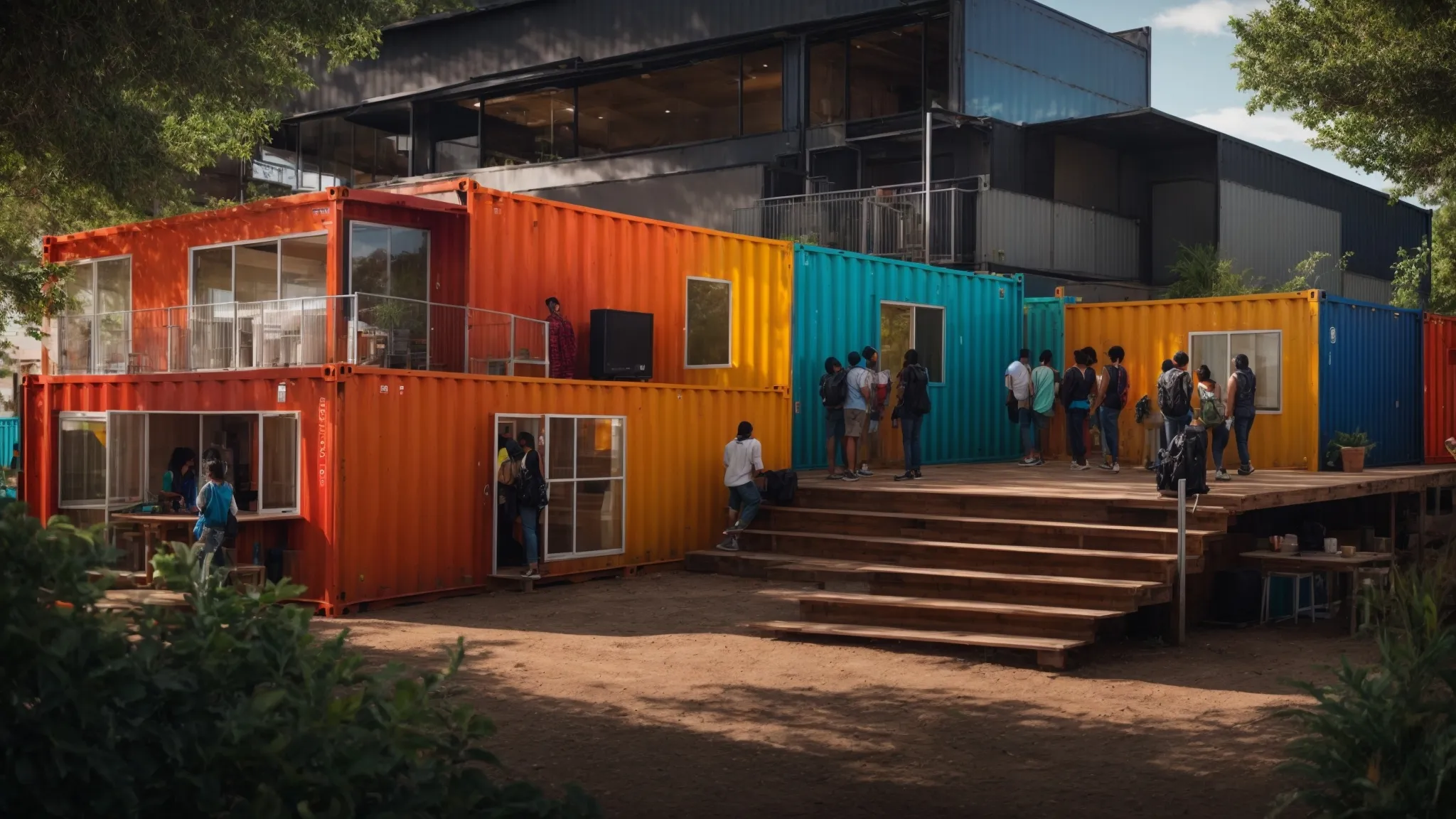
As you enter the realm of public and community-centric architecture, behold the transformative potential of shipping containers that extend beyond private homes and retail spaces.
These robust structures, known for their role in global trade, are now taking center stage in cultivating community cohesion and resilience.
Envision containers repurposed into colorful centers bustling with local activity, imagine them as innovative educational facilities fostering growth and learning, and recognize their indispensable quick deployment as emergency shelters in the wake of unforeseen disasters.
Your immersion into this facet of shipping container architecture reveals a compelling narrative of adaptability and hope in building stronger communities.
Transforming Containers Into Vibrant Community Centers
Witness the transformation as shipping containers transcend their utilitarian past, evolving into vibrant community centers that become the heartbeats of neighborhoods. Their adaptability and speed of construction make them perfect candidates for gathering spaces that inspire, connect, and energize, from bustling marketplaces to cultural hubs that might house an art gallery or a coffeehouse.
- Identify suitable shipping containers aligned with your community center’s projected scale and purpose.
- Engage with architects with experience in shipping container architecture to design a space that fosters inclusivity and interaction.
- Implement environmentally friendly elements such as solar power to endorse container reuse’s ecological benefits further.
Engage with your surrounding community, integrating their insights and needs into the design process to ensure these centers genuinely resonate with those they will serve. By doing so, you’ll cultivate a vested interest in the longevity and success of these spaces, making them a true asset to every user’s experience and fostering an even more tightly-knit community.
Developing Container-Based Solutions for Educational Facilities
Envision a campus where shipping containers form the core of innovative educational facilities, illustrating that adequate learning spaces can emerge from the most unexpected sources. Pursuing container-based solutions embodies a commitment to academic innovation and architectural sustainability.
Container-based classrooms and laboratories denote a shift in the educational architecture paradigm, signaling that you’re harnessing the principles of sustainability and adaptability without sacrificing functionality or design:
- Consult with an architect to ensure that the transformation of containers into educational facilities meets the unique needs and safety regulations of a learning environment.
- Incorporate eco-friendly materials and technologies, like solar panels and efficient insulation, to reduce operational costs and teach students the importance of environmental stewardship through the structures they learn.
- Design multipurpose spaces that serve as classrooms, workshops, or study areas, enabling a single container to adapt to various educational activities and group sizes.
Your decision to construct these educational spaces from shipping containers creates a distinctive aesthetic and serves as a live educational tool, showcasing the practical application of reuse and sustainability principles in modern construction.
Shipping Containers as Emergency Shelters and Disaster Relief
In times of crisis, shipping containers have proved to be versatile assets, swiftly transforming into emergency shelters. They offer hope to those affected by the catastrophe, providing immediate, sturdy refuge with the potential for swift deployment across various terrains.
Embracing the concept of adaptive reuse, these containers are also instrumental in long-term disaster recovery, easily converted into temporary clinics, schools, or housing. Their modular design allows for rapid assembly and disassembly, adaptability to site-specific needs, and resistance to extreme weather conditions – crucial for post-disaster rebuilding efforts.
| Function | Features | Benefits |
|---|---|---|
| Emergency Shelter | Fast deployment, sturdy construction | Immediate safety and protection |
| Temporary Clinics | Sanitary environments, medical equipment storage | Continuity of care in affected areas |
| Educational Spaces | Flexible design, quick setup | Restoration of normalcy for children |
| Housing Solutions | Customizable layouts, weather-resistant | Comfort and privacy during recovery |
Shipping container projects have redefined public and community spaces, infusing them with a sense of ingenuity. Now, let’s explore how these versatile steel boxes transform into breathtaking, functional art forms through modification.
The Art of Shipping Container Modification

Welcome to the pioneering world of shipping container modification, where the convergence of robust construction techniques with avant-garde design ideas ushers in a new wave of architectural splendor.
As you hone the requisite skills for container customization, you’ll be propelled into a dynamic landscape where trends and inspirations are as diverse as they are transformative.
Each project unfurls its unique narrative in this realm of container architecture, showcasing how this once-humble building material ascends to revolutionary heights.
Prepare to navigate the cutting-edge terrain of inventive container conversion and witness the emergence of habitats and hubs that defy conventional boundaries.
Mastering the Skills Needed for Container Customization
Embarking on the path of container customization requires a blend of technical knowledge and creative vision. You’ll need to master the fundamentals of construction, including understanding the properties of weathering steel and the nuances of structural integrity, to ensure your projects stand the test of time and functionality.
Concurrently, your artistic finesse is just as crucial, compelling you to envision spaces that are not only practical but also aesthetically captivating. Delve into the principles of design and familiarize yourself with current trends in sustainable architecture to elevate your shipping container projects from mere constructions to crafted experiences.
Trends and Inspirations in Container Architectural Design
Shipping container architectural design thrives on the edge of modern creativity, where your vision can leap from blueprint to reality, unfettered by traditional constraints. Embrace the opportunity to draw inspiration from the diverse textures of urban landscapes, the efficiency of minimalistic living, and the transformative nature of adaptive reuse.
In this architectural age, trends lean toward blending organic elements with the industrial aesthetic of containers: incorporating wood accents and living green walls complement metal surfaces, reflecting your aspiration for sustainability and a connection with nature:
- Integrate biophilic design elements that enhance the human-nature connection within urban settings.
- Utilize upcycling artistry to furnish and decorate with repurposed materials, fostering a narrative of environmental stewardship.
- Explore innovative insulation and climate control methods to redefine comfort and energy efficiency in container living.
Container design projects stand as a testament to your commitment to shaping practical, space-efficient structures and fostering communities centered on ecological living. Let your endeavors be guided by the pressing need for sustainability, and be inspired to create spaces that resonate with the growing consciousness of your environmental impact.
Case Studies of Groundbreaking Container Architecture Projects
Take a moment to reflect on the Container City project in London, an inspiring example of shipping container construction. It set a precedent by stacking numerous shipping containers into innovative live/work spaces, fostering a community for artists and businesses.
Observe how the student housing complex in Amsterdam, known as the Keetwonen development, harnessed the potential of modified containers. Recognized as one of the most significant shipping container housing projects globally, it offers a sustainable and practical solution to accommodate the city’s growing student population:
- Containers are adapted to create affordable, modular student apartments.
- Each unit is designed with soundproofing and energy efficiency in mind.
- The complex includes communal areas, contributing to a sense of community and well-being.
Innovative Methods of Shipping Container Reuse Final Thoughts
Shipping container reuse is pioneering a revolution in architecture, offering innovative solutions that blend sustainability, cost-effectiveness, and design ingenuity.
As communities embrace these versatile structures, we see shipping containers reimagined into comfortable, eco-friendly homes, chic retail spaces, and dynamic work environments that challenge traditional aesthetics and construction methods.
These projects alleviate housing affordability issues and reduce environmental impacts by minimizing waste and incorporating renewable energy technologies.
Furthermore, shipping containers provide adaptable solutions for public and community spaces, essential in emergencies as fast-deployable shelters.
As architects and designers continue pushing the boundaries of container modification, they create groundbreaking spaces emphasizing a future of efficient, sustainable, and community-centric living.
Shipping container architecture is a testament to our environmental stewardship and ever-adapting urban landscapes.
Related Resources
- Exploring Effective Construction Uses of Shipping Containers
- Exploring Alternative Living Spaces Using Shipping Containers
- Exploring Innovative Methods of Shipping Container Reuse
- Exploring Environmentally Friendly Uses of Shipping Containers
- Exploring Emergency Housing Solutions With Shipping Containers