
Walk through any suburban neighborhood in the Northeast this June and you’ll spot them: sleek steel pools sitting above ground where an in-ground build used to be the only option. The shipping container pool has stopped being a novelty. In 2026 it’s a mainstream backyard choice, and with pool season at its peak, the questions hitting our phones have shifted from “does this actually work?” to “what does it really cost, and what do I need to know before I buy?”
The short answer is that a container pool runs 40 to 60% less than a traditional in-ground build, installs in a fraction of the time, and — this is the part most homeowners miss — lives or dies on the quality of the steel box underneath it. Before you price anything, it helps to understand what a shipping container actually is as a structure, because a pool is one of the few modifications where the container becomes a permanent, water-bearing shell that has to hold up for decades.
What a Container Pool Actually Costs in 2026
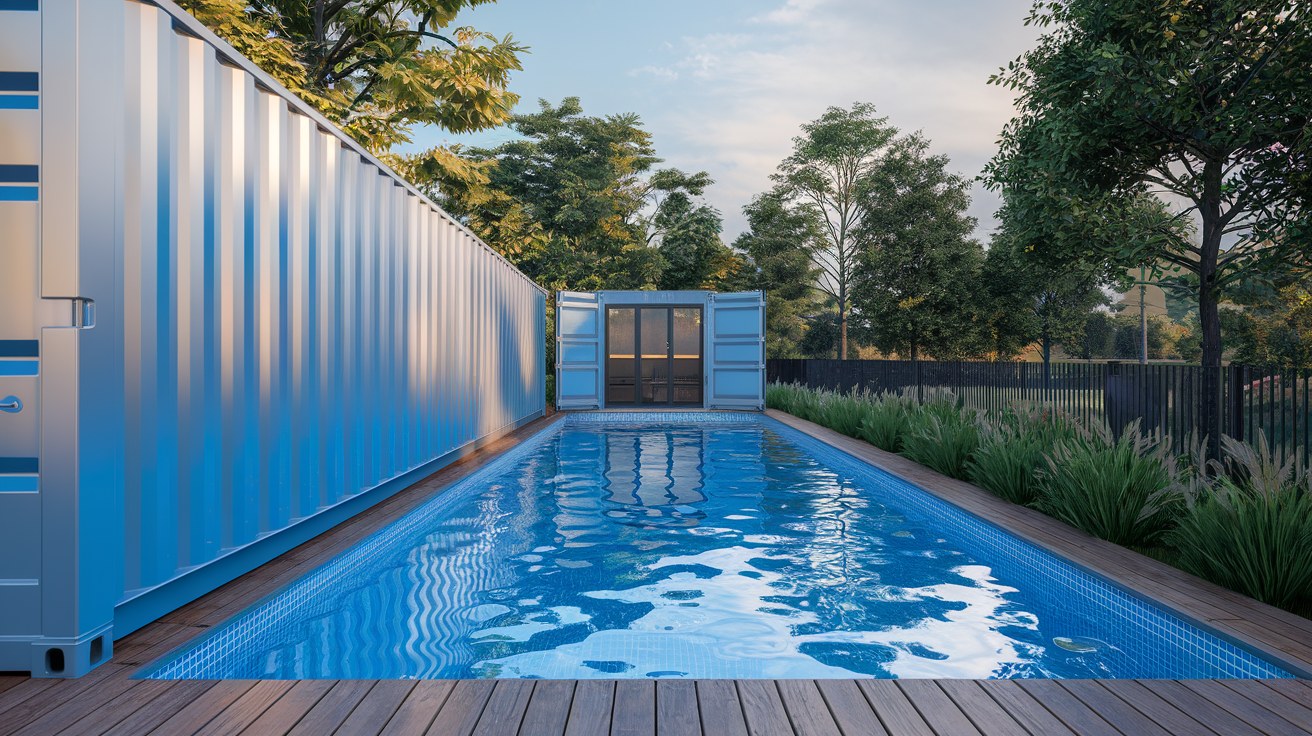
Let’s start with real numbers. A finished shipping container pool — container, conversion, delivery, and basic installation — typically runs $35,000 to $65,000, with most homeowners landing around $50,000 for a standard 8-foot-by-20-foot model, according to 2026 cost data from Angi and HomeGuide. The 20-foot footprint is the volume seller for good reason: it ships without oversized-load permits, fits most residential lots, and still gives you roughly 16 feet of clear swimming length.
Compare that to a traditional in-ground pool. A midrange fiberglass or plaster in-ground build runs $40,000 to $60,000 before you add landscaping, fencing, and the months of excavation and disruption, per the same 2026 figures. That’s where the 40-to-60% savings claim comes from — not from cutting corners, but from skipping the dig. The container is the structure, fabricated off-site, dropped on a prepared pad, and connected. You can be swimming weeks after delivery instead of at the end of a construction season.
Operating costs are modest and predictable. Expect roughly $100 to $200 a month to run the pump and heat the water during summer use, dropping off sharply in the off-season. None of that is exotic — it’s the same equipment a conventional above-ground pool uses, just wrapped in 14-gauge Corten steel instead of resin panels.
The number that surprises people is the container itself. The raw steel box is a small fraction of the finished price, but it’s the fraction that determines whether the other $45,000 was money well spent. That’s the part worth slowing down on.
Why the Container Underneath Matters More Than the Water
Most container modifications forgive a rough starting unit. When you’re cutting in roll-up doors and partitions for storage or a workshop, surface rust and old paint don’t matter much — the work resurfaces what would have driven a buyer toward a pricier unit anyway. A pool is the exception. The container walls and floor become the structural envelope holding several thousand gallons of water under constant pressure, so the condition of the steel isn’t cosmetic. It’s the whole ballgame.
This is why reputable container pool builders almost always start from a one-trip or near-new unit rather than a weathered used box. A pool is precisely the project where the used-versus-new decision tilts toward new. For a storage container, a wind-and-watertight used unit at half the price of a one-trip is the smart buy nine times out of ten. For a pool, you want clean, uniform, dent-free steel with no prior corrosion in the floor seams, because every weld and every patch becomes a potential leak point once the box is full of chlorinated water.
That doesn’t mean a used container is off the table — it means the inspection bar is far higher. If you or your fabricator are sourcing a used unit for a pool conversion, the inspection checklist for buying a shipping container becomes non-negotiable: corner posts, floor cross-members, interior wall pitting, and the integrity of the bottom rails all matter more here than in any other use case. A $1,400 unit that needs $3,000 in remediation before it can safely hold water is no bargain. Buyers who want to understand the cost-quality tradeoff before they shop should read our overview of affordable options for buying shipping containers — the same logic applies, with the floor raised.
The modification work itself is real fabrication, not a weekend project. Cutting the access opening, installing the liner or applying a marine-grade interior coating, framing the equipment bay, and engineering the plumbing penetrations all require the kind of shop that does this regularly. Our walkthrough of the shipping container customization process and the available modification options covers how serious conversions are sequenced — and why the structural work always comes before the finish work.
Permits, Delivery, and the Northeast Reality
Here’s where buyers get tripped up, and where regional rules matter. A container pool is still a pool in the eyes of your building department. In most U.S. jurisdictions, above-ground pools holding under 5,000 gallons skip the full building permit, and many container models are sized to stay under that line, according to permit guidance compiled by container pool installers. But “many” is not “all,” and the rules change at the municipal level, not just the state level.
Permit costs themselves run $400 to $1,800 depending on where you live, per 2026 figures from Angi — and that’s before you factor in the plumbing and electrical permits that any pump-and-heater setup may trigger separately. The Northeast, where a large share of our customers buy, tends toward stricter local enforcement: fencing requirements, setback rules from property lines, and electrical inspection for the equipment bay are common across New York and New Jersey municipalities. The honest advice is the same one we give every buyer: call your local planning or building department before you put money down, because a $1,200 permit surprise is a lot cheaper to plan for than to discover after delivery.
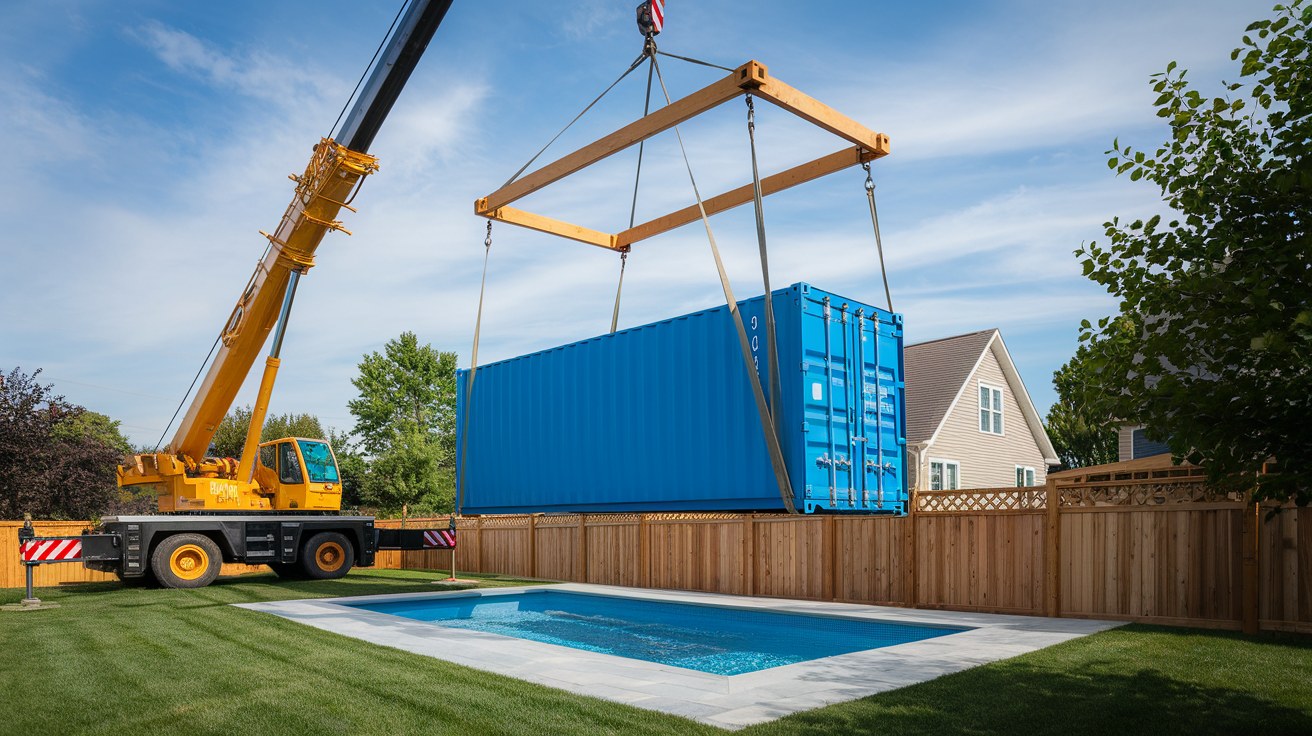
Delivery is the other half of the equation, and it’s the part container buyers consistently underestimate. A finished pool is heavier and more delivery-sensitive than an empty box, which means the placement plan has to be right the first time. A 20-foot unit needs roughly 60 feet of straight-line clearance for a tilt-bed drop, level and compacted ground to sit on, and overhead clearance free of branches and power lines. Where tilt-bed access isn’t feasible — a fenced backyard, a tight side-yard approach, a sloped lot — crane placement becomes the answer, and it carries its own cost and access requirements. Our delivery and placement guide covers the prep most buyers wish they’d read first, and the container dimensions page lays out the exact footprints so you can measure your site honestly before committing to a size.
Where Container Pools Make Sense — and Where They Don’t
Container pools aren’t the right answer for everyone, and we’d rather tell you that up front than sell you the wrong thing. They make the most sense on lots where excavation is expensive or impossible — rocky Northeast soil, high water tables, sloped yards, or properties where you simply don’t want to lose a summer to a construction crew. The above-ground steel structure sidesteps the single most expensive variable in traditional pool building, which is what’s underground.
They’re also a natural fit for buyers who value the portability and the look. Unlike a poured in-ground pool, a container pool can be relocated if you move or reconfigure the yard, and the industrial-modern aesthetic has become a selling point in its own right. This is part of the broader wave of innovative container reuse that’s pulled units off the resale market for everything from backyard offices to pop-up retail — and pools are now firmly in that mix.
Where they make less sense: very large families wanting a 40-foot-plus swimming footprint with diving depth, or buyers in jurisdictions with permit regimes so strict that the speed advantage evaporates. And container pools sit inside the same 2026 market pressures as every other steel box. With new container imports from China down roughly 28% year over year and tariffs adding as much as 55% to the landed cost of Chinese goods, per FreightWaves and container industry reporting, the one-trip units that pool builders prefer aren’t getting cheaper. Steel input costs have ticked up again in recent months as well. None of this is a crisis — it’s the same timing story we covered in our look at the key trends shaping the container market — but it does mean the container portion of your pool budget is more likely to firm than to fall through the rest of 2026.
The Bottom Line
A shipping container pool is one of the better values in backyard recreation right now: 40 to 60% less than an in-ground build, weeks instead of months to install, and a structure you can take with you. But it’s also one of the few container projects where the steel box isn’t a detail — it’s the foundation of a water-bearing structure that has to last. Buy the right container, prep the site honestly, and clear your permits before delivery, and you’ll spend the summer swimming instead of troubleshooting. Cut corners on the unit underneath, and you’ll learn why the cheap ones were cheap.
If you’re weighing a container pool or any container project this summer, our team can walk you through new and used inventory, the right grade for a water-bearing conversion, and the delivery logistics for your specific Northeast lot. Request a quote today and start the project on the right box.