
Most buyers spend weeks comparing container prices down to the last hundred dollars, then treat delivery as an afterthought. That’s backwards. In the summer of 2026 — with construction activity at its seasonal peak and trucking demand tight — delivery and site prep are where buyers get surprised, and the surprises run from a few hundred dollars to a few thousand. The container is the easy part. Getting a 10,000-pound steel box onto your ground, level and where you want it, is the part that goes sideways.
The good news is that almost every delivery surprise is avoidable with a little planning before you sign anything. This piece breaks down what delivery actually costs in 2026, why summer is the expensive time to buy, and the site-prep details that separate a clean tilt-bed drop from an expensive crane day. If you want the full operational walkthrough, our delivery and placement guide covers the prep checklist in depth — this article is the budgeting and timing companion to it.
What Delivery Actually Costs in 2026
Start with the default method. Tilt-bed delivery — where the truck tilts its bed and slides the container off onto the ground — runs roughly $400 to $1,550 depending on distance, according to 2026 figures from Discover Containers and CHS Container Group. A short local drop lands around $400 to $600. A longer haul of 200 to 300 miles pushes toward $1,200 to $1,550 or more. Per-mile rates generally fall between $3 and $7, with shorter trips carrying a higher per-mile cost because the fixed cost of dispatching a truck gets spread over fewer miles.
Crane delivery is a different number entirely. When tilt-bed access isn’t possible — a tight lot, a fence to clear, an obstruction the truck can’t drive past — you’re looking at a crane or boom truck, and that ranges from $1,000 to $4,000, per Rigging Force’s 2026 cost data, with most residential and small-business lifts landing between $1,500 and $2,500. A hiab-style boom truck that can place a container over an obstacle typically adds $200 to $500 on top of a standard delivery.
Here’s the number that matters most for budgeting: industry pricing guides put a typical all-in 2026 purchase — container plus delivery — in the $1,500 to $4,500 range for most buyers, per Yes Containers’ 2026 pricing guide. Delivery isn’t a rounding error on that figure. On a budget used unit, it can be a third of the total. Treat it as a real line item from the first quote, not a surprise on the invoice.
Why Summer Is the Expensive Time to Buy
Container demand is seasonal, and the pattern is consistent year after year. Prices and delivery costs tend to rise in spring and summer when construction activity peaks, and soften in late fall and winter, according to Container Sales Group’s 2026 pricing guidance. Summer is when general contractors need on-site storage, when agricultural operations gear up, and when event and retail builds get staged — all of which compete for the same trucks and the same yard inventory.
That seasonal pressure is real in the numbers. Used 20-foot containers are running roughly $2,000 to $3,800 in June 2026, and used 40-foot units $2,800 to $4,500, depending on grade, per current market tracking. Those are firmer prices than buyers saw over the winter, and the firming is consistent with the broader market signal we covered in our look at why the shipping container buyer’s market is turning — the reward for waiting has been shrinking all spring.
The takeaway isn’t “panic-buy.” It’s that if a purchase is on your summer calendar, the off-season discount has already evaporated, and delivery slots get tighter as the season runs. Buyers who lock in a quote and a delivery window early avoid both the price creep and the scheduling crunch. The buyers who wait until the project is already behind pay for the rush.
The Site-Prep Mistakes That Turn a Tilt-Bed Job Into a Crane Job
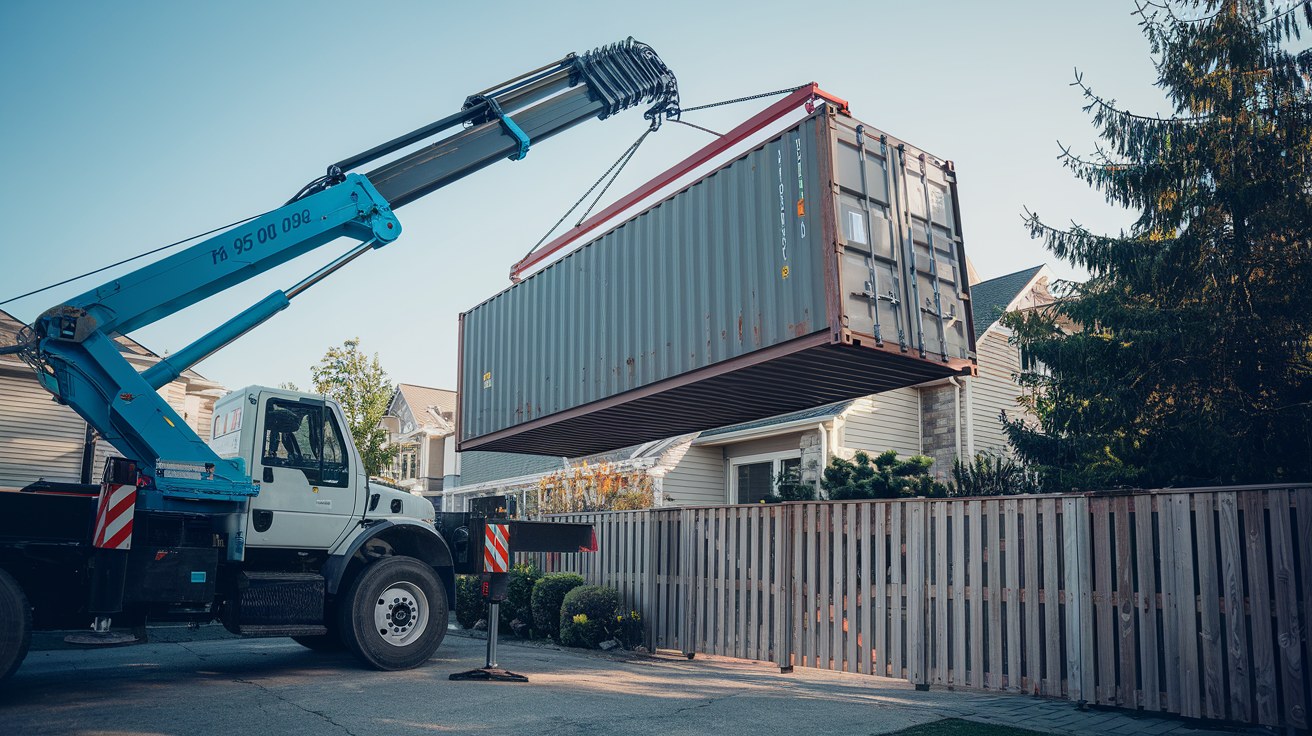
This is where the money actually leaks. A tilt-bed delivery needs a clear, mostly level, firm path the truck can back into — and when the site doesn’t cooperate, a routine $500 drop becomes a $2,000 crane day. Three site conditions cause most of the upgrades.
First, access. A tilt-bed truck delivering a 40-foot container needs roughly 100 feet of straight-line clearance to maneuver and offload, plus room to back in. Tight driveways, sharp turns, soft shoulders, and parked vehicles all block that. If the truck can’t get a clean run at the spot, the unit either gets dropped where it’s inconvenient or you pay for a crane to reach over the obstacle.
Second, ground firmness. The delivery surface needs to bear the weight without the truck sinking. Gravel, compacted dirt, concrete, and asphalt are fine. Soft soil, wet lawn, and freshly graded fill are not — and summer thunderstorms turn a marginal surface into a stuck-truck situation fast. A few yards of gravel laid ahead of time is far cheaper than a failed delivery and a rescheduled truck.
Third, overhead clearance. Low branches, power lines, eaves, and carport roofs all interfere with both tilt-bed offloading and crane lifts. The tilt-bed method in particular raises one end of the container high into the air during the slide-off, so the airspace above the drop zone has to be clear. Buyers who walk the site looking only at the ground footprint miss this one constantly.
Manufactured ground is the silent budget-killer here. Uneven or soft ground costs you more in leveling, shimming, and failed-delivery fees than almost any other single factor — and unlike the container itself, it’s entirely within your control before the truck rolls.
How Size and Type Change the Delivery Equation
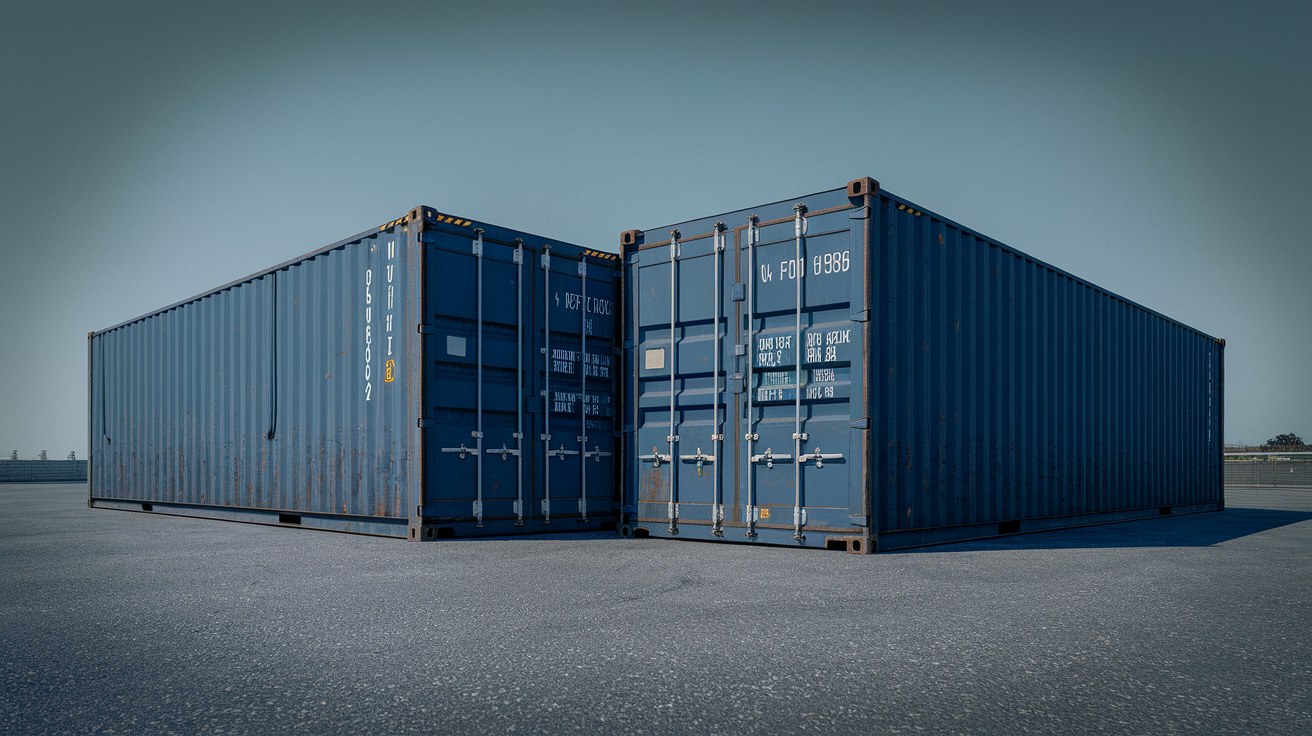
The 20-foot versus 40-foot decision isn’t only about how much you can store — it changes what delivery requires. A 20-foot unit is far more forgiving on a tight site; a 40-foot unit needs the full 100 feet of clearance and a longer level pad. If your site is constrained, the price-per-square-foot advantage of a 40-foot container can get eaten by the crane fee it forces. Our shipping container dimensions breakdown lays out the exact external footprints and door-swing clearances so you can measure your site honestly before you commit to a size.
Container type matters too. High-cube units add a foot of height, which tightens overhead clearance further. Specialty configurations — open-side, refrigerated, or heavily modified units — carry more weight and sometimes need specific placement, which can narrow your delivery options. Our overview of the different types of shipping containers for sale is worth a read if you’re still deciding, and if the unit is destined for on-site construction storage, our guide to using shipping containers for storage covers the placement and security considerations that go with it.
One more cost lever worth naming: condition. The inspection details in our guide to what to look for when buying a shipping container matter for delivery too, because a unit with a warped frame or a bowed floor is harder to set level and more likely to need shimming once it’s on the ground. Buy a straight box and the placement gets easier.
What to Lock Down Before the Truck Rolls
A short pre-delivery routine prevents almost every expensive surprise. Walk the path the truck will take and confirm 100 feet of clearance for a 40-foot unit, or measure honestly for a 20-foot if access is tight. Check the ground where the container will sit and where the truck will park, and lay gravel if either is soft. Look up and clear the airspace of branches and lines. Decide the exact orientation you want the doors to face, because repositioning a placed container is its own cost.
Then settle the method and the money in the same conversation. Ask the dealer directly whether your site is a tilt-bed or a crane job, and get the delivery fee quoted as a specific number, not “we’ll figure it out later.” A real dealer asks about ground, access, and clearance before quoting — that questioning is a sign you’re dealing with someone who actually delivers containers. Timing is negotiable too; our guide to negotiating shipping container prices covers where there’s room to move, and for cost-conscious buyers our overview of affordable options for buying shipping containers lays out how delivery factors into the total.
For buyers in the Northeast and Mid-Atlantic, regional inventory and delivery coverage are solid heading into the summer peak. The New York and New Jersey markets we serve have both tilt-bed and crane delivery available, which matters when a site won’t take a standard drop.
The Bottom Line
Delivery is not the afterthought — it’s the part of a container purchase most likely to cost more than you planned. In summer 2026, with construction demand peaking and delivery slots tightening, the buyers who budget for delivery from the first quote and prep their site before the truck arrives come out ahead. The buyers who treat delivery as a detail pay the crane fee, the rescheduling fee, or both.
If you’re buying for storage, a modification project, or a construction site this summer, our team will tell you straight whether your site is a tilt-bed or a crane job, quote the delivery as a real number, and coordinate the logistics so the unit lands level and where you want it. Browse current used and new inventory, and when you’re ready, request a quote today — we’ll handle the heavy part.
Sources: Discover Containers 2026 Delivery Cost Guide; CHS Container Group 2026 Shipping Container Delivery Guide; Rigging Force 2026 Crane Cost Data; Conexwest 2026 Transport Cost Calculator; Yes Containers 2026 Pricing Guide; Container Sales Group 2026 Costs & Pricing Guide.