
Something has shifted in who’s calling us about container homes this summer. A year ago, the caller was usually a homeowner who wanted a guest suite or a hobby studio. Now, more often than not, it’s someone running the numbers on rent — a homeowner sizing up a backyard unit as a second income, or a small investor who wants a short-term rental that pencils out faster than a traditional build. The shipping container has quietly become an income-property play, and the 2026 data explains why.
This isn’t hype. It’s arithmetic. When a modified container studio can go from delivery to leased in a matter of weeks at a fraction of stick-built cost, the math starts to look very different from a conventional accessory dwelling unit. Below is what the build actually costs, what the rent side realistically looks like, and what Northeast buyers in particular should weigh before treating a container home as an investment rather than a hobby.
What the Numbers Are Saying
The category is growing fast enough that serious money is now paying attention. The global market for shipping container construction was valued at $63.1 billion in 2025 and is projected to reach $96.2 billion by 2034, according to market research cited by RealtyTimes in its coverage of why investors are moving into container properties. That’s not a niche curiosity anymore — it’s a construction format that institutional buyers are actively evaluating.
On the cost side, the appeal is straightforward. Container homes run roughly $150 to $350 per square foot, versus $200 to $400 for traditional construction, per Angi’s 2026 cost data. At the small end — the size most relevant to a backyard rental — the pricing gets concrete. A finished 20-foot container studio with a full kitchen, bathroom, and sleeping area starts around $55,000 delivered nationwide, according to Boma Properties’ 2026 pricing. A 40-foot one-bedroom, one-bathroom unit lands closer to $75,000 and, by most operators’ accounts, delivers the strongest short-term-rental returns because it hits the sweet spot of build cost and broad renter appeal.
Compare that to a conventional accessory dwelling unit, where construction commonly runs $100,000 to $300,000 depending on size and finish. The container route doesn’t win on every project, but for a compact income unit, the starting number is often less than half. That gap is the whole reason the investor phone calls are picking up.
The Rental-Income Side of the Ledger
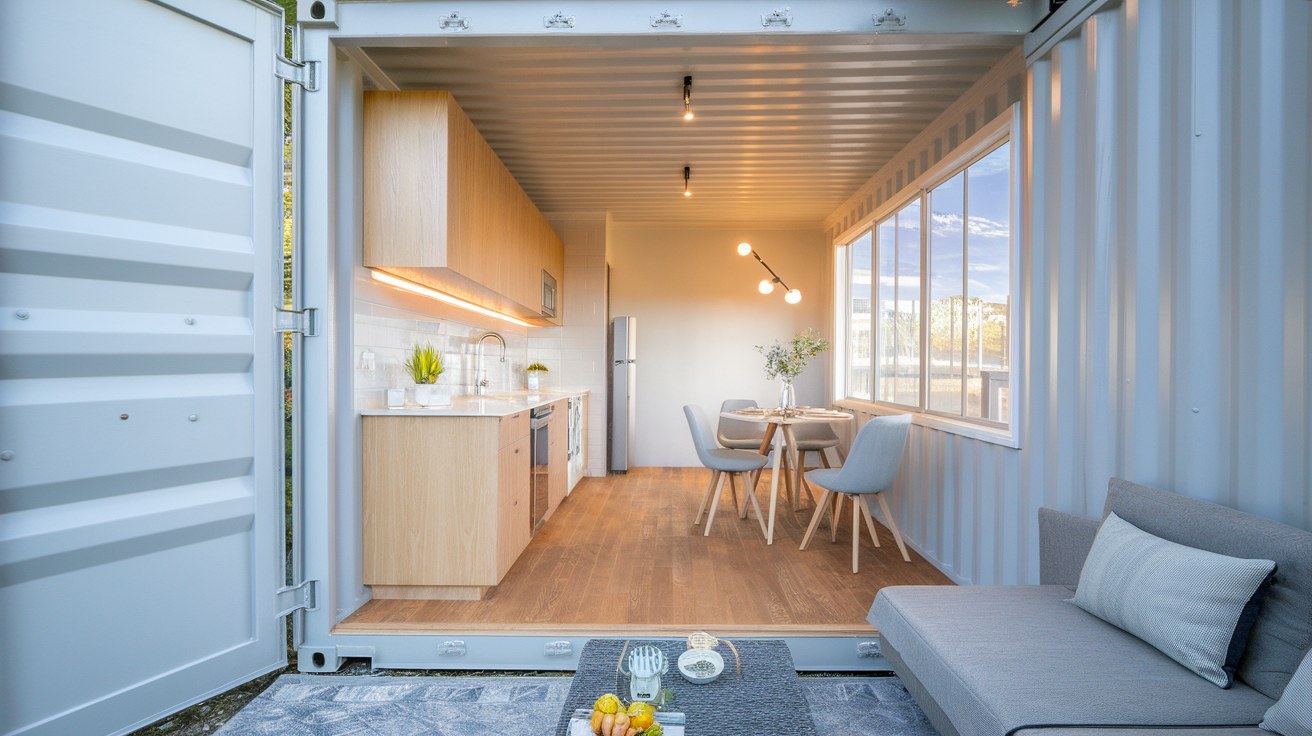
A cheap box that sits empty isn’t an investment. The reason the container-ADU math works is that the rent side has held up. In high-demand metros, a well-finished 400-to-600-square-foot accessory unit rents for anywhere from $1,800 to $4,500 a month in 2026, according to Los Angeles market data compiled by regional ADU builders — with the top of that range concentrated in the most expensive coastal neighborhoods. Those are West Coast numbers, and Northeast rents vary by market, but the structure of the return is the same wherever the unit lands.
The payback timeline is what tends to surprise first-time investors. Many homeowners recover an ADU’s cost within roughly five to fifteen years through rental income alone, and faster in tight markets. When the build cost starts at $55,000 instead of $200,000, the front end of that range gets a lot more reachable. Vacancy has also stayed low where supply is scarce — under 3% for well-finished units in strong markets, with most leasing inside two weeks of listing.
There’s a second lever that doesn’t show up in the monthly rent: the property itself. Real estate professionals report that adding an accessory dwelling can lift a property’s value by 20% to 30% in high-demand areas, and in expensive metros the bump has run $100,000 to $200,000. Even discounting heavily for a cooler regional market, the resale story is a real part of the return — you’re buying an asset that produces income and appreciates the parcel it sits on.
Why Investors Keep Choosing the Container Route
Speed is the first reason, and it’s a big one. A container home can be built in under a month, against several months to a year for a comparable stick-built unit. For an investor, that compressed timeline is money — every month a unit isn’t finished is a month it isn’t earning. The container arrives as a finished structural shell, which collapses the framing and weatherproofing stages that eat the front half of a conventional build.
Cost predictability is the second. Because the customization process starts from a standardized steel box, the modification scope is easier to quote and harder to blow past. The common add-ons — insulation, windows, a roll-up or standard entry door, electrical, and HVAC — are well-understood line items, and our overview of modification options walks through what each one does to the build. Investors like line items they can price before they commit.
Modularity is the third. A single 20-foot unit can be a starter short-term rental; two 40-foot units can be combined into a two-bedroom. That flexibility lets an investor start small, prove the income, and expand — the kind of staged approach that’s much harder with a poured foundation and framed walls. The broader wave of alternative living spaces built from containers is being driven as much by this modularity as by cost, and the innovative reuse projects gaining traction in residential design are pushing the design ceiling higher every year.
What Northeast Buyers Should Weigh Before Committing
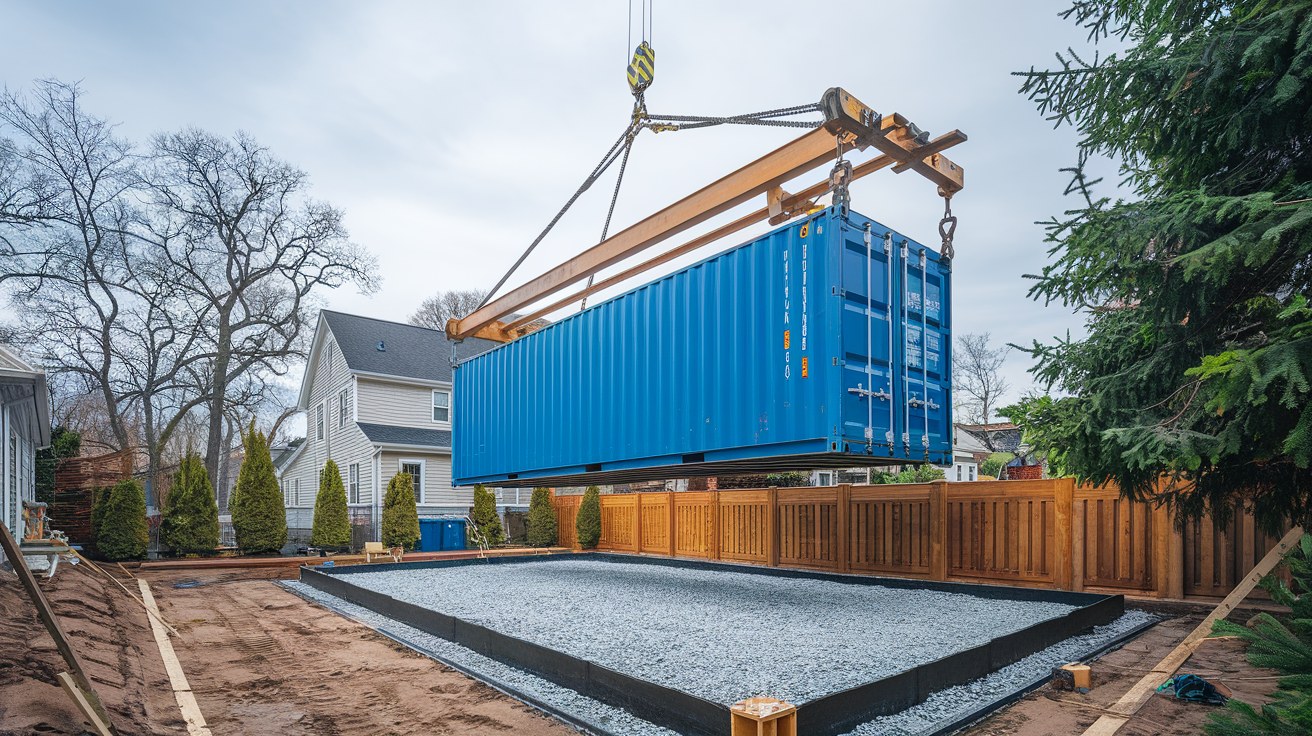
The rental math is national, but the constraints are local — and the Northeast has a few that matter. First, insulation isn’t optional here. A container that works as a Southern California studio needs a serious thermal package to be a year-round rental in New York, New Jersey, or Pennsylvania. That means spray foam or equivalent, proper thermal breaks, and a right-sized heating system — costs that belong in the pro forma from day one. Buyers weighing this often start with an insulated container base rather than insulating a standard box after the fact.
Second, permitting and zoning drive the timeline more than the build does. Accessory-dwelling rules vary town by town across the region, and short-term-rental ordinances are tightening in many markets. The container arrives fast; the certificate of occupancy is the long pole. Investors who treat the permit process as the real critical path — and start it early — are the ones who hit their lease-up dates.
Third, delivery and site access aren’t afterthoughts. Placing a container ADU means getting a 20-foot or 40-foot unit onto the parcel and level, which our delivery and placement guide covers in detail. Tight urban and suburban lots sometimes push the job from tilt-bed to crane delivery, and that’s a cost and a scheduling constraint worth pricing before you buy. The shipping container dimensions page lays out the exact footprints so you can measure your setback and clearance honestly.
For buyers shopping the region, current inventory is solid across our New York, New Jersey, and Pennsylvania markets in both new and used condition.
New, Used, or Modified: Where the Dollars Go
The base container is the smallest line in an ADU build, which changes the usual new-versus-used calculus. For a raw storage unit, a used box saves real money — used 20-foot containers run roughly $2,000 to $3,800 delivered and 40-foot units $2,800 to $4,500 in mid-2026, per current market pricing. But once you’re cutting in windows, doors, and a full interior, cosmetic wear on the original skin becomes irrelevant, and even structural touch-ups are minor against the finish budget. Our guide on what to look for when buying a shipping container covers the inspection points — floor, corner posts, door gaskets, roof seams — that separate a sound donor unit from a money pit.
That said, an investor building a premium short-term rental sometimes starts from a one-trip container for a cleaner shell and a longer service life, especially where the finish standard is high. The affordable options overview and our walkthrough of where to buy used shipping containers both cover how to weigh that tradeoff against your budget and your finish goals. Either way, the base unit is where you can afford to be practical — the return comes from the build quality and the rent, not from squeezing the container line.
The Bottom Line
The container ADU has crossed from novelty into a real income-property format, and the 2026 numbers are why: a finished studio starting near $55,000, a build measured in weeks, rents that hold in tight markets, and a resale bump on top. It won’t pencil everywhere — insulation, permitting, and delivery access can make or break a Northeast project — but for the right parcel, the math is genuinely compelling in a way it wasn’t a few years ago.
If you’re weighing a container ADU as a rental or a first investment unit, our team can walk you through base-unit selection, insulation and modification scope, delivery logistics, and realistic timelines for your specific site and market. Request a quote today and we’ll help you build the pro forma before you commit a dollar.
Sources: RealtyTimes 2026 container property investment coverage; Angi 2026 container home cost data; Boma Properties 2026 container home pricing guide; Conexwest 2026 container home cost breakdown; Los Angeles regional ADU rental income data (2026); Container Sales Group and industry 2026 used container pricing.