
The US port fee on Chinese-built ships has sat at zero dollars since November 10, 2025, and the suspension holding it there expires at 11:59 p.m. Eastern on November 9, 2026. If it lapses, Annex II of the USTR’s Section 301 maritime action charges $153 per container, or $18 per net ton when that figure runs higher, on every affected vessel rotation through a US port. No extension has been announced. For a Northeast buyer pricing a container this month, that date sits in the middle of the fourth-quarter delivery window.
A fee on vessels never reaches a container already standing in a Northeast yard, and that gap is what a fourth-quarter purchase turns on. Below is what the paused fee actually charges, whether any of it is reaching buyers today, what a November 10 restart would do to Northeast supply and quotes, and the questions worth settling before the date arrives. Our running read on the trends shaping the container sales industry has tracked vessel-side costs and yard-side prices moving on separate clocks all year.
What the Paused Fee Actually Charges
The Section 301 action USTR announced in April 2025 sorts arriving ships into annexes. Annex I covers vessels owned or operated by Chinese entities and started at $50 per net ton, stepping up to $140 per net ton by 2028. Annex II covers Chinese-built ships operated by anyone and started at $18 per net ton or $120 per container, whichever produces the larger number. The per-container figure steps to $153 in April 2026, $195 in 2027, and $250 in April 2028, per USTR’s notice of action and the fee schedules summarized by law firm HFW and by Flexport.
The charge applies per rotation, meaning one string of US port calls rather than each individual berth. A ship that works Elizabeth, then Savannah, then Charleston owes once for the string. On a vessel in the 10,000 TEU class, the container-count method produces a seven-figure number, which is why carriers treat the question as a surcharge policy rather than a rounding error.
Then USTR paused all of it. The November 10, 2025 Federal Register notice suspended Annexes I, II and III for one year and stated that no party accrues liability for or is required to pay the fees during the suspension period. China suspended its mirror-image port fees on US-linked ships the same week. The suspension runs through 11:59 p.m. Eastern on November 9, 2026, and USTR said it would consider in advance of that deadline whether continuing it is appropriate. Senators Warren and Kelly wrote to Ambassador Greer on June 7, 2026 asking where the shipbuilding action stands, so the question is still live in Washington.
Are Container Buyers Paying the Port Fee Right Now?
No. USTR’s November 2025 Federal Register notice suspending the action states that no party accrues liability for or is required to pay the fees under Annexes I, II or III during the suspension period, and Holland & Knight’s client alert on the pause reads it the same way. On a Bergen County buyer who was quoted a one-trip 20-foot high cube in August and asked why the paperwork carried no port-fee line, the answer is that there is no live fee to carry.
The confusion is fair. The fees were live for a short stretch, from October 14 to November 9, 2025, and quote templates written in that window sometimes still carry the line item months later. If a seller shows you a Section 301 vessel surcharge on a container quoted this fall, ask which vessel, which rotation, and which arrival date. A real pass-through has a voyage attached to it. Our guide to where to buy used shipping containers covers which sellers answer that kind of question directly and which ones talk around it.

What buyers are paying is the ordinary import cost stack: factory price, ocean freight, terminal and customs handling, inland drayage, and whatever steel-side tariffs apply to the unit itself. Those costs are separate from the vessel fee and none of them are suspended. The different types of shipping containers sit at different points in that stack, which is why a one-trip unit and a cargo-worthy unit react differently to the same headline.
What a November 10 Restart Would Do to Northeast Supply
Carriers pass vessel costs through as surcharges, and smaller buyers absorb a larger share of a surcharge than big retail importers with negotiated contracts do. A restart would land on the lane that is already the expensive one. Drewry’s World Container Index rose 1 percent to $4,500 per 40-foot container on September 17, with Shanghai to New York up 7 percent to $10,394 and Shanghai to Los Angeles up 5 percent to $7,712. The East Coast lane carries a premium of roughly $2,682 over the West Coast before any fee resumes. Trading Economics had the containerized freight index at 3,662.18 on September 18, up 9.15 percent on the month.
Set $153 per box against a lane running above $10,000 and the percentage looks small. Timing is the part that reaches a buyer. A fee that restarts on November 10 rides on containers that sail after it, which puts the effect on first-quarter 2027 arrivals rather than on anything landing in the Northeast this quarter.
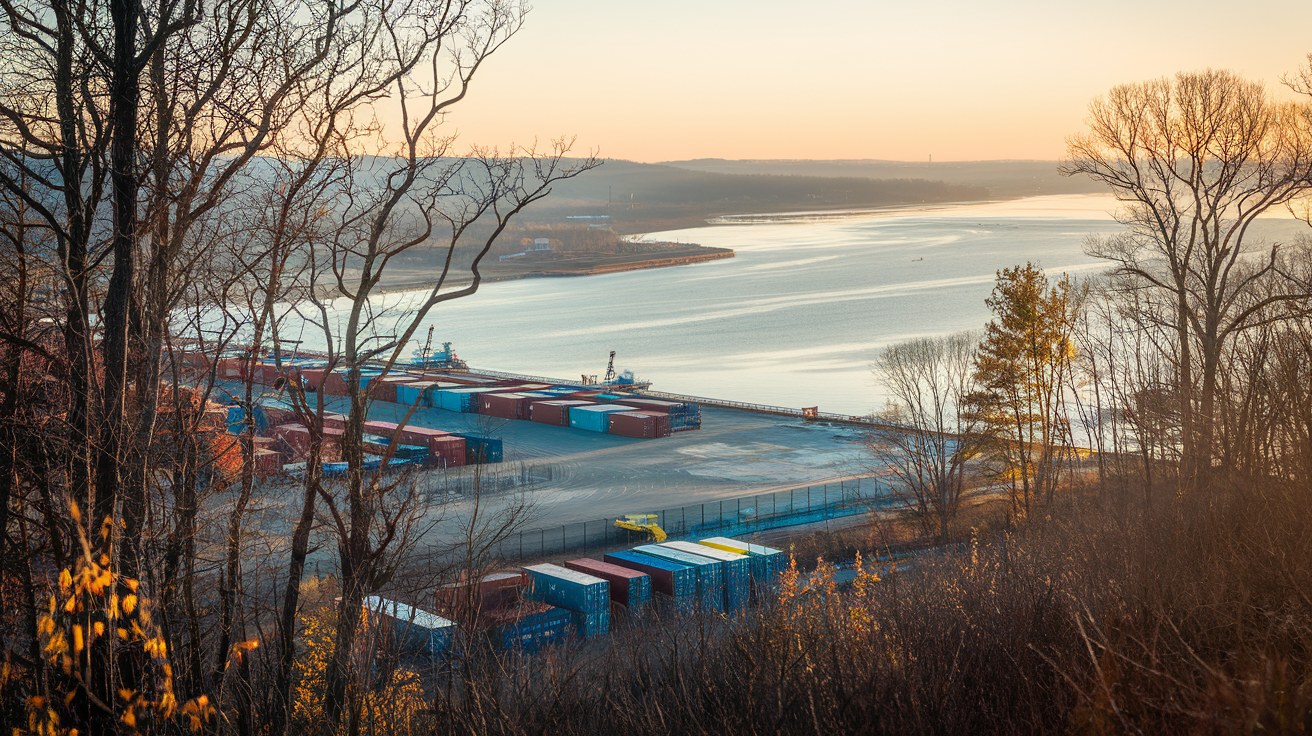
Our Northeast pattern on vessel-side news is consistent enough to plan around. Yards that are long on a size hold their number for a few weeks and then move it. Yards that are short on a size reprice within days of the headline, whether or not the cost has reached them yet. The spread between two quotes on the same specification widens for about a month and then closes again. Buyers who ask for a delivered price in writing with a date attached come out of those windows better than buyers who spend the month negotiating percentages. Checking shipping container dimensions is worth the ten minutes before you commit to a size you may not be able to re-source at the same number.
Does a Vessel Fee Change What a Used Container Costs in a Northeast Yard?
Not directly, and not quickly, because a vessel fee applies to ships arriving with cargo and a cargo-worthy unit that has been sitting on gravel in a New Jersey yard for three years never touches one. Container Management’s 2026 cost data puts used 20-foot units at roughly $1,300 to $2,000 and used 40-foot units at roughly $2,000 to $3,200, figures current as of early 2026, and depot location and delivery distance move those numbers more than any single policy line does. On a Rockland County storage buyer comparing two cargo-worthy 20-foot quotes in October, the difference between them will be yard distance and door condition.
The second-order effect is real and slower. When the landed cost of a new import rises, some share of the buyers who wanted one-trip units substitute into used, used inventory tightens, and used prices follow a quarter later. That is the transmission path worth watching if the fee returns, and it argues for settling a fourth-quarter purchase on availability rather than parking the decision until a policy deadline resolves.
Pricing as of September 2026 promises nothing about December. Our pieces on negotiating container prices and affordable buying paths cover which parts of a quote have give in them, which is usually delivery terms and grade rather than the unit price itself.
What to Settle Before November 9
First, ask where the container is physically sitting today. A unit in a Northeast yard this week carries no vessel-fee exposure under any version of what happens on November 10. A unit that has not sailed does. Ask for the depot, not the region.
Second, get the delivered price in writing with a date attached. A quote that holds for thirty days on a container with no arrival date is worth less than a firm delivered number for a specific morning. Our delivery and placement guide covers what the site has to be ready for once that date is set.
Third, decide whether the project needs one-trip or can take cargo-worthy. That answer determines whether policy risk touches your purchase at all. A clean cargo-worthy 20-foot unit stores tools and inventory as well as a one-trip unit does, and our inspection checklist covers how to separate a cosmetic problem from a structural one.
Fourth, if you already have an import order in the pipeline, ask your seller about vessel exposure. The question is whether the booked service runs Chinese-built tonnage and what the contract says about regulatory pass-through. September is when you want that answer, not the week of Thanksgiving.
Your step this week takes one phone call and costs nothing. Ask the yard you were quoted from whether the unit is domestic stock or an inbound import, and if it is inbound, ask for the arrival date and the vessel. For most Northeast storage and workshop buyers the 20-foot units clear more site constraints than anything larger, and used inventory is where the short lead times live.
The Bottom Line
The Section 301 vessel fee is at zero dollars today and stays there until 11:59 p.m. Eastern on November 9. Whether it restarts the next morning is a decision USTR has not announced, and no buyer gets to plan around an unannounced decision. Inventory is the part a buyer can plan around. A container standing in a Northeast yard this week carries no vessel-fee exposure at all, and a container that has not sailed yet carries whatever the rule turns out to be.
We will tell you which depot a unit is sitting in, whether it is domestic stock or inbound, and what the delivered number is for your address. For new and used shipping containers across New York, New Jersey, and Pennsylvania, request a quote today.
Note: we use AI to help draft market-analysis pieces like this; a team member edits every article before it publishes.
Sources: Office of the United States Trade Representative, Notice of Action in Section 301 investigation on China’s targeting of the maritime, logistics, and shipbuilding sectors, April 2025; Federal Register, Notice of Modification of Section 301 Action, November 13, 2025; Holland & Knight, USTR Port Fee Suspension: What You Need to Know, November 2025; HFW, USTR port fees updates, clarifications and proposed modifications; Flexport, Breaking Down the USTR’s Chinese Vessel Fees; Watson Farley & Williams, Suspension and Amendments to US and China Port Fees; letter from Senators Warren and Kelly to Ambassador Greer, June 7, 2026; Drewry World Container Index, September 17, 2026; Trading Economics containerized freight index, September 18, 2026; Container Management, Shipping Container Costs 2026.