
The Panama Canal cut its Neopanamax draft limit to 47.5 feet on September 3, the second reduction in nine days, and three carriers have already repriced the lane that brings one-trip containers into New York and New Jersey. Drewry’s World Container Index put Shanghai to New York at $9,587 per 40-foot container on September 3, 2026, up 3% on the week. The same box to Los Angeles ran $7,185. That roughly $2,400 gap is the widest coast spread of the year, and it decides which coast the next round of one-trip inventory lands on.
Almost none of that reaches a Northeast quote this week. It reaches October and November, and it reaches the one-trip column specifically, because used cargo-worthy boxes already sitting in East Coast depots are priced off domestic supply instead of ocean freight. Below is what the canal did, what the surcharges add per container, and how the coast spread should change what you order between now and the holidays. Our running read on the trends shaping the container sales industry has tracked freight and box pricing pulling apart since midsummer.
What the Canal Changed on September 3
The Panama Canal Authority reduced the maximum authorized draft in the Neopanamax locks to 48.0 feet effective August 26, 2026, then to 47.5 feet effective September 3, according to transit advisories circulated through GAC’s hot port news service. The stated reason is water management, specifically current and projected levels in Gatun Lake, the freshwater reservoir that fills the locks on every transit, plus preparation for the 2026 dry season and the El Nino pattern forecast for the back half of the year.
Draft is a weight limit wearing a different name. Every inch of authorized draft a ship gives up is cargo it cannot carry through the locks, so a 47.5-foot limit means fewer loaded boxes per transit on the same vessel, the same crew, and the same toll. The cost per box rises whether or not the canal changes a published rate.
Carriers answer that two ways and they are using both. They add a surcharge, and they trim sailings so the boxes that do move travel full. Capacity from Asia to the US East Coast fell 9% month over month in August while West Coast capacity held roughly flat, down 0.4%, and 14 blank sailings were scheduled between August 24 and September 13.
How Much Does a Panama Canal Surcharge Add to a Container?
A Panama Canal surcharge currently adds roughly $130 to $150 per TEU, which lands at about $260 to $300 on a 40-foot high cube. MSC raised its Panama Canal Surcharge from $100 to $149 per TEU effective September 12, 2026, Ocean Network Express set its transit fee at $150 per TEU effective August 10, and Hapag-Lloyd applied $130 per TEU on affected routes, per carrier notices compiled by Supply Chain Dive. On a one-trip 40-foot high cube routed from Asia into Port Newark, that is close to $300 of canal surcharge sitting under the base rate, before the general rate increase, the terminal handling, or the drayage out to a yard in Middlesex or Bergen County.
That charge is billed per container, not as a percentage of cargo value, so it lands identically on a box full of electronics and a box that is itself the product. A one-trip container is the second case, and every per-box ocean charge on its voyage ends up in the cost basis of the unit you eventually buy.
Those charges are stacking. Carriers filed a further general rate increase on the East Asia to USA lane effective September 1, the seventeenth of 2026 on that trade, and several added the canal surcharge on top of it for Asia to East Coast and Asia to Gulf services.
The Coast Spread Is the Number Northeast Buyers Should Watch
Drewry’s September 3, 2026 assessment held the composite World Container Index flat at $4,465 per 40-foot container, which reads like a quiet week until you look at the legs. Shanghai to Los Angeles rose 5% to $7,185. Shanghai to New York rose 3% to $9,587. Shanghai to Genoa fell 10% to $4,368 and Shanghai to Rotterdam fell 5% to $4,092. The composite went nowhere because Europe dropped as fast as the US East Coast climbed.
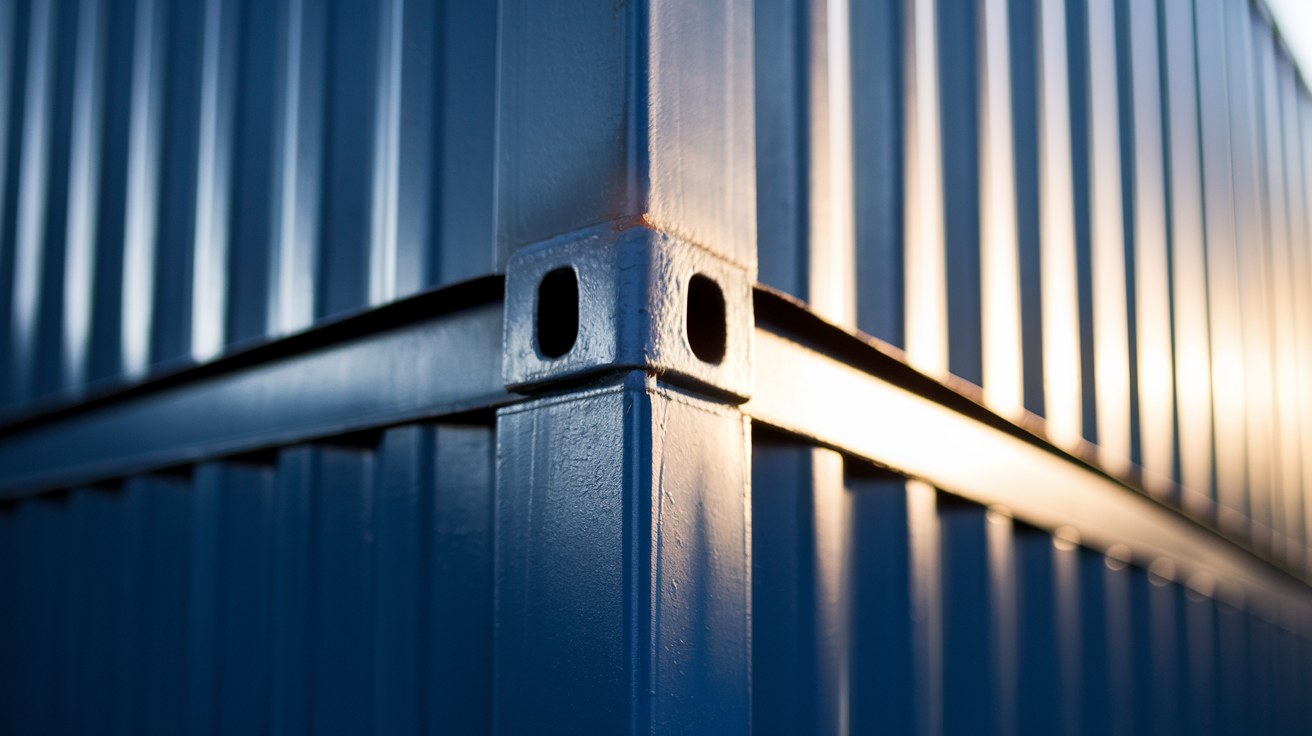
Asia to US East Coast pricing near $9,600 per 40-foot container is the 2026 high on that lane, and the spread over the West Coast, roughly $2,400 as of Drewry’s September 3 print, is the operative number for anyone buying east of the Alleghenies.
We buy Northeast inventory out of depots that are already on this coast, and the pattern we watch after an East Coast rate spike is a lag rather than a jump. Quotes we are writing this month cover units that were booked, sailed, and landed before the September surcharges existed. The move typically shows up six to ten weeks later, in the one-trip column, and it is typically a couple hundred dollars rather than a step change. Buyers who call in late October asking why the price moved are usually looking at a ship that left in August.
Two adjacent facts keep this from becoming a scramble. The Port of New York and New Jersey handled 2.2 million import TEU through the first half of 2026, off 0.2% against the same period last year, so Northeast demand is holding roughly level. And used domestic stock is not exposed to any of this, which is part of why the more affordable buying paths look better in a fall like this one.
Will One-Trip Container Prices Rise in the Northeast This Fall?
One-trip prices in the Northeast are likely to firm modestly, with the move landing in late October and November, not this month. Container Sales Group’s 2026 cost and pricing guide puts one-trip 20-foot units at roughly $2,500 to $4,500 delivered across most US markets and one-trip 40-foot high cubes at roughly $3,500 to $5,500 as of mid-2026, ranges wide enough to show that regional position already outweighs any national average. For a Lehigh Valley buyer pricing a one-trip 20-foot unit for a fall equipment build, the practical read is that a September quote is worth locking rather than shopping for three more weeks.
Two things would undo that. East Coast demand could soften after peak season, which historically pulls general rate increases back out within weeks, or Gatun Lake could recover enough for the canal to restore draft. Neither runs on a schedule, and we sell containers rather than forecast freight, so treat these as ranges with an as-of date attached.
The used side should sit still. Used 20-foot units have been running roughly $1,300 to $2,000 and used 40-foot units roughly $2,000 to $3,200 through 2026 depending on grade and location, per Container Management’s 2026 cost guide, as of September 2026. Those used shipping containers are already in North American depots. No canal restriction, no per-TEU surcharge, and no general rate increase touches them.
How to Buy Around the Coast Spread
First, price the used option and the one-trip option on the same day, from the same seller, delivered to the same address. The coast spread only reaches you if the unit’s ocean voyage is still ahead of it. Putting both on one quote sheet turns a freight story into a number you can act on, and our overview of the different container types for sale covers what you give up going used.

Second, ask where the unit is physically sitting today. Depot location is the biggest swing factor in a delivered price after grade, and it is the question buyers ask least. The same used 20-foot unit can differ by four figures between a coastal surplus market and an inland yard on trucking alone, which is why any national price list is a starting point instead of a quote. Our guide to where to buy used shipping containers covers how dealers, brokers, and listing sites differ on that point, and matching shipping container dimensions to your site access keeps you from buying a size the driveway cannot take.
Third, lock the delivered price rather than the container price. Ocean surcharges reach you through the box’s cost basis; placement reaches you through fuel, permits, and the equipment your site requires. Our delivery and placement guide covers the site side, and our piece on negotiating container prices covers which lines on a quote actually move.
Fourth, grade the box on the box. Which coast a unit came through says nothing about its floor, its gaskets, or its door seal, so run the same inspection checklist either way.
Your step this week does not require calling anyone. Pull two delivered quotes to your address, one for a used cargo-worthy unit and one for a one-trip unit, and divide each by usable interior square feet. Then check this Thursday’s Drewry World Container Index print. If the Asia to New York leg is still climbing, the one-trip quote in your hand is the better of the two you will see this quarter.
The Bottom Line
A 47.5-foot draft limit in Panama and three per-TEU surcharges do not change what a container is worth sitting in a Northeast yard. They change what the next one costs to get here. One-trip inventory landing on this coast this fall carries a higher cost basis than the units already here, and that difference should surface in quotes around late October. Used cargo-worthy stock is untouched by it, which makes this a good quarter to price both and buy whichever wins on delivered cost per usable square foot.
We quote the delivered number, we tell you where the unit is sitting and what grade it actually is, and we will say plainly when the used box is the better buy. For new and used shipping containers across New York, New Jersey, and the wider Northeast, request a quote today.
Note: we use AI to help draft market-analysis pieces like this; a team member edits every article before it publishes.
Sources: Drewry World Container Index, September 3, 2026 assessment; Panama Canal Authority Neopanamax draft advisories, August and September 2026, circulated via GAC Hot Port News; Supply Chain Dive reporting on carrier Panama Canal surcharges, August and September 2026; The Loadstar and Sourcing Journal coverage of Asia to US East Coast spot rates, blank sailings, and 2026 general rate increases; Port Authority of New York and New Jersey first-half 2026 cargo volumes; Container Sales Group 2026 shipping container costs and pricing guide; Container Management 2026 shipping container cost guide.