
Lunar New Year falls on Saturday, February 6, 2027, 11 days earlier than the February 17 holiday in 2026, which pulls the last reliable China departure for a one-trip container order back to early or mid-January. A Northeast buyer who wants a new 20-foot or 40-foot high-cube on a gravel pad by April is closer to that cutoff than the calendar suggests, because factory output starts falling two to three weeks before the holiday and full capacity often does not return until mid-March.
Below we cover what the early date changes for departure deadlines, what the freight forecasts say about January, why used containers already standing in Northeast depots sit outside the holiday, when a one-trip order placed in November could reach a yard, and three questions to settle with a seller this week. Our running read on the trends shaping the container sales industry has treated the Chinese factory calendar as one of the few dates that moves one-trip supply every year.
How Much Does an Early Lunar New Year Change China Departure Deadlines?
An early Lunar New Year moves the last reliable China departure for a one-trip container into the first half of January 2027. CargoLinked’s 2027 shipping calendar, checked on August 16, 2026, tells importers to assume that cutoff and to set a written cutoff with each supplier, and it cites Flexport’s estimate that factories run closed or at reduced capacity for at least four weeks and Maersk’s note that output starts falling two to three weeks before the holiday. A Hudson Valley farm-stand owner who wants a new 20-foot unit by mid-April is working backward from a January sailing, which puts the real decision date in December.
SEKO Logistics published a planning timeline on October 28, 2026 that recommends finishing production in late November or early December, booking ocean space in December or January at least three weeks before cargo is ready, and adding one to two weeks of transit buffer. SEKO wrote it for general China-to-UK freight and not for containers, so treat the sequence as a template and ask your seller for its own dates. CargoLinked adds that China’s State Council usually publishes the official holiday window around November, so the exact days off are still unannounced.
What Current Freight Forecasts Say About January
Two respected forecasts point in different directions for the same month. Xeneta’s October 1 update put Far East to US East Coast spot rates at $11,523 per 40-foot container and expected them to ease to roughly $6,000 to $7,000 in about three months, which is January, while Freightos expects rates to rise again from a higher baseline ahead of Lunar New Year, according to Tradlinx’s October 5 summary of both. Drewry’s World Container Index for October 22 sits between them, with the composite up 2 percent to $4,585 per 40-foot container, its highest level in 15 weeks, and Shanghai to New York up 1 percent to $10,166.
The freight rate matters less to a Northeast quote than the sailing date does. In our experience, a move in ocean freight reaches a one-trip quote six to ten weeks later and as a couple hundred dollars, and Container Sales Group’s 2026 pricing guide puts one-trip 20-foot units at roughly $2,500 to $4,500 delivered and one-trip 40-foot high cubes at $3,500 to $5,500 as of mid-2026. Our guide to affordable ways to buy shipping containers covers where that range gives and where it does not.
The USTR date lands in the same window. USTR proposed on October 23 to keep its Section 301 ship fee suspended through January 9, 2027, per gCaptain, and a vessel that sails in mid-January reaches a US port after that date. If the pause is not extended again, a mid-January sailing arrives on the exposed side of the restart, so a holiday question and a fee question can attach to the same box.
Do Used Containers in Northeast Depots Follow the Chinese Calendar?
No, a used container already standing in a North American depot has no ocean voyage ahead of it, so the holiday does not touch its supply. Eveon’s market monitor, checked on October 30, 2026, put the US average used price at $1,759 for a 20-foot and $2,260 for a 40-foot high-cube, up 1.24 percent and 1.23 percent over the trailing 12 months. A cargo-worthy 20-foot that has sat in a Pennsylvania depot since last year is priced against local demand and delivery distance, and Container Management’s 2026 cost guide puts delivery within 100 miles of a depot at $350 to $850 as of September 2026.
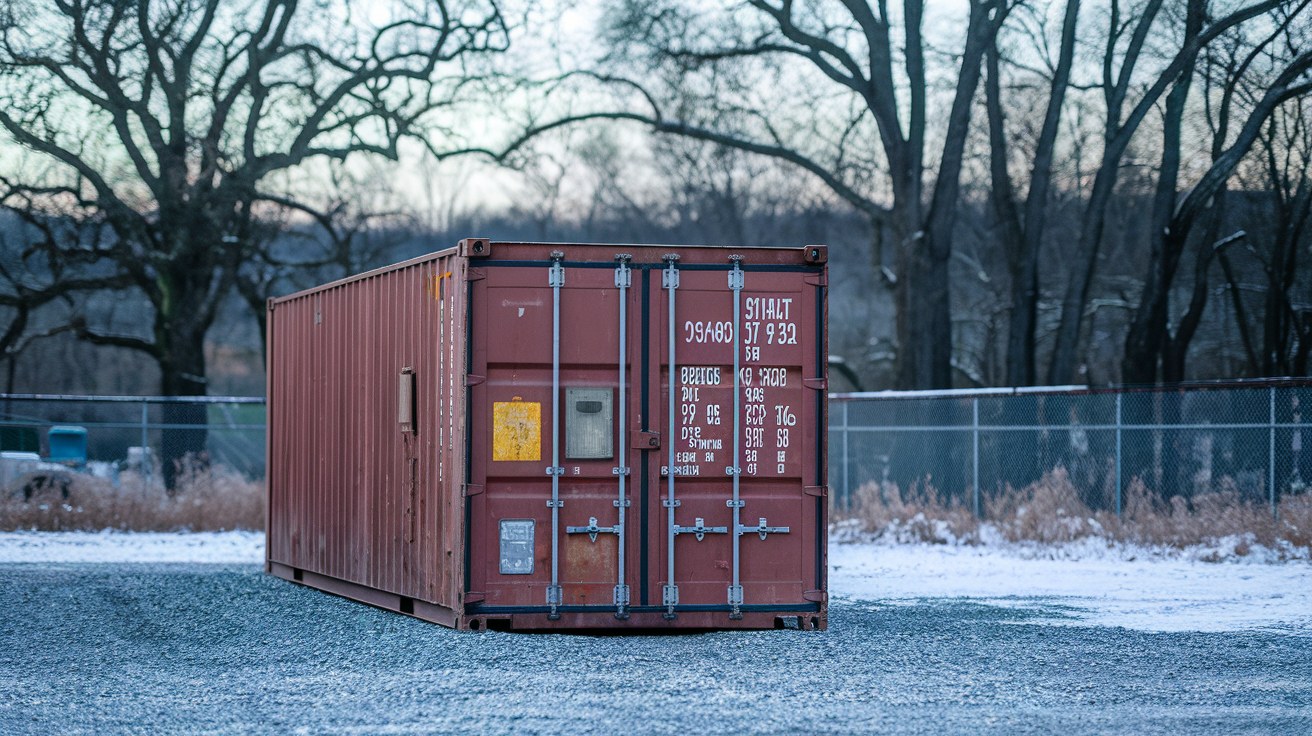
Northeast used inventory has its own calendar. In our experience, used and one-trip stock in the region tightens each March as ADU and construction season starts, and $200 to $400 moves on a 20-foot cargo-worthy unit are common in those weeks. That is a pattern from our desk and not a count of orders. This year the March squeeze meets the holiday recovery, because SEKO expects production to take several weeks to return to normal in February and March, which means the first one-trip units to sail after the holiday reach a Northeast yard in April at the earliest by our reading of that timeline. Our guide to where to buy used shipping containers covers how to tell domestic stock from inbound stock before you commit.
When Would a One-Trip Order Placed in November Reach a Northeast Yard?
A one-trip unit that is not yet on the water and sails by mid-January can reach a Northeast depot in late winter, and one that misses the cutoff arrives in April or later. SEKO’s timeline has cargo leaving port in January with a one-to-two-week transit buffer and production recovering through February and March, and ocean transit, port dwell, and delivery from the depot add several more weeks on top. A Rockland County contractor who signs a one-trip 40-foot high-cube order on November 15 for a March jobsite office is inside the window only if the seller can name the sailing date.
The site has a calendar of its own. Frozen ground in February and March limits what a delivery vehicle can reach, and a pad that was not built before the freeze may wait for the thaw. Our delivery and placement guide lists what the site needs to be ready for once a date is set, and a unit that lands in April on a finished pad beats a unit that lands in March with nowhere to go.
Three Questions to Settle Before You Place a One-Trip Order

First, ask whether the unit is in a Northeast yard, on the water, or not yet shipped. A unit in a yard has a delivery date you can plan around. A unit not yet shipped has a sailing date, an arrival date, and a holiday in between, and the seller should be able to state all three. Our advice on negotiating container prices applies here, since delivery terms tend to have more give than the unit price.
Second, ask what happens to the price if the sailing slips past the holiday. A delivered price with a stated sailing date and a stated cap on pass-through is worth more than a lower price with neither. Ask the same question about government fees, because a mid-January sailing can meet both the restart question and the factory slowdown.
Third, decide whether a used cargo-worthy unit does the job. For tool storage or retail overflow it usually does, and it can arrive on a domestic timeline. Our inspection checklist shows how to separate a cosmetic problem from a structural one, and the shipping container dimensions guide helps you settle 20-foot or 40-foot before you call.
The Bottom Line
Lunar New Year falls on February 6, 2027, the last reliable China departure for a one-trip unit is early to mid-January, and used containers already in Northeast depots are outside the holiday. Freight forecasts disagree about January, so the sailing date in your quote tells you more than the ocean rate does.
Your step this week costs nothing. Pull any one-trip quote you hold, find the line that states where the unit is today and when it ships, and email the seller asking for both dates in writing. If the quote has no such line, you have learned that before you paid a deposit.
We can tell you which units are standing in a Northeast depot today, which are inbound, and what the delivered number is for your address. For used containers across New York, New Jersey, and Pennsylvania, request a quote today.
A note on how this article was written: we use AI to help draft and research pieces like this, then a Giant Lockbox team member edits for accuracy and voice. Here’s how and why we use AI in our content.
Sources: SEKO Logistics, Chinese New Year 2027 Shipping and Factory Closure Deadlines, October 28, 2026; CargoLinked, Shipping Calendar to Chinese New Year 2027, checked August 16, 2026, citing Flexport and Maersk guidance; Xeneta market update, October 1, 2026, as reported by FreightWaves on October 6, 2026; Tradlinx, Asia-US Freight Rates Near a Peak as Blank Sailings Increase, October 5, 2026; Drewry World Container Index, October 22, 2026; gCaptain, USTR Proposes Extending China Ship Port Fee Suspension Through January 2027, October 23, 2026; Eveon Containers, Market Monitor, accessed October 30, 2026; Container Sales Group, 2026 pricing guide; Container Management, 2026 cost guide.