
Two clocks are running on container buyers this month, and they’re both about to hit zero. Ocean freight costs have climbed to a four-year high, with the price of moving a 40-foot container from East Asia to the West Coast up 120% in six weeks, according to Bloomberg’s July 7 coverage. And in late July, a new round of U.S. import duties — 10% to 12.5% on goods from roughly sixty countries — takes effect, stacking on top of the steel and aluminum tariffs already in place since early 2026. Every new container on a U.S. lot came off a ship, which means both of those costs are headed for the sticker price.
The window between now and the end of the month is the story. Buyers who lock in pricing on used inventory — units already on U.S. soil, already through customs, already exempt from whatever lands in late July — are shopping a different market than buyers who wait for August. Here’s what the numbers say, what changes when the duties take effect, and the three moves worth making before the calendar turns.
What the Numbers Are Saying
Start with the freight side, because that’s where the surge is sharpest. Drewry’s World Container Index jumped 9% in a single week to $4,530 per 40-foot container on July 2, driven by rate increases on the trans-Pacific and Asia–Europe lanes. The Platts Container Index has climbed roughly 80% in just thirty days — a run not seen since the Red Sea disruptions — and Bloomberg reports the East Asia to U.S. West Coast lane has more than doubled since late May, reaching $6,200 per 40-foot box.
Behind the spike is an early, compressed peak season. Shippers are pulling cargo forward to beat the late-July duties, carriers are holding capacity discipline with blank sailings and peak season surcharges, and Drewry expects rates to keep rising in the coming weeks. That combination — surging demand, restrained capacity, a hard policy deadline — is the same recipe that produced the price run-ups buyers remember from earlier in the decade, just on a smaller scale.
None of this is happening in a vacuum. It’s the continuation of the dynamics we flagged in our overview of the key trends shaping the shipping container sales industry — trade policy and freight economics driving the retail price of the box in your driveway. What’s different now is that the deadline is no longer hypothetical. It has a date, and the date is this month.
What Actually Changes in Late July
The duties taking effect in late July add 10% to 12.5% on goods from roughly sixty countries, per Bloomberg’s reporting. They land on top of the tariffs introduced in early 2026, which put 10% to 25% on steel, aluminum, and manufactured goods from Asia — a category that covers both newly manufactured and refurbished steel containers, as K & K International noted in its 2026 tariff analysis. China still builds the overwhelming majority of new containers sold in the U.S., so there is no meaningful way to buy a new one-trip unit that doesn’t carry the import-cost load.
Industry trackers have been modeling what that means for retail pricing all year. Spinnaker Equipment’s 2026 guide projects bulk container prices could rise 15% to 35% through the year, depending on size, type, and sourcing. Today’s new one-trip pricing runs from roughly $2,500 for a 20-foot unit to $7,000 for a 40-foot high cube, per Metal-Buildings.org’s 2026 cost guide. Apply even the low end of the tariff-driven range and the math changes fast — a $7,000 high cube at 15% is over $1,000 of new cost that didn’t exist in the spring.
We’re a dealer, not a forecaster, and we won’t pretend to know exactly where new-unit pricing settles by fall. But the direction is not in dispute among the people who track this market for a living. Import costs are rising on two fronts at once, and new container prices follow import costs the way a trailer follows a truck.
Why Used Inventory Is the Buyer’s Hedge

Used containers are the one corner of this market the late-July duties can’t touch. A used 20-foot unit sitting in a Northeast depot cleared customs years ago. It carries no new tariff exposure, no ocean freight surcharge, no peak-season repositioning cost. Current used pricing — roughly $1,200 to $2,800 for a 20-foot and $1,800 to $3,500 for a 40-foot, per Metal-Buildings.org — reflects a domestic market, and domestic supply is what insulates it.
That doesn’t mean used prices stand still. When new-unit costs jump, demand spills over to used inventory and tightens resale supply — the same spillover we saw building in the spring, now with a firmer catalyst. The buyers who move first benefit. The buyers who wait pay the spillover.
There’s one honest caveat, and it matters more in 2026 than it used to: the used fleet is aging. Containers historically entered the resale market at 7 to 15 years old; today many aren’t released until 10 to 20 years, according to Arcon Container’s 2026 outlook. An older fleet means inspection separates the good buys from the money pits. Our guide on what to look for when buying a shipping container covers the checklist — floors, door gaskets, corner posts, roof seams — and our overviews of where to buy used shipping containers and affordable options for buying containers walk through how to vet the dealer as carefully as the box.
How the Freight Spike Reaches Your Driveway
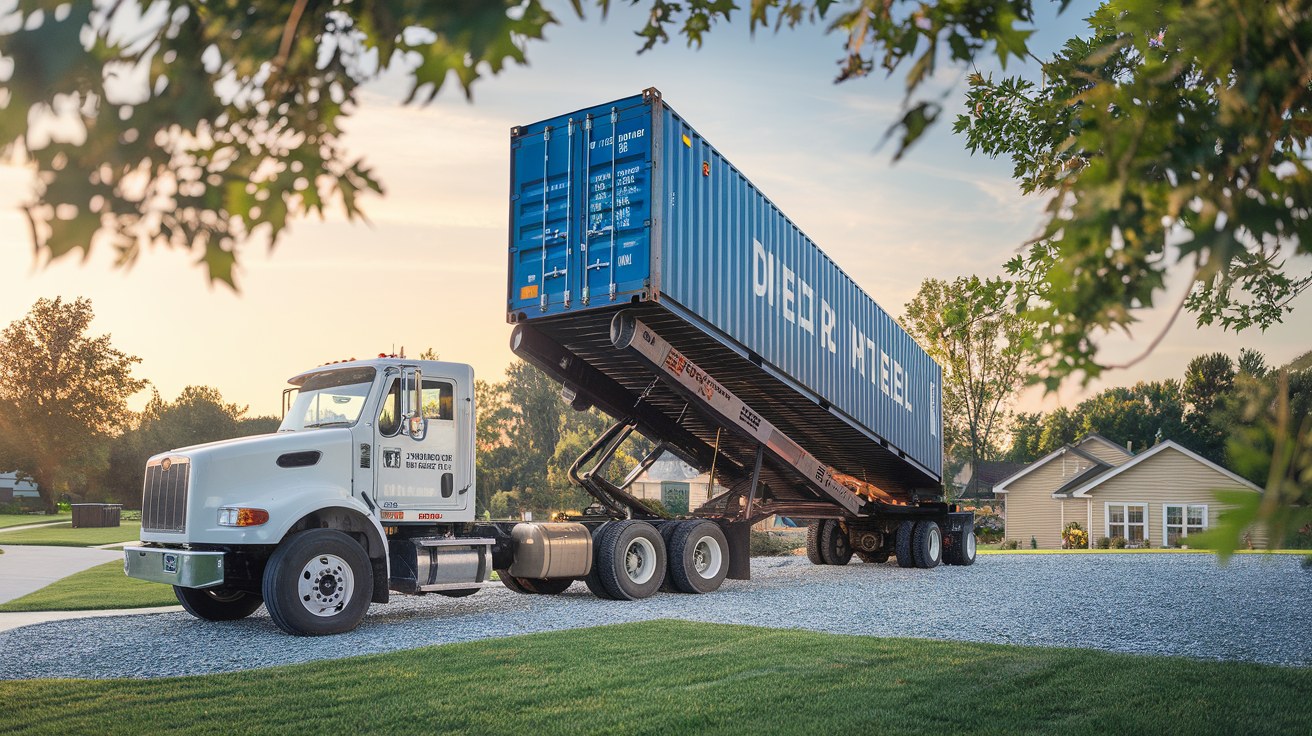
It’s fair to ask why an ocean freight index should matter to someone buying a storage container in Pennsylvania. The answer is that the resale market is fed by the freight market. When shipping rates spike, carriers work their boxes harder — repositioning them to high-paying export lanes instead of retiring them into the resale pipeline. Fewer boxes released means tighter depot inventory, and tighter depot inventory means firmer used pricing even though used units carry no tariff. As Muwon USA put it in its July market outlook, buyers right now should focus on delivered costs rather than headline prices — the quote that matters is the one with the container on your ground.
The regional picture, at least, favors Northeast buyers. The Port of New York and New Jersey was the nation’s busiest cargo gateway as recently as March, moving 837,993 TEUs in the month — up 6.9% year over year, per Port Authority data. A high-volume gateway keeps regional depots stocked, which is why availability across our New York, New Jersey, and Pennsylvania markets remains solid in both used and one-trip condition. Supply isn’t the problem this summer. Price direction is.
Three Moves Worth Making Before August
If a container purchase is anywhere on your 2026 plans, the next few weeks reward action over analysis.
First, get a written quote and ask how long it holds. Reputable dealers will hold pricing for a defined window — typically 14 to 30 days. A quote issued this week reaches across the late-July deadline; a quote requested in mid-August prices in whatever happened. If you want to sharpen the number before you commit, our primer on negotiating shipping container prices covers what’s actually flexible in a firming market — hint: less than in a soft one, which is itself a reason to move.
Second, settle the size question against your site, not the price sheet. The per-square-foot math usually favors a 40-foot unit, but tilt-bed delivery of a 40-footer needs roughly 100 feet of straight-line clearance, and plenty of residential and small-commercial sites simply don’t have it. Our shipping container dimensions guide lays out the true footprints, and if the site says 20-foot, current 20-foot inventory is the segment where used pricing remains most accessible.
Third, have your delivery plan ready so the quote window doesn’t expire while you prep. Ground firmness, leveling, overhead clearance, truck access — the delivery and placement guide covers the checklist. The buyers who lose their window usually don’t lose it at the negotiating table. They lose it waiting on a gravel pad.
The Bottom Line
July 2026 is a deadline market. Freight costs are at a four-year high and still climbing. New duties covering sixty countries arrive in weeks, on top of tariffs already priced into every imported box. Used inventory — domestic, landed, duty-exempt — is the hedge, and it stays a hedge only as long as spillover demand hasn’t repriced it. It’s not a crisis. It’s a countdown.
If you’re weighing a purchase for storage, a job site, a modification project, or a build, our team can quote current new and used inventory, hold that pricing through the deadline window, and walk you through delivery for your specific site. Request a quote today — this month, the date on the quote matters as much as the number.
Sources: Drewry World Container Index (July 2, 2026); Bloomberg/BNN Bloomberg tariff and shipping-rate coverage (July 7, 2026); Trading Economics Containerized Freight Index (July 6, 2026); Spinnaker Equipment 2026 tariff impact guide; K & K International 2026 tariff analysis; Metal-Buildings.org 2026 container cost guide; Arcon Container 2026 market outlook; Muwon USA July 2026 market outlook; Port Authority of New York and New Jersey cargo statistics.