
The rush that defined the container market all summer just hit its high-water mark. U.S. container imports are on track to set an all-time monthly record in July — roughly 2.47 million TEUs, enough to top the 2.4 million record set in May 2022, according to the National Retail Federation’s Global Port Tracker. And ocean freight, which spiked to a 22-month high of $4,639 per 40-foot container on July 9, has since fallen for two straight weeks, sliding to $4,374 in Drewry’s July 23 assessment. The wave crested. What comes next is the part worth planning around.
Two things are true at the same time this week. The market that has been climbing since spring is finally cooling, and yet the temporary tariff that helped drive the rush expires today, with a bigger one expected within weeks. That combination — easing freight, a record now in the rearview, and a policy cliff still ahead — makes the next stretch a genuine window for buyers of used inventory and one-trip units alike. It’s a narrow window, though, and reading it correctly matters. Here’s what the numbers say, why the peak passed when it did, and the moves that make sense in a quieter market.
What the Numbers Are Saying
Start with freight, because that’s where the turn is clearest. Drewry’s World Container Index climbed to $4,639 per 40-foot container on July 9 — the highest reading since September 2024 — then reversed, declining about 4% in the week to July 23 to land at $4,374, its second straight weekly drop. Rates are still running roughly 40% above where they sat at the start of 2026, so nobody should mistake this for a collapse. But the direction has flipped, and that’s news after months of one-way movement.
On the volume side, the story is a record that’s already being made. Imports through the nation’s major container ports are forecast at 2.47 million TEUs for July, per the NRF and Hackett Associates — an all-time monthly high. That is not a sign of underlying demand; it’s front-loading. Retailers and importers pulled cargo forward to beat an expected tariff change, stacking back-to-school and early holiday inventory into a single compressed peak. This is the July 2026 chapter of a story we’ve been tracking all year in our overview of the key trends shaping the shipping container sales industry — trade policy and freight economics setting the retail price of the box that lands in your driveway.
The reason freight is already easing is that the front-loading is mostly done. When everyone rushes the same door at once, the crush clears fast. The July record is the crest, and the water is starting to recede.
Why the Wave Crested When It Did
The catalyst has a date, and the date is today. A temporary 10% Section 122 global tariff took effect back in February and is set to expire on July 24, according to Sourcing Journal’s reporting. Importers spent the early summer racing to land cargo under known costs before that expiration and before whatever replaces it — which is exactly the behavior that produced a record July and a freight spike in the same month.
What the NRF’s own forecast shows next is a demand cliff. After July’s 2.47 million TEUs, the group projects August imports falling to 2.22 million — down 4.5% year over year — followed by 1.99 million in September, 1.99 million in October, and 1.92 million in November. Every one of those months is projected below the prior year. When you pull months of buying into a single summer, you borrow that volume from the fall, and the fall pays it back with a slump.
For the container resale market, a demand cliff on the import side is a mixed signal. Fewer boxes moving means carriers eventually have less reason to hoard equipment on export lanes, which over time loosens the supply of retired units feeding the used market. But that’s a lagging effect measured in months, not days. The near-term read is simpler: the panic-buying pressure that was firming prices in June and early July has eased, and buyers who sat out the rush are looking at a calmer market than they were three weeks ago.
The Tariff Cliff Is Still Out There
Cooling freight is not the whole picture, and it would be a mistake to treat the easing as an all-clear. The Section 122 tariff expiring today is expected to be followed by a new round of Section 301 duties on roughly sixty trading partners as early as August, per Sourcing Journal. New and one-trip containers carry the heaviest exposure to that kind of cost, because the overwhelming majority of new units sold in the U.S. are still built in Asia from imported steel.
The steel math is what makes this stick. Steel accounts for 50% to 60% of the cost of manufacturing a shipping container, and Corten — the weathering steel containers are built from — has settled around £650 to £750 per tonne in 2026 after years of violent swings, per industry cost trackers. A stable raw-material price is good news, but tariffs are layered on top of it, and industry analysts including Spinnaker Equipment have projected bulk container costs rising 15% to 35% through the year once duties are fully in effect. New one-trip pricing today runs from about $2,500 for a 20-foot unit to $7,000 for a 40-foot high cube, per Metal-Buildings.org’s 2026 cost guide — and it’s the top of that range that has the most room to move if the August duties land as expected.
We’re a dealer, not a forecaster, and we won’t pretend to know the exact number a 40-foot high cube carries in October. But the setup is not ambiguous. Freight is easing now; import-cost pressure on new units is building for later. Those are two different clocks, and they’re telling buyers to look hard at what’s already on the ground.
What the Cooling Means if You’re Buying Used

Used containers are the part of this market least exposed to any of it. A used 20-foot unit sitting in a Northeast depot cleared customs years ago — it carries no new tariff, no peak-season freight surcharge, no repositioning cost. Current used pricing runs roughly $1,200 to $2,800 for a 20-foot and $1,800 to $3,500 for a 40-foot, per Metal-Buildings.org, with delivery adding anywhere from $300 to $2,500 depending on distance from the nearest yard. Our affordable options for buying shipping containers overview breaks down where those numbers land for cost-conscious buyers.
The cooling helps here in a specific way. Through the spring and early summer, spillover demand from buyers priced out of new units was firming resale pricing. With the front-loading rush spent and freight rolling over, that spillover pressure is lighter than it was — which makes the next few weeks a better moment to shop used than the middle of the surge was.
One honest caveat, and it matters more in 2026 than it used to: the used fleet is aging. Containers historically hit the resale market at 7 to 15 years old; today many aren’t released until 10 to 20 years, according to Arcon Container’s 2026 outlook. An older fleet means inspection is where the deal is won or lost. Our guide on what to look for when buying a shipping container covers the checklist — floors, door gaskets, corner posts, roof seams — and our walkthrough of where to buy used shipping containers covers how to vet the dealer as carefully as the box.
Three Moves for a Quieter Market
A cooling market rewards preparation over panic. If a container is anywhere on your 2026 plans, three moves make sense right now.
First, use the lull to negotiate, not to wait. A softer market gives you more room than the June rush did, but that room closes if the August duties reset expectations. Our primer on negotiating shipping container prices covers what’s actually flexible — and a two-week freight decline is exactly the kind of leverage worth naming when you ask for a number. Get the quote in writing and ask how long it holds; reputable dealers will lock pricing for 14 to 30 days.
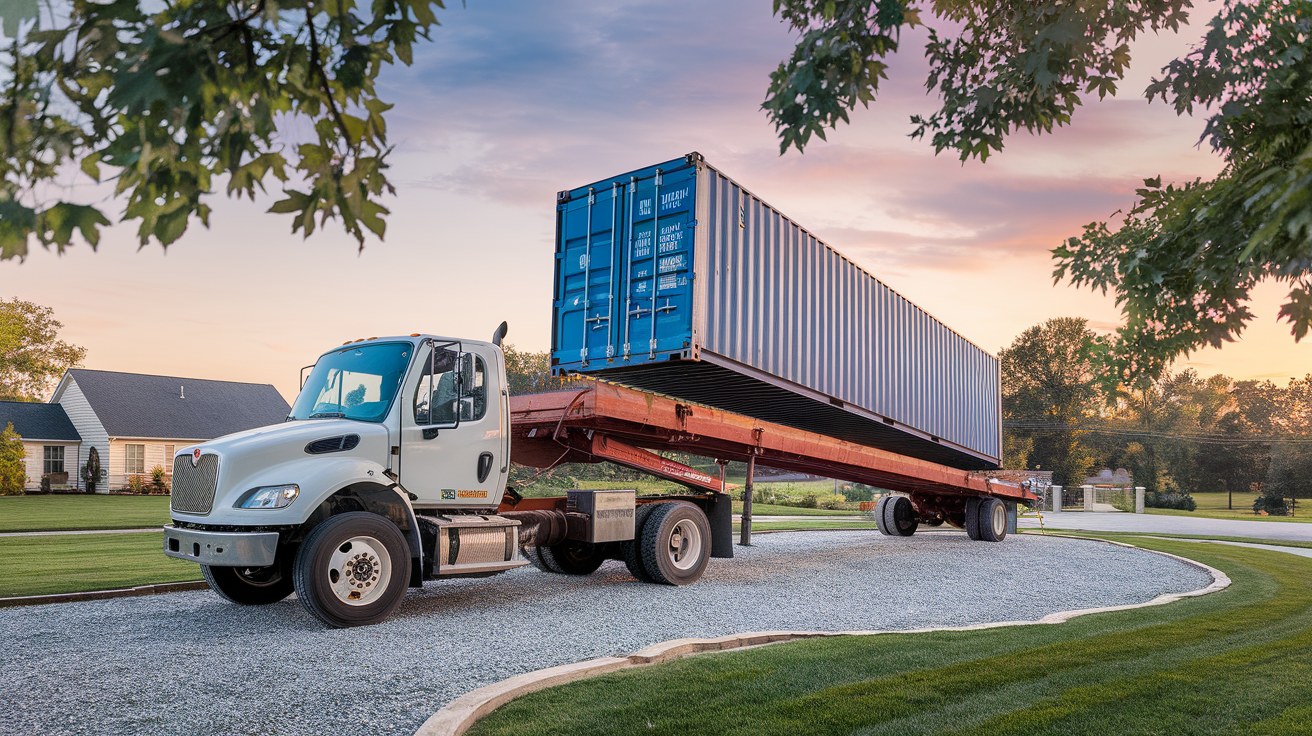
Second, size to your site before you size to the price sheet. The per-square-foot math usually favors a 40-foot unit, but tilt-bed delivery of a 40-footer needs roughly 100 feet of straight-line clearance, and plenty of residential and small-commercial lots don’t have it. Our shipping container dimensions guide lays out the real footprints, and if the answer is 20-foot, current 20-foot inventory is where used pricing stays most accessible.
Third, have your delivery plan ready so a quote doesn’t expire while you prep the ground. Firmness, leveling, overhead clearance, truck access — the delivery and placement guide covers it. Regional supply favors Northeast buyers this summer: our New York, New Jersey, and Pennsylvania yards stay well stocked in both used and one-trip condition, so the box isn’t the bottleneck. The prep usually is.
The Bottom Line
The summer surge crested this month. Freight is easing off a 22-month high, July set an import record that August won’t come close to matching, and for a few weeks the pressure that firmed prices has let up. But the temporary tariff driving the rush expires today, and a bigger one is expected within weeks — pointed squarely at new and one-trip units. The read is straightforward: this is a window, it favors buyers who move while it’s open, and it favors used inventory most of all. It’s not a crash. It’s a breather before the next bill comes due.
If you’re weighing a purchase for storage, a job site, a modification project, or a build, our team can quote current new and used inventory, lock that pricing before the August changes, and walk you through delivery for your specific site. Request a quote today — the quiet part of the market is the part you want to catch.
Sources: National Retail Federation / Hackett Associates Global Port Tracker (July 2026); Drewry World Container Index (July 9 and July 23, 2026); IndexBox freight-rate coverage (July 2026); Sourcing Journal tariff reporting (July 2026); Spinnaker Equipment 2026 tariff impact guide; Metal-Buildings.org 2026 container cost guide; ContainerEU 2026 steel and container-cost analysis; Arcon Container 2026 market outlook.