
Something is shifting under the feet of Northeast homeowners thinking about adding a rental unit, a home office, or a multi-generational suite in the backyard. New York City just opened the financing window for legal accessory dwelling units across the five boroughs. New Jersey’s legislature is moving on a bill that could mandate ADU allowance statewide. Massachusetts crossed 1,200 permitted ADUs in the first year of its program. For shipping container buyers, the rules of who can put what behind the main house are changing faster than they have in fifty years.
The container fit isn’t perfect for every ADU project. It is, however, increasingly the right answer for a specific Northeast homeowner: a buildable lot in a suburban or transit-adjacent neighborhood, a budget that doesn’t stretch to $500-per-square-foot stick-built construction, and a timeline measured in months rather than years. Our overview of alternative living spaces using shipping containers is the right starting point — from there, the question is which new ADU pathway actually opens a buildable opportunity in your town.
What Just Changed in the Northeast
The biggest move came in New York City. The City of Yes for Housing Opportunity rezoning, passed by the Council in December 2024, legalized backyard cottages, garage conversions, and basement apartments as ADUs citywide, capped at 800 square feet on the same lot as a one- or two-family home. In March 2026, Mayor Mamdani’s administration reopened the Plus One ADU financing program after a two-year pause. The NYC Department of Buildings has received 98 ADU filings this year — roughly half in the last two months alone, per The City and 6sqft — and the first Plus One window drew about 2,800 homeowner inquiries, concentrated in Queens, Staten Island, and the Bronx.
New Jersey is one bill away from a similar shift. State Senate bill S1786 would require every municipality to permit ADUs on single- and two-family lots, treat approval as a ministerial action without public hearing, and bar HOAs from blocking construction. If it passes, the playing field flips. Opposition from the New Jersey League of Municipalities is real, but the directional momentum across the Northeast is hard to miss.
The pattern repeats outside the two biggest markets. Massachusetts permitted 1,224 ADUs across 217 communities in year one of its statewide program. Connecticut and Rhode Island have moved on their own reforms. And the 2025 Building Code of New York State now defines standards for intermodal containers used as structures — a frame of reference instead of a case-by-case argument every time.
Where Containers Actually Fit in the New ADU Picture
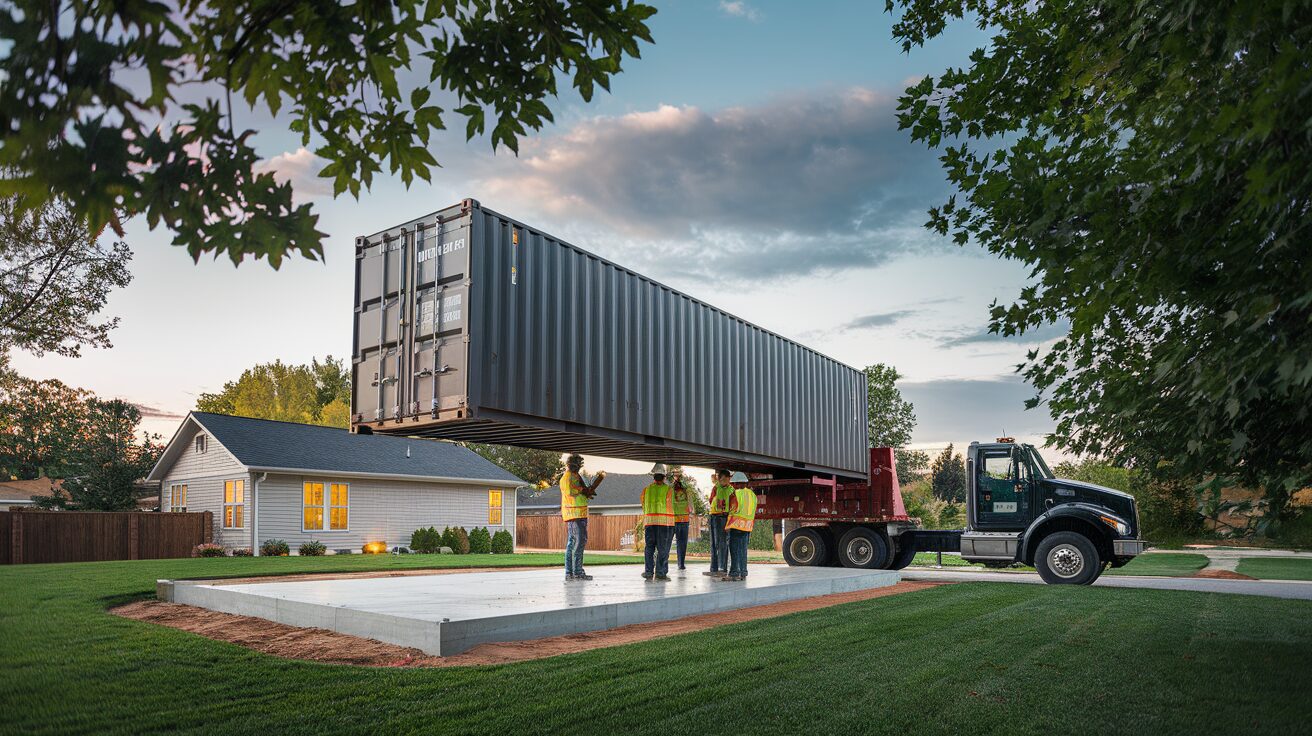
Not every ADU pathway is a container opportunity. Basement, attic, and garage-interior conversions are stick-built territory. Where shipping containers genuinely compete is the freestanding backyard ADU on a buildable lot — the use case City of Yes legalized in NYC and S1786 would mandate statewide in New Jersey.
For a 320-square-foot cottage built around a single 40-foot container, the economics get interesting. Container ADUs run $150 to $350 per square foot delivered and finished, against $300 to $600 for stick-built ADUs in high-cost Northeast markets, per 2026 pricing guides. A modified container can be set on a prepared foundation in days and weatherized within weeks, while comparable stick-built ADUs run six to twelve months from permit to occupancy. For homeowners trying to capture rental income inside a single calendar year, that timeline difference is the whole pitch. The catalog on our shipping container homes for sale page shows the configurations most buyers work from.
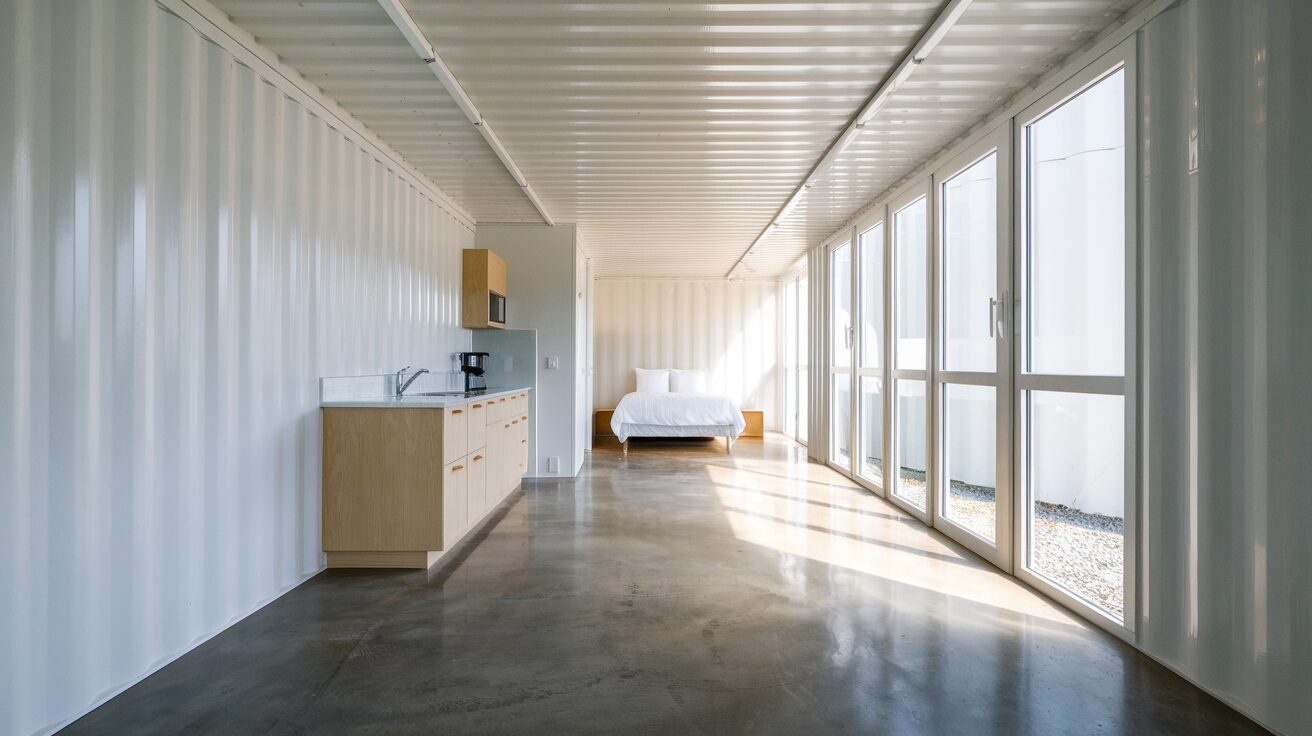
For a basic studio rental, home office, or backyard guest suite, a modified container delivers a finished envelope — insulation, windows, electrical, HVAC, and interior framing — already integrated into a build that doesn’t require months of on-site labor. Our walkthrough of the customization process and the menu in our modification options overview covers what’s standard, what’s a stretch, and what to raise in the design conversation early.
Where They Still Don’t Fit
The honest version of this story is that container ADUs are a wedge, not a sweep. Several real constraints will keep them out of certain Northeast projects.
City of Yes excludes backyard ADUs in NYC’s densest historic and low-density districts — R1, R2, and R3 zones outside transit-accessible areas, plus designated historic districts. That covers a meaningful share of single-family Manhattan and brownstone Brooklyn. Most municipal codes also require architectural review for any non-traditional structure, and container ADUs are non-traditional by any reading. In New Jersey, until S1786 passes, the patchwork of municipal ordinances still governs, and many NJ towns explicitly disallow container-based residential structures regardless of size.
Site access is the constraint buyers most often underestimate. Setting a 40-foot container in a backyard requires tilt-bed clearance — roughly 100 feet of straight-line access plus clear overhead from trees and power lines. We walk the site with you first, and if your access won’t work for the unit you want, we tell you before you pay. Our delivery and placement guide lays out the prep checklist most buyers wish they’d read before the truck showed up, and the shipping container dimensions page covers the exact footprints to verify against your setbacks.
Local design standards matter too. A growing number of NYC and NJ towns require ADUs to be visually consistent with the primary dwelling. A bare-steel container with corrugated walls and stenciled markings is a hard sell to a zoning board in a neighborhood of clapboard colonials. The fix — cladding, peaked roofing, traditional window framing — is straightforward in modification, but it’s a budget line that needs to be in from day one, not month six.
The 2026 Buyer Math
For a homeowner pricing a backyard ADU in a Northeast market that now allows them, the spreadsheet typically lays out three options.
First, full stick-built ADU. Architect, general contractor, framing crew, the full trades roster. Northeast pricing runs $300 to $600 per square foot, with six to twelve months from permit to occupancy. The output is a traditional structure indistinguishable from the main house.
Second, modular ADU drop-and-set. A prefabricated unit trucked in and set on a slab. $200 to $400 per square foot, three to six months. Lower customization than stick-built, faster than a traditional build.
Third, modified shipping container ADU. A used or one-trip 40-foot or 20-foot container modified with insulation, electrical, HVAC, windows, doors, and finishes. $150 to $350 per square foot, set time measured in days, full weatherized completion in two to four months. The output is transport-rated steel — a different durability and security profile than light-frame, and a structure the homeowner could relocate if needed.
The container math gets better when the buyer starts with the right unit. A wind-and-watertight used container in good structural condition is typically half the cost of a new one-trip unit, and most ADU modifications resurface enough of the exterior that the cosmetic differential stops mattering. The inspection checklist in our guide to what to look for when buying a shipping container covers the items that matter most for a unit you intend to convert to living space, and our overview of container types for sale explains the trade-offs between standard, high-cube, and specialty stock.
What Northeast Buyers Should Do Next
If a backyard ADU is on your 2026 calendar, the order of operations matters more than the size of the budget.
First, verify zoning before you do anything else. Call your municipality’s planning office and ask three questions: is an ADU permitted on this lot, what are the size and setback limits, and is a modified shipping container an allowed construction method. Get the answer in writing if you can. For New York and New Jersey buyers, the answer varies block by block. Pennsylvania, Connecticut, and Rhode Island have their own patchworks worth a one-hour call to confirm.
Second, measure the site honestly before committing to a unit size. A 20-foot container will fit a backyard a 40-foot can’t reach, and the price-per-square-foot premium is worth paying when the alternative is an undeliverable 40-foot. Tilt-bed access, gate widths, utility lines, and setbacks all matter at the inch level.
Third, line up the modification scope before purchase, not after. The difference between a one-room studio container and a code-compliant residential ADU is significant — insulation, vapor barriers, egress windows, HVAC, plumbing rough-ins, permitted electrical, finishes, and exterior cladding. Pricing the full scope up front, with the dealer selling the base unit, prevents the surprise that ends most container-ADU projects mid-build.
The Bottom Line
The 2026 ADU wave across the Northeast is real, and the regulatory direction is unmistakably toward more permitted backyard housing in more zoning districts. Shipping containers are a serious option inside that wave for a specific buyer profile — suburban or transit-adjacent lot, mid-range budget, fast-timeline pressure, comfort with non-traditional construction. They aren’t the right answer for every ADU project, and pretending otherwise sets buyers up for the wrong purchase.
The buyers winning here do the zoning homework first, measure the site honestly, and price the full modification scope before signing. The buyers losing money treat the container as the whole project rather than the structural envelope inside a larger build.
If you’re sizing up a container ADU project anywhere in the Northeast, Ohio, or Texas, our team can walk you through current new and used inventory, realistic modification scopes for residential use, and delivery logistics for your specific site. Request a quote today and start the project with answers, not assumptions.
Sources: NYC Mayor’s Office press release on Plus One ADU program (March 2026); The City reporting on Mamdani ADU financing (March 18, 2026); 6sqft NYC ADU filings update (2026); NYC Department of City Planning City of Yes ADU guide; New Jersey Legislature S1786 bill text (2026 session); Massachusetts ADU program one-year update; 2026 Building Code of New York State container provisions; Angi 2026 container home cost data; HomeGuide 2026 ADU and modular home cost data; Conexwest 2026 Northeast container regulations briefs.