
A new market report this spring put a number on something we’ve watched grow in our own yards for years: turning shipping containers into finished commercial space is now a $17.77 billion global business, and it’s compounding at roughly 9% a year. For small business owners in the Northeast weighing a storefront, an office, or a second location against the cost of conventional construction, that growth isn’t an abstraction — it’s a signal that the steel-box conversion has gone from novelty to mainstream, and the economics are the reason.
The story for 2026 isn’t that containers are cheap, though a solid used unit still is. It’s that a modified container delivers a permitted, climate-controlled, lockable commercial space for a fraction of what a stick-built equivalent costs — and it does it on a timeline measured in weeks, not quarters. This piece walks through what the numbers actually say, what buyers are building, what it costs, and how to buy the right base unit before you put a saw to it. A good place to start is our overview of the key trends shaping the shipping container sales industry, because modification demand is now one of the biggest forces holding up resale values.
What the Numbers Are Saying
The headline comes from the Shipping Container Modification Global Market Review, published May 13, 2026, which pegged the global modification market at $17.77 billion in 2025 and projected it to reach $27.59 billion by 2030 — a compound annual growth rate of about 9.1%. The report credits the rise of smart technologies, better insulation, and improved climate-control systems for pushing repurposed containers into uses that would have been impractical a decade ago. Other trackers put the figure somewhat lower, near $13.9 billion, but every credible forecast points the same direction: up, and fast.
That growth is buyer demand, not hype. The same modification appetite that’s expanding the global market is part of why used resale prices have firmed up this year, with used 20-foot units averaging $1,786 nationwide. When more containers get pulled off the resale lot to become offices and cafés instead of plain storage, the supply that’s left gets tighter — a dynamic we covered in our look at innovative methods of shipping container reuse. The category that was once an afterthought now competes head-to-head for the same inventory storage buyers want.
There’s a cost backdrop worth naming, too. Ocean freight spiked hard in early June, with Asia-to-U.S. West Coast spot rates jumping more than 50% as peak season arrived early, and tariffs continue to threaten new-container prices. Both push buyers toward used units as the modification base — the box doesn’t need showroom paint when you’re cutting in windows and doors anyway.
From Box to Business: What Buyers Are Actually Building
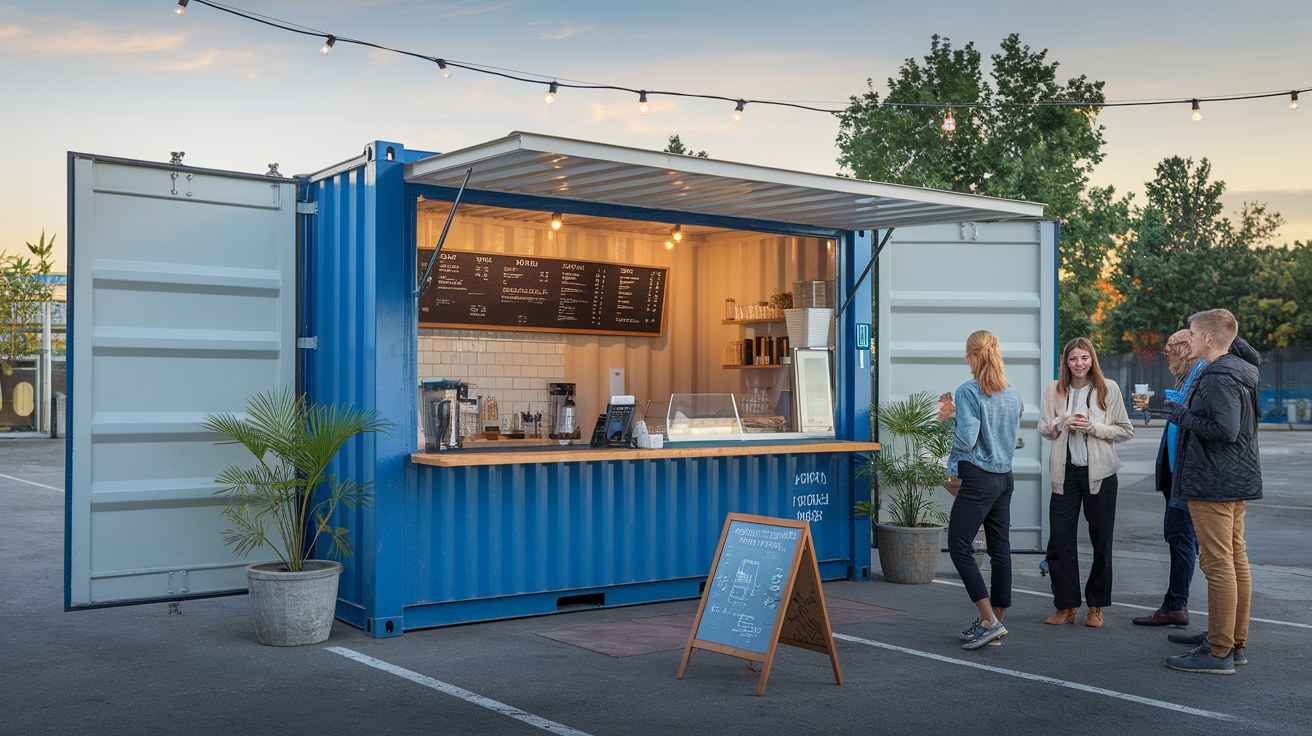
The fastest-growing category is small-format commercial. Coffee shops, juice bars, and specialty food vendors are standardizing on container kiosks because a single design can be replicated across a fleet — same footprint, same brand, same security, dropped onto a new lot in a day. A 10-foot unit makes a compact kiosk, a 20-foot handles a single-bar concept, and a 40-foot fits a full menu with indoor seating. Pop-up retail runs on the same logic: a modified container lets a brand test a seasonal location or launch a product line without signing a multi-year lease, which is exactly why we keep seeing them at markets, breweries, and event sites across New York and New Jersey.
Offices are the other big driver. Contractors, property managers, and small firms are converting containers into climate-controlled workspaces — backyard offices, on-site project trailers, equipment-yard command posts. The portability is the selling point: when the job moves, the office moves. And the security that makes a container good for storage makes it good for an office full of equipment, a point our guide to security features of shipping containers breaks down in detail.
Then there’s the residential edge of the category — guest suites, home offices, and accessory dwelling units. We won’t rehash the full picture here, but the same conversion playbook that builds a café builds a livable space, as our overview of alternative living spaces using shipping containers lays out.
The Cost Case That’s Driving the Trend
Numbers explain the boom better than adjectives. A 20-foot container office conversion typically runs $15,000 to $40,000 depending on finishes, on top of a base container that costs roughly $3,000 to $6,000. On a per-square-foot basis, that pencils out to about $100 to $185 — versus $250 to $500 or more for conventional construction. That’s a finished, professional workspace for 40% to 60% less than building from scratch, and it’s the single biggest reason the conversion market keeps compounding.
Food and beverage builds cost more because the equipment costs more. A container café or restaurant generally lands between $50,000 and $200,000, with entry-level kiosks coming in under that and high-traffic builds with full kitchens and patios running above it. But measure that against the alternative: a traditional coffee shop buildout often demands $80,000 to $300,000 in startup capital before the doors open, frequently in leased space the owner will never own. The container is an asset that moves with the business and holds resale value — a meaningfully different bet than sinking tenant improvements into someone else’s building.
For buyers who want to start smaller, renting a modified container office runs roughly $450 to $850 a month before delivery, which lets a business prove out a use case before committing capital. Whichever path you take, the budget math rewards starting from a sound used unit — our guide to affordable options for buying shipping containers covers where the real savings live before you commit a dollar to finishes.
What Modification Actually Involves
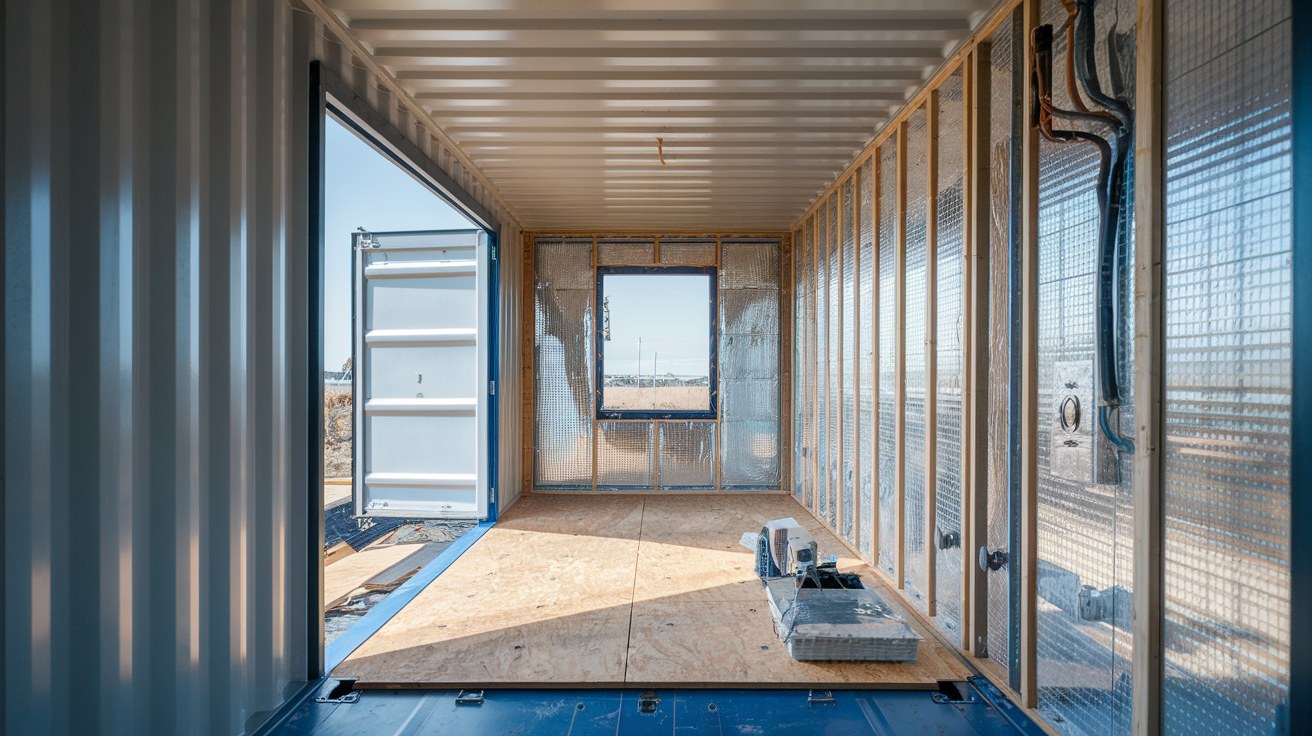
A conversion isn’t magic, but it does follow a sequence, and understanding it keeps your budget honest. Most builds start by cutting openings for doors, windows, and roll-up sections, then framing and reinforcing those cuts so the container keeps its structural strength. Insulation comes next — spray foam or panel, depending on climate and use — followed by electrical rough-in, HVAC, interior wall finishes, flooring, and exterior paint. Our walkthrough of the shipping container customization process lays out that order step by step, and our breakdown of modification options covers the specific add-ons buyers ask about most: roll-up doors, windows, insulation packages, electrical, and climate control.
The detail buyers most often underestimate is climate control, which is exactly where the smart-technology trend the market report flagged is showing up. A steel box in a Northeast winter or a July heat wave needs real insulation and HVAC to function as a workspace or a food operation — and getting that right is the difference between a space that works and one that’s miserable half the year. For temperature-sensitive uses, starting from an insulated container saves a step.
The other underestimated piece is permitting. A container used as commercial or habitable space is subject to local zoning and building codes, and permit costs can range from a few thousand dollars in smaller towns to far more in dense metros. None of that is a dealbreaker — it’s the same process any commercial structure faces — but it belongs in the budget from day one, not as a surprise after delivery.
Buying the Right Base Container
The conversion is only as good as the box under it, and this is where first-time buyers lose money. A modification project resurfaces most cosmetic flaws, so paying a premium for a pristine one-trip unit usually makes no sense — a structurally sound wind-and-watertight used container is the right call for the overwhelming majority of builds. But “structurally sound” is doing real work in that sentence. Floor condition, corner-post integrity, door alignment, and roof seams matter enormously once you start cutting, because a cut redistributes load and any pre-existing weakness shows up fast.
Our checklist on what to look for when buying a shipping container is the inspection we’d run ourselves, and our guide to where to buy used shipping containers covers why buying from a yard you can walk beats buying from a listing photo — doubly true when the unit is the foundation of a build. It’s also worth matching the container size to the job before you buy; our shipping container dimensions guide helps you weigh a 20-foot versus 40-foot footprint against your site and your use case. When you’re ready to compare specific units, our used inventory is the place to start.
The Bottom Line
The modification boom isn’t a fad — it’s a $17.77 billion market growing 9% a year because the math works. A converted container delivers a finished, secure, movable commercial space for 40% to 60% less than conventional construction, on a timeline conventional construction can’t touch. For a small business deciding between a steel box and a stick-built buildout in 2026, the box increasingly wins on cost, speed, and resale value at once. The buyers doing best are the ones who pick a sound base unit and plan the conversion before they buy, not after.
If you’re sizing up a container for an office, a storefront, a food build, or any commercial conversion, our team can walk you through the right base unit, the modification options for your use case, and delivery logistics across the Northeast and Mid-Atlantic. Request a quote today and build on a box that’s worth converting.
Sources: Shipping Container Modification Global Market Review 2021-2025 and Growth Outlook 2026-2031 (GlobeNewswire, May 13, 2026); Research and Markets Shipping Container Modification Market forecast; metal-buildings.org and Conexwest 2026 container office cost guides; Midstate Containers 2026 container café cost guide; Bellwether Coffee 2026 coffee shop startup cost analysis; IndexBox June 2026 ocean freight rate data; Eveon Containers 2026 used container pricing.