
For two years, the smart move on a shipping container was to wait. Prices fell, inventory piled up, and every month a buyer held off seemed to shave a little more off the bill. That math is quietly reversing. Used resale prices are ticking up, new-container costs are bracing for a tariff hit, the major ocean carriers have started buying boxes again, and peak-season freight is spiking — and together those forces are draining the reward that patient buyers have banked since 2024.
This isn’t a panic story, and it isn’t a forecast. It’s a read of what credible market data is saying right now, in the middle of June 2026, and what it means if you’ve been sitting on a container purchase waiting for the bottom. The short version: the bottom looks like it’s already behind us in several segments. To understand why, it helps to start with the same lens we use in our overview of the key trends shaping the shipping container sales industry — supply, steel, and freight all moving at once.
What the Numbers Are Saying
Start with the used market, because that’s where most of our buyers shop. Per Eveon Containers’ 2026 Market Monitor, the nationwide average for a used 20-foot container is $1,786, with a 40-foot standard averaging $2,187 and a 40-foot high cube at $2,288. The headline isn’t the price — it’s the direction. All three sizes are trending modestly upward versus the prior twelve months: about 2.6% for the 20-foot, 3.3% for the 40-foot standard, and 3.1% for the high cube, a shift Eveon attributes to tighter resale supply. After a long stretch of falling numbers, modest increases across every common size is the market telling you something.
Production, meanwhile, is still running hard. Factory data shows May 2026 output of roughly 590,468 TEU, including 552,329 TEU of dry containers and 38,139 TEU of reefers, per industry production tracking. That’s a healthy supply pipeline, which is exactly why this isn’t a shortage story. The point is more subtle: new boxes keep coming, but the forces that pushed used prices down for two years — carrier overstock, storage-driven dumping, soft freight — are fading at the same time. When the thing dragging prices down lets go, prices don’t keep falling just because factories are busy.
The freight side confirms the turn. Drewry’s World Container Index rose 3% to $3,549 per 40-foot container in its June 11, 2026 reading, lifted by rate increases on the Transpacific and Asia–Europe lanes. Freight rates and container prices aren’t the same thing, but they move in the same weather. When it costs more to move a box across an ocean, it costs more to land a new one in a U.S. yard.
Why the Reward for Waiting Is Shrinking
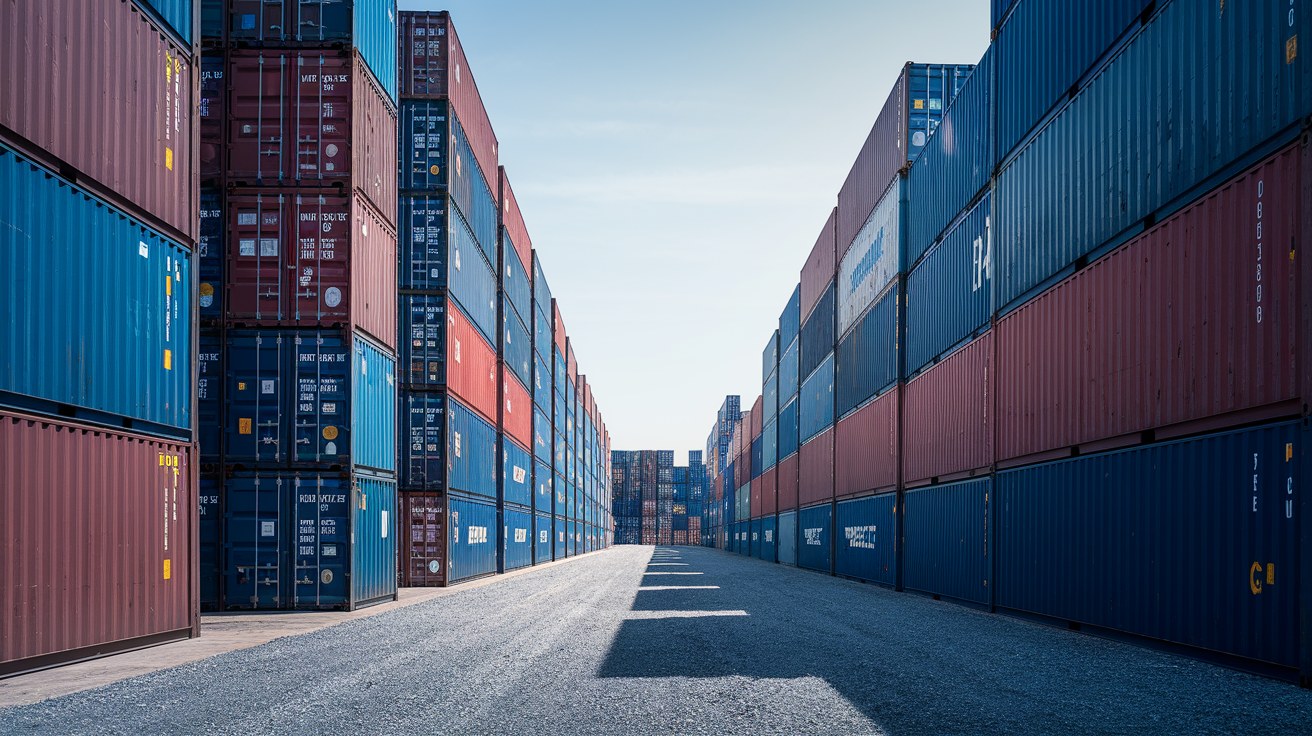
The clearest framing of the shift comes from Muwon USA’s June 2026 market insight, bluntly titled “Why the Reward for Waiting Is Shrinking.” The argument: many of the forces that supported cheaper containers through 2025 are weakening simultaneously. The major shipping lines have resumed meaningful box procurement after a long pause, freight rates have strengthened, steel costs have climbed, and the replacement economics that govern factory pricing have stabilized. None of those is a crisis on its own. Stacked together, they remove the floor that buyers have been standing on.
The deeper mechanic is replacement cost. Container prices over the past two years were dragged below what it actually costs to build and land a new box, because leasing companies chose to dump surplus inventory rather than store or scrap it. That’s a temporary condition, not a permanent one. Once the dumped inventory clears, the market resets toward true replacement cost — which, with steel and freight both higher, sits well above today’s bargain pricing. The buyers who move first benefit. The buyers who wait pay both increases.
That’s the same dynamic we walk through in our guide to affordable options for buying shipping containers: the cheapest moment in a market is rarely obvious until it’s gone. Right now, used pricing is still favorable by any multi-year standard — but “favorable and rising” is a different decision than “favorable and falling.”
The Tariff Pressure on New Containers
The wildcard sitting over new-container pricing is tariffs. Most new and one-trip containers sold in the U.S. are built in China, and industry pricing guides note that tariffs on Chinese-manufactured goods could push new container prices up 20% to 30%. We don’t take a position on trade policy — we sell boxes, we don’t legislate — but the cost arithmetic is worth understanding plainly: a tariff is a line item that lands on the invoice.
Today a new one-trip 20-foot container runs roughly $2,500 to $5,500 delivered, and a new 40-foot high cube can reach $7,000, depending on spec and location. Layer a 20% to 30% increase onto those numbers and the gap between new and used widens considerably — which is precisely why tariff pressure tends to push demand toward the used market. That’s a useful thing to know when you’re weighing different types of shipping containers for sale and deciding whether a one-trip unit is worth the premium over a solid used box from our used inventory.
There’s a second-order effect, too. As new prices rise, the used market tightens further, because buyers priced out of new boxes compete for the secondhand supply. That’s part of why used resale numbers are already creeping up. The two markets are connected, and tariff pressure on one end pulls the other along with it.
Peak-Season Freight Is Stacking On Top
The timing makes all of this sharper. June is the front edge of ocean shipping’s peak season, and 2026’s is arriving early and hot. Spot rates climbed after June 1 General Rate Increases took hold, with Peak Season Surcharges of up to $2,000 per forty-foot equivalent now in effect on several lanes, per Freightos’ market updates. West Coast rates jumped more than $1,000 per container in a single week. Transpacific rates have run around $3,200 to the West Coast and $5,000 to the East Coast, with Asia–Europe near $3,000.
Capacity is tight, particularly on East Coast and Gulf services, as shippers pull imports forward ahead of possible tariff actions. For a Northeast buyer, the East Coast premium matters: the boxes that serve the New York, New Jersey, and Pennsylvania markets ride the more expensive lane. Freight is a cost input on new containers and a backdrop pressure on the whole market, and right now it’s pushing up, not down.
What This Means for Your Purchase
If you’ve been waiting, the calculus has changed, and it’s worth being concrete about what to do with that. First, separate “cheap” from “still falling.” Used containers remain a strong value by any multi-year measure — a used 20-foot box around $1,786 is far below the pandemic-era peaks. But it’s no longer a market where waiting reliably saves money, and on several lines it’s a market where waiting costs money. If a container is in your near-term plans, the case for moving now is stronger than it’s been in two years.
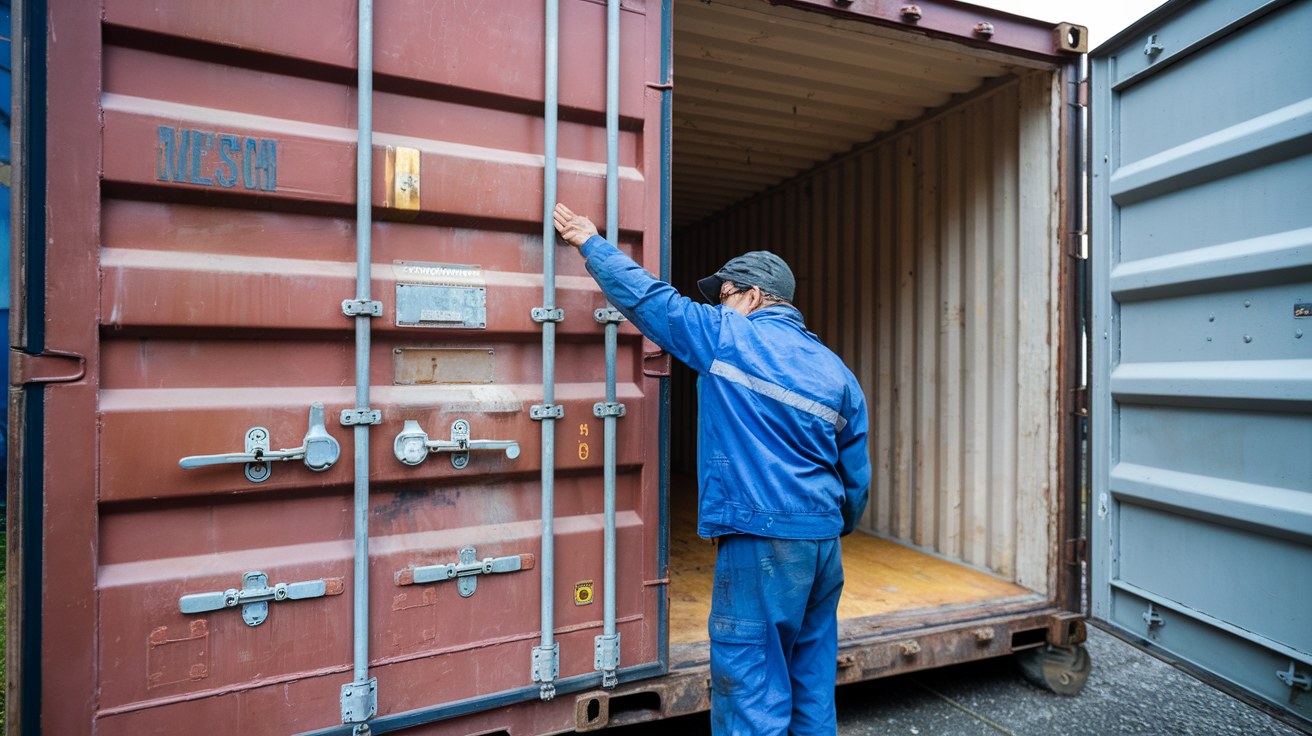
Second, inspect harder, because the supply is older. Containers used to enter the secondhand market at 7 to 15 years old; today many aren’t released until 10 to 20 years. Older boxes can be perfectly sound, but the floors, door gaskets, and roof seams deserve closer scrutiny. Our checklist on what to look for when buying a shipping container and our guide on where to buy used shipping containers cover exactly what to check before money moves — and why buying from a yard you can walk beats buying from a listing photo.
Third, get the size right the first time. With prices firming, there’s less room to fix a wrong call by buying again cheap later. Our breakdown of shipping container dimensions helps you weigh the 20-foot versus 40-foot decision against your site and budget, and our 20-foot container page is the most popular starting point for first-time and storage buyers. And while the market is shifting, there’s still room to negotiate — our guide to negotiating shipping container prices covers what’s actually flexible when you’re buying.
The Bottom Line
The two-year run of falling container prices was real, and the buyers who took advantage of it did well. But the conditions that produced it — carrier overstock, dumped leasing inventory, soft freight — are unwinding at once, while tariffs threaten to lift new-container costs 20% to 30% and peak-season freight climbs on top. The market isn’t crashing or spiking. It’s quietly resetting toward replacement cost, and that direction favors the buyer who acts over the buyer who waits.
If a container is in your plans for this year, now is the time to lock in pricing while the used market is still favorable and the inventory is still deep. Our team can pull current availability across our full container lineup, walk you through condition and delivery, and give you a quote that holds. Request a quote today — the reward for waiting is shrinking, but the reward for moving early is still on the table.
Sources: Eveon Containers 2026 Market Monitor; Muwon USA June 2026 Market Insights (“Why the Reward for Waiting Is Shrinking”); Drewry World Container Index (June 11, 2026); Freightos market updates (June 2026); America Conex 2026 shipping container market trends; metal-buildings.org and Arcon Container 2026 pricing and availability outlooks; industry container production tracking (May 2026).