
The largest sporting event ever staged in North America kicks off June 11, and the New York/New Jersey region is at the center of it. MetLife Stadium in East Rutherford hosts eight matches across the tournament — including the final on July 19 — and the state of New Jersey alone has 34 official watch parties, fan zones, and street festivals planned across Jersey City, Newark, Secaucus, East Rutherford, and Bergen County, per NJ 101.5’s coverage. For local retailers, food operators, and event vendors, the question of the summer is simple: how do you put a storefront, a kitchen, or a secure stockroom in front of those crowds in a matter of weeks?
Increasingly, the answer is a steel box. Shipping containers have quietly become the default infrastructure for temporary commerce — fast to deploy, secure overnight, indifferent to weather, and gone without a trace when the event ends. We covered the broader pattern in our piece on innovative methods of shipping container reuse, and the World Cup is about to give the Northeast its biggest live demonstration yet. Here’s what the tournament means for container demand in our region, what a container pop-up build actually involves, and what’s still realistic to pull off before the final whistle.
What the Tournament Brings to the Region
The numbers are hard to overstate. The 2026 World Cup runs 39 days across 16 host cities, and the NY/NJ market drew the heaviest allocation — eight MetLife Stadium matches capped by the final itself, per the stadium’s official event calendar. Analysts at TheStreet have called the tournament a billion-dollar retail boom, with host-city spending projected across hospitality, merchandise, food service, and tourism.
New Jersey’s state government is treating it accordingly. Governor Sherrill launched a $5 million World Cup Community Initiative to fund fan experiences and invest in small businesses, cultural associations, and nonprofits across the state, per CBS News coverage. The Goya Presents Flag Cities festivals — five of them, running through the tournament — will feature artisan vendor villages, food trucks, beer gardens, and giant LED screens. Every one of those vendor villages needs booths, serving counters, secure overnight storage, and back-of-house space. That is container territory.
The precedent is already set north of the border. Toronto’s STACKT market — North America’s largest shipping container market — is transforming into an adidas-branded fan hub hosting 1,200 fans daily from June 11 through July 19, per blogTO’s reporting. When the world’s biggest sportswear brand needs a tournament venue built from scratch, it builds it out of containers. Regional operators should take the hint.
Why Containers Are the Pop-Up Platform of Choice
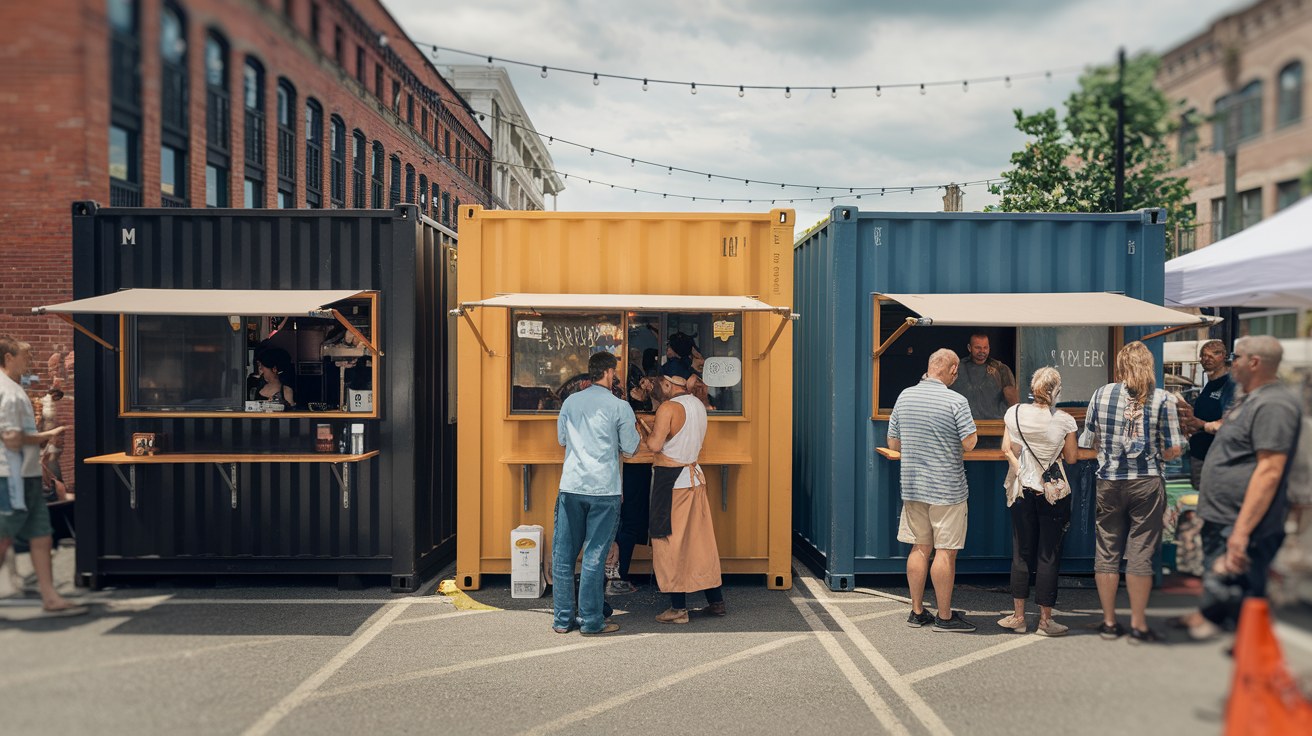
A tent gets you a roof. A container gets you a building. That difference is the whole argument.
Start with security. A fan festival runs for hours, but the gear stays on site for weeks — inventory, refrigeration, point-of-sale hardware, sound equipment. A locked cargo-worthy container with intact door gaskets and lockbox-shielded padlocks is the most theft-resistant structure money can rent or buy at this price point, which is the same reason construction firms have standardized on containers for site storage. Event organizers face the identical overnight problem, just with merchandise instead of power tools.
Then there’s weather. A Northeast July delivers heat, thunderstorms, and the occasional tropical remnant — sometimes in the same week. Steel containers shrug all of it off. And because the units arrive on a tilt-bed truck and leave the same way, there’s no foundation, no framing, no demolition, and usually a far lighter permitting footprint than site-built temporary structures. For operators weighing the economics, a wind-and-watertight used unit in the $1,200 to $2,800 range for a 20-footer, per Metal-Buildings.org’s 2026 pricing guide, is a fraction of what five weeks of comparable built-out booth space costs at premium event rates.
What a Container Pop-Up Build Actually Involves
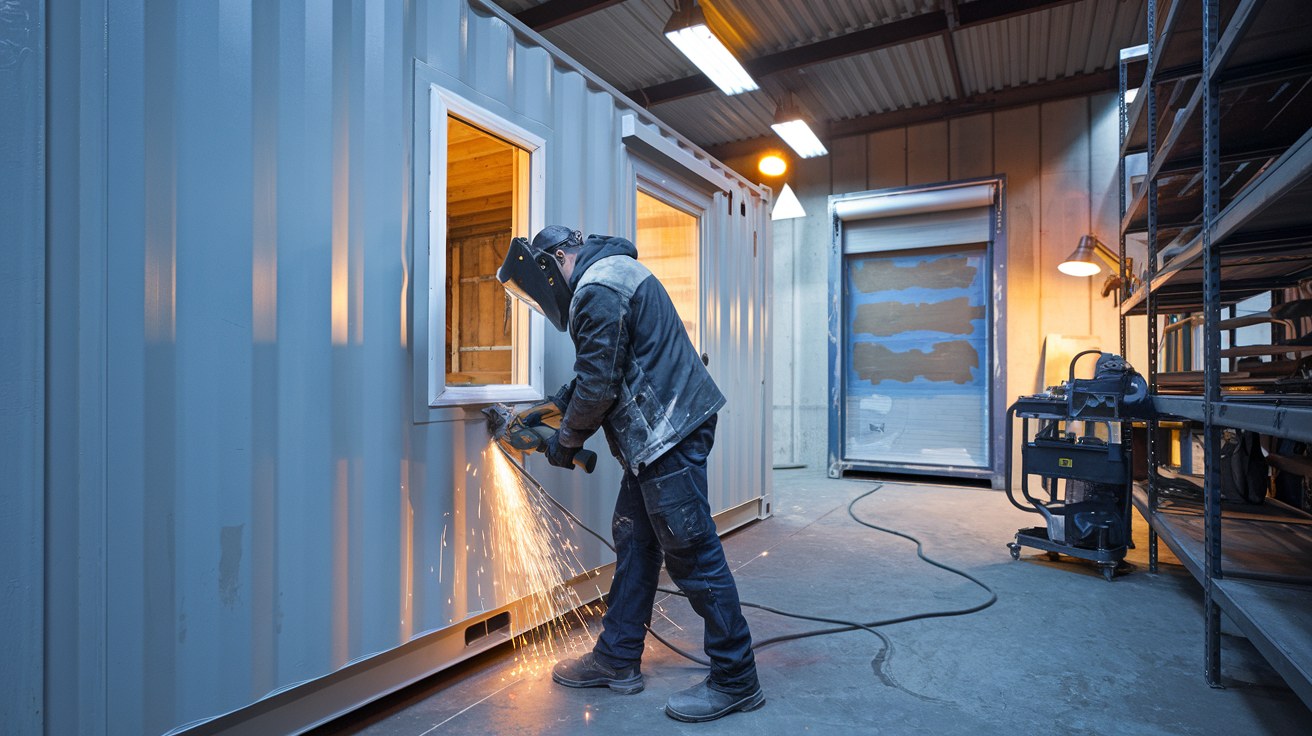
The conversion from cargo box to commerce is more standardized than most first-time buyers expect. The typical retail or food-service package starts with a cut-in serving window with a fold-down counter or awning shutter, a roll-up door or glass storefront on the long wall, interior electrical with a generator hookup or shore-power connection, LED lighting, and exterior paint in brand colors. Our container customization process overview walks through how a build moves from drawing to delivery, and the companion guide to modification options covers the full menu — insulation, HVAC, windows, vents, and partitions included.
Food and beverage operators have two additional considerations. First, anything involving open food service needs to satisfy county health requirements, which usually means washable interior surfaces, hand-wash stations, and screened openings — solvable, but it belongs in the build spec from day one, not as a retrofit. Second, cold storage is its own decision. A refrigerated container gives a festival food operation walk-in cooler capacity that no rental trailer matches, and an insulated unit handles dry goods and beverage staging at far lower cost.
For merchandise and activation builds, open-sided containers deserve a look. With the long wall opened up, a 20-foot unit becomes a genuine storefront with sixteen feet of frontage — the configuration behind most of the container retail villages you’ve seen photographed.
The Timeline Math Before July 19
Here’s the honest version of what’s still possible. The tournament runs through July 19, with the knockout rounds — and the biggest Meadowlands crowds — concentrated in July. A stock unit with no modifications can be quoted, inspected, and delivered inside a week in most of our service area. A basic pop-up package — window, door, electrical, paint — is typically a one-to-three-week shop job depending on the queue. A full food-service build with health-code interior is tighter but feasible for July if the spec is settled now.
Buyers moving at this speed should not skip the fundamentals. The what to look for when buying a shipping container checklist — floors, door gaskets, corner castings, roof seams — matters more under deadline pressure, not less, because there’s no slack in the schedule for surprise welding. Confirm the unit’s footprint against your site using the container dimensions guide, and read the delivery and placement guide before you promise a festival organizer a move-in date. A 20-foot unit needs roughly 75 feet of straight-line clearance for tilt-bed delivery; urban festival sites in Jersey City or Newark may need a crane and a street permit instead. None of that is a problem if it’s planned. All of it is a problem on June 30.
One more market note: the soft pricing that defined the spring is firming. Muwon USA’s June 2026 market insights report that shipping lines have resumed procurement, steel costs have risen, and freight rates have strengthened — Drewry’s World Container Index showed Shanghai–New York rates up 20% to $5,505 per 40-foot container as of June 4. Their conclusion, in their words: the reward for waiting is shrinking. Event demand on top of that only tightens regional inventory further.
After the Final Whistle
The quiet advantage of container pop-ups is what happens in August. A tent is landfill. A trailer depreciates on wheels. A container is still a container — and the resale market for used units is deep enough that a clean, modified 20-footer routinely finds a second life as a job-site office, farm stand, or backyard workshop. Operators who buy rather than rent for the tournament are effectively financing five weeks of premium selling space with an asset they can resell, redeploy to the next festival season, or keep as permanent storage.
That math is why we tell event vendors to think of the purchase as a two-act decision: act one is the World Cup, act two is everything after. Our piece on affordable options for buying shipping containers covers the budget side of that decision for first-time buyers.
The Bottom Line
The World Cup is a 39-day demand spike landing squarely on our home market, and container pop-ups are the fastest legitimate way for a local business to put secure, weatherproof commercial space in front of it. The clock is the only real constraint. Stock units are days away; modified units are weeks away; and every week of waiting trades away both shop capacity and the soft pricing left over from spring.
Giant Lockbox is based in the heart of the host region, with current inventory and modification capacity serving New York and New Jersey buyers. If you’re planning a pop-up, a vendor booth, festival storage, or a food-service build for the tournament window, request a quote today and let’s talk about what’s deliverable before kickoff — and what’s deliverable before the final.
Sources: MetLife Stadium official event calendar; NJ 101.5 World Cup events coverage (2026); CBS News coverage of the New Jersey World Cup Community Initiative; TheStreet World Cup retail analysis (2026); blogTO coverage of Toronto’s STACKT market transformation (May 2026); Muwon USA June 2026 U.S. Container Market Insights; Drewry World Container Index (June 4, 2026); Metal-Buildings.org 2026 Shipping Container Price Guide.