
Pennsylvania municipalities paid a statewide average of $88.21 a ton for road salt in the August 2025 to July 2026 contract year, and South Hills received a single bid of $152 a ton for the coming season, up from $88.32 a year earlier, according to a November 7, 2026 market review from Crux Investor. Private snow contractors across the Northeast are trying not to repeat last January, when suppliers ran short in the middle of storm season, and many are buying bagged salt and ice melt earlier and holding more of it on their own lots. A steel shipping container is one of the most common places to put those pallets, and salt is one of the harder products to keep in one.
Below we cover what happened to salt supply last winter, whether a container suits bagged salt, what chloride does to container steel, how much a 20-foot or 40-foot unit holds, and what to check this week. Our overview of using shipping containers for storage covers the general case, and this piece covers salt, which corrodes the steel it is stored in.
What Happened to Salt Supply Last Winter?
Deicing salt ran short across much of the Northeast in the 2025 to 2026 winter because early storms drew down stockpiles before January. Phill Sexton, writing for the Snow & Ice Management Association (SIMA), says the season strained an already limited supply, with delivery windows slipping from 24 hours to as long as 10 days and some private buyers paying $300 a tonne or more. In Bristol Township, Pennsylvania, 6abc reported on January 23, 2026 that heavy December use had depleted supplies earlier than usual and that a local supplier was filling state, municipal, and school contracts first.
SIMA’s article traces the tight supply to several causes, including Cargill’s 2022 closure of its Avery Island mine in Louisiana and production cuts at Compass Minerals in 2024. The private buyers who paid the most were the ones without a supply contract, which is the position many small plow and landscape operators are in. Spot prices for private buyers in a shortage run well above municipal contract bids, so the $300 figure and the $88 to $152 range describe different markets.
Crux also notes that NOAA expects a very strong El Niño to bring warmer-than-average temperatures to much of the northern US this winter. A warm-leaning season can still open with heavy storms, and last winter’s shortage started with heavy use in December. Contractors who were caught short in January are the ones ordering storage now.
Can a Shipping Container Hold Bagged Rock Salt?
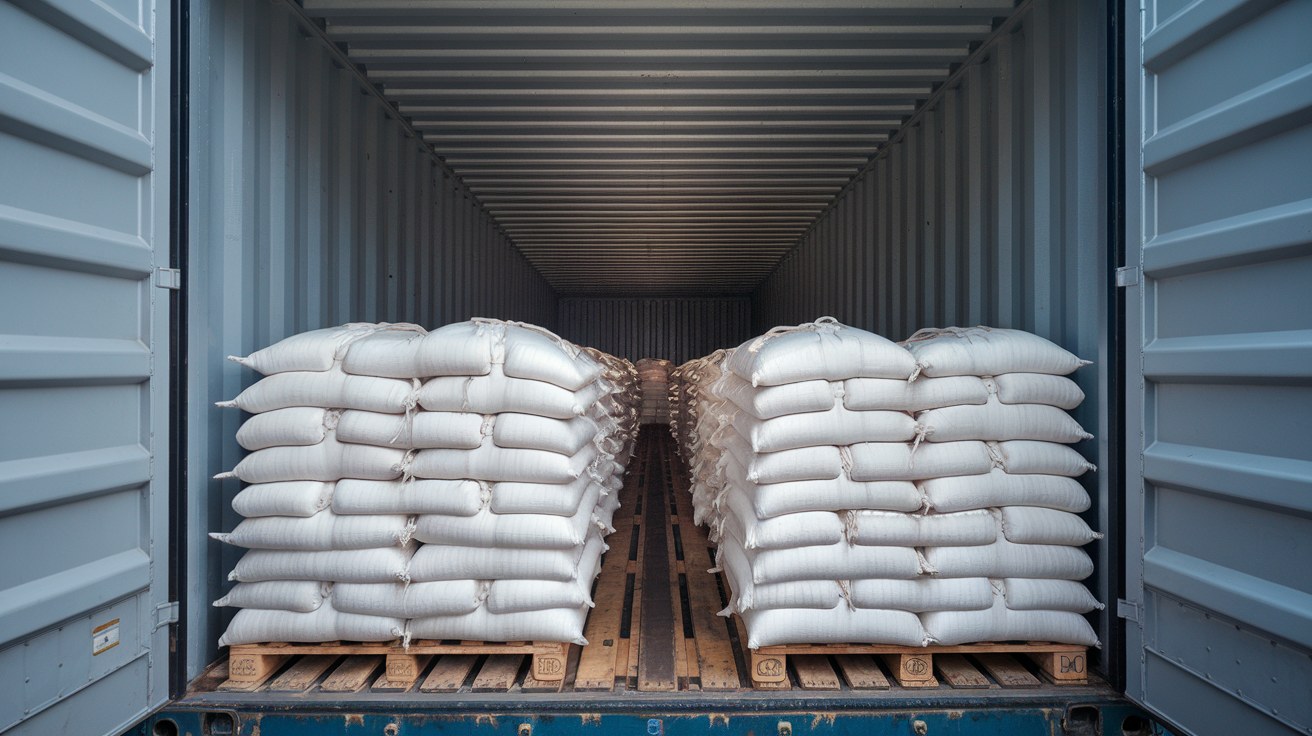
Yes, a wind-and-watertight steel container works well for bagged salt and ice melt on pallets, and poorly for loose bulk salt. The EPA’s stormwater fact sheet on deicing material storage (EPA 832-F-21-030K, December 2021) says to keep salt in covered storage, noting that cover reduces losses and that proper storage keeps the material from lumping together. On February 11, 2026, CBS Boston reported that a Stoughton, Massachusetts contracting firm was spreading its salt across storage bins and shipping containers at sites around the state as its piles ran down mid-season.
Bagged product fits because the bag keeps brine off the floor and walls, and the pallet keeps the bag above any water that gets in. Loose rock salt is a different job. A few tons of bulk salt shoveled against corrugated walls keeps chloride in direct contact with the steel all winter, and getting it out in spring means scraping a floor you want to keep. Bulk piles belong in the barns, domes, and other covered structures the EPA fact sheet describes.
Calcium chloride and blended ice melts need the most protection. Calcium chloride pulls water out of humid air, and an open bag left in a container through a wet thaw can set into a solid block. The EPA’s cost table, built on 2020 North American data, puts the median price of calcium chloride at $171 a ton against $51 for sodium chloride, so a caked pallet of calcium chloride is a loss more than three times larger than a caked pallet of rock salt.
What Salt Does to Container Steel
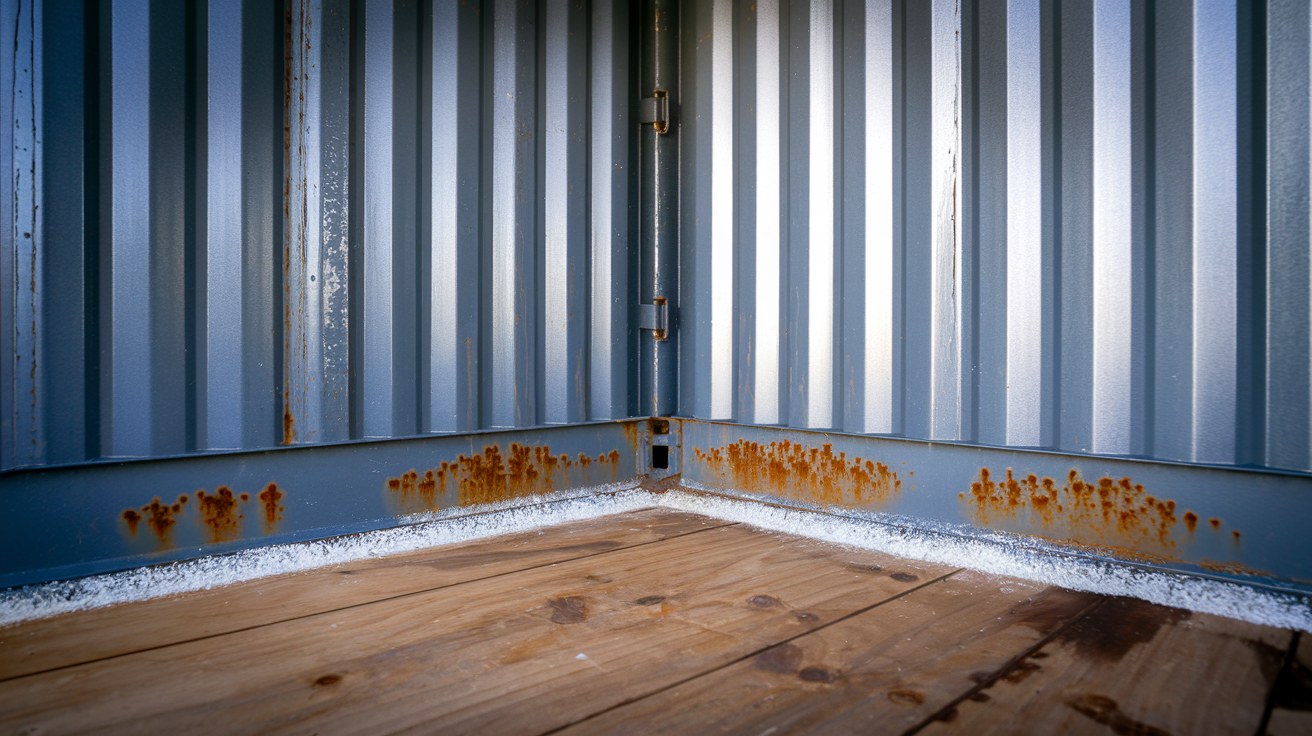
Container walls, roof panels, and frames are built from weathering steel, often sold under the trade name Corten, which forms a tight rust layer that slows further corrosion as long as the surface can dry out between wettings. Chloride interferes with that layer. The Federal Highway Administration’s Technical Advisory T 5140.22 on uncoated weathering steel says the material should be avoided where winter deicing salt use is significant, and it tells owners to regularly remove dirt, debris, and deposits that trap moisture.
A container is painted inside and out, so the steel only meets salt where the coating has been scratched, chipped, or worn through. On a used unit that usually means the lower foot of the side walls, where pallets and forklift tines have rubbed for years, and the door sill. Salt dust and brine settle in exactly those spots. The EPA fact sheet says the same about any salt storage building: salt is highly corrosive, and owners should inspect storage in the offseason and fix leaks, weak points, and corroded areas.
The marine plywood floor is the other exposure. Brine that soaks into the plywood stays there, and a floor that stays damp all winter wears out before the rest of the box. One season of bagged salt on pallets will not ruin a sound container. Several winters of loose salt and standing brine will shorten its life.
How Much Salt Fits in a 20-Foot or 40-Foot Container?
A standard 20-foot container holds about 10 standard 48-by-40-inch pallets on the floor, and a 40-foot holds about 20, so for 50-pound bagged salt you run out of floor long before you reach the weight rating. ISO 668, the international standard for freight container dimensions and ratings, sets a maximum gross weight of 30,480 kilograms (67,200 pounds) for a 20-foot container, and the CSC safety plate on each container’s door lists that unit’s own maximum gross and tare weight. A plow operator who stores 10 pallets of 49 fifty-pound bags, a common supplier configuration, is holding about 24,500 pounds of salt, well under what a 20-foot is rated to carry.
Double-stacking short pallets is possible in a standard-height container, but it doubles the load on each square foot of plywood and makes the back of the box hard to reach. Most salt buyers we talk with single-stack and leave an aisle down the middle. Our guide to shipping container dimensions lists interior length, width, and door opening for each size.
Weight still matters on the ground. Twelve tons of salt on top of the container’s own tare sits on the bottom rails and corner castings, and soft ground in a January thaw lets one corner settle and rack the door frame. Set a salt container on compacted gravel or another firm, level base before you fill it. Our delivery and placement guide covers site prep and truck access.
What to Check This Week
Calls from plow operators and landscape companies follow a pattern we see every fall in Giant Lockbox sales conversations, and it picked up after last January. The buyer wants a 20-foot on the shop lot before Thanksgiving, plans to fill it with pallets the week it lands, and asks whether a used unit is good enough. Our answer is that a sound used cargo-worthy or wind-and-watertight container suits bagged salt, and that tight door seals matter more for this job than a newer paint job. That describes many conversations over several seasons; we have not counted them.
First, check the door gaskets and the roof before the first pallet goes in. On a sunny afternoon, step inside with the doors pulled nearly shut and look for daylight along the seals and roof seams. A leak that drips onto bagged salt dissolves it into brine on the floor. Our checklist of what to look for when buying a shipping container covers gaskets, roof dents, and floor condition.
Second, keep every bag on a pallet and every pallet a few inches off the walls. The gap lets air move and keeps bags from rubbing the painted steel where salt does the most damage.
Third, keep calcium chloride and blends sealed and near the doors. Use them first, and move partial bags into a lidded plastic bin so they do not draw moisture for the rest of the season.
Fourth, lock the container. When salt is scarce, a pallet of it is worth more than usual. Our page on container security features covers lock boxes and door hardware.
Fifth, plan the spring cleanout now. Sweep the floor, open the doors on a dry day so the plywood dries, and touch up any scratched paint on the lower walls with a rust-inhibiting primer. If the container sits near a storm drain, sweep spilled salt up instead of hosing it out, in line with the EPA fact sheet’s advice to collect spilled brine.
The Bottom Line
A used 20-foot or 40-foot container is a sound place to hold bagged rock salt and ice melt through a Northeast winter, as long as the bags stay on pallets, the doors seal, and the floor gets swept and dried in spring. Keep loose bulk salt out of it. With a Pennsylvania municipal bid at $152 a ton for the coming season and private spot prices last winter reaching $300 a tonne, as of November 2026, dry storage protects stock you may not be able to replace in January.
We can help you size a unit for your pallet count and get it on your lot before the first storm. For 20-foot containers, used containers, and other container types delivered across New Jersey, New York, and Pennsylvania, request a quote today.
A note on how this article was written: we use AI to help draft and research pieces like this, then a Giant Lockbox team member edits for accuracy and voice. Here’s how and why we use AI in our content.
Sources: Crux Investor, “Road Salt 2027 Outlook: Supply Security Sets Prices as Buyers Run Short,” November 7, 2026; Phill Sexton, “The Salt Squeeze,” Snow & Ice Management Association; 6abc Philadelphia (WPVI), “Salt shortage impacting suppliers ahead of winter storm,” January 23, 2026; CBS Boston via Patch, “Massachusetts Private Contractors’ Salt Piles Dwindling As Snow Continues To Fall,” February 11, 2026; U.S. Environmental Protection Agency, Stormwater Best Management Practice: Deicing Material Application and Storage (EPA 832-F-21-030K), December 2021; Federal Highway Administration, Technical Advisory T 5140.22, Uncoated Weathering Steel in Structures; ISO 668, Series 1 Freight Containers: Classification, Dimensions and Ratings.