
A standard padlock with an exposed shackle on a shipping container door can be cut with bolt cutters in seconds, according to USA Containers’ guide to container locks, and a Northeast winter adds a second problem when ice forms in the keyway of the lock that is supposed to protect the door. In our experience, buyers who take delivery in November or December spend the first week on the pad and the paperwork and pick the lock last, often at a hardware store and often the cheapest one on the shelf.
Below we cover where a container door is weakest, what a lock box adds, why locks freeze in the Northeast and what to do about it, what the public theft data says, and three steps for this week. The same hardware questions come up in our overview of the security features of shipping containers, and most of the fixes here are inexpensive hardware changes made at delivery.
What Is the Weakest Point on a Container Door?
The weakest point on a container door is the padlock shackle, which sits exposed on the outside of the locking-bar handle. USA Containers, in its guide to the best locks for shipping containers, calls the exposed shackle of a standard padlock the weak point because bolt cutters can cut it in seconds, and it adds that unsecured handles can be levered open even when the padlock is good. A Hudson Valley farm buyer who keeps a tractor and its attachments in a used 20-foot cargo-worthy unit behind a hardware-store padlock is relying on exactly the setup that guide describes.
The guide names two easy attacks, cutting the lock and prying the bars, and recommends pairing a lock box with a door bar lock to remove both. That pairing is a hardware decision, so it can be made before the unit arrives and installed on the day it lands. Buyers comparing units can check which doors, handles, and keepers a given grade ships with in our guide to the types of shipping containers for sale.
Does a Lock Box Beat a Standard Padlock?
A lock box beats a standard padlock because it encloses the shackle, which removes the part that bolt cutters and angle grinders go after. USA Containers describes a lock box as a steel shroud that bolts over a padlock or puck lock, says a universal bolt-on version fits most containers with no welding, and names angle grinders as a threat that a full enclosure blocks. A New Jersey contractor setting a one-trip 20-foot on a job site can bolt a box over the lock at delivery without cutting or welding the door.
A lock box has limits. The same guide treats even heavy-duty padlocks as a deterrent and part of a layered setup, since the shackle on a standard model stays exposed, and it lists discus locks (round bodies that largely enclose the shackle) as a middle option. None of these stops an attacker who goes after the door hardware itself, which is why the bar lock sits alongside the box.
In our experience on the sales desk, buyers who ask about security at purchase ask almost entirely about the lock and rarely about the seals and keepers behind it. That is an observation across many Giant Lockbox conversations and not a count. Our inspection checklist covers the door gaskets and hardware to look at before you commit.
Why Do Container Locks Freeze in the Northeast?
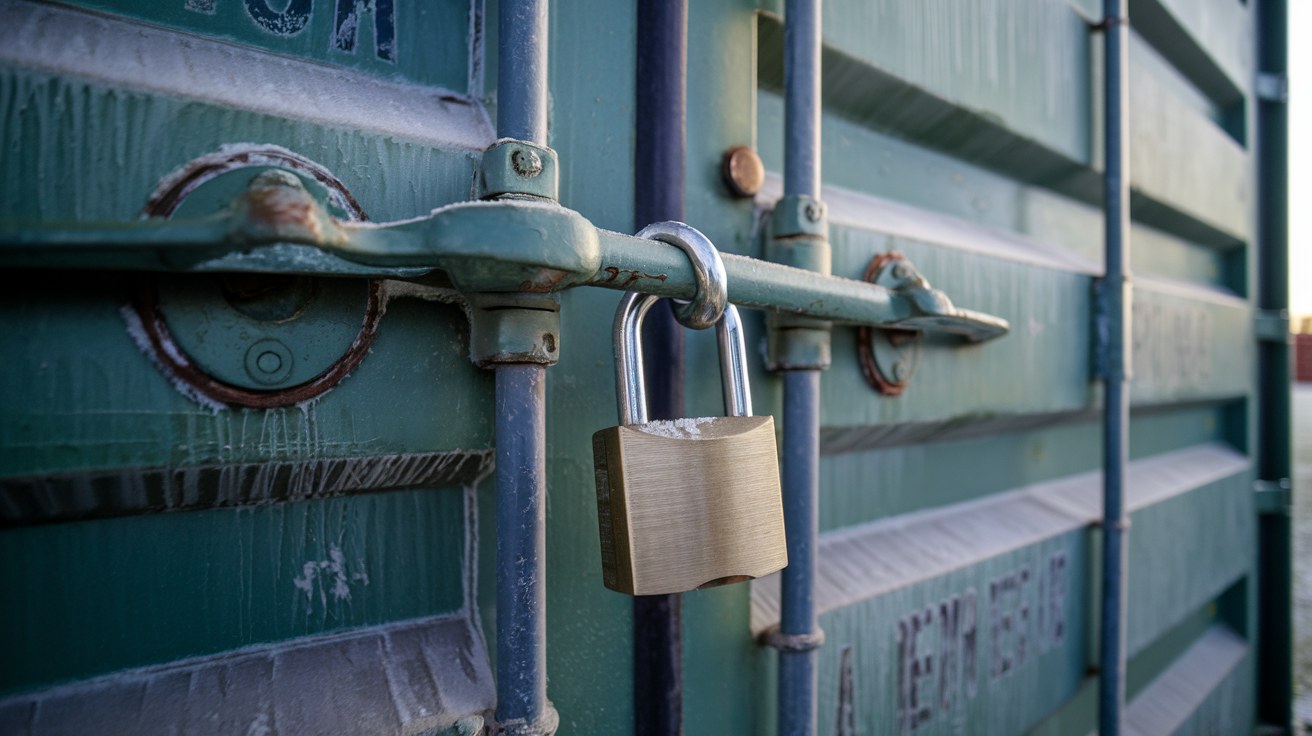
Container locks freeze when moisture gets into the keyway and the temperature drops below freezing, which happens repeatedly across a Northeast winter. Hunker’s lock-care guide, written mainly for car and household locks, recommends lubricating with WD-40 before cold weather arrives, reapplying later in a long winter, and using graphite where the air holds little moisture. A Catskills storage buyer who locks a unit on a Friday after wet snow and returns on Monday after a hard freeze is in the situation that advice targets.
For padlocks on sheds and gates, Hunker suggests duct tape over the keyhole and a plastic bag over the whole lock. A lock box covers the padlock in a similar way and may keep snow off the keyhole, although the sources we reviewed address theft and not icing, so treat that as a possible side benefit and not a tested one.
If a lock does freeze, Hunker says to warm the end of the key with a match or lighter and work it into the lock, and to use hot water only as a last resort because it refreezes fast. It also says to keep de-icer somewhere you can reach, not inside the vehicle or the unit you cannot open. Eveon Containers’ winter guide adds that doors and joints should be opened and oiled periodically so rust does not fuse them, and that worn door seals should be replaced to keep the unit airtight. Our guide to using shipping containers for storage covers what else a winter storage buyer should plan for.
What Does the Theft Data Say About Containers on Job Sites?
The best public data on equipment theft is older than most buyers assume, and it points to low recovery odds once something leaves a site. The National Equipment Register and the National Insurance Crime Bureau reported roughly 20 percent recovery of stolen heavy machines, more than 11,000 reported equipment thefts a year, and an average loss near $6,000 per incident, in a series that ended with its 2016 report, as summarized by BuildingSecurity.com. A Long Island contractor whose job-site unit holds a compressor, a generator, and a rack of power tools is putting a loss of that size behind one door.
BuildingSecurity.com notes that these figures are underreported and that equipment values have risen since 2016. They also cover machinery and farm equipment broadly and are not specific to containers or to the Northeast. We found no current container-specific theft figure from a named authority, so we do not quote one.
Three Steps to Take This Week

First, look at the door hardware before you pick a lock. Check the handles, cam keepers, locking bars, and seals on the unit you are buying or already own. Eveon Containers advises replacing worn door seals and inspecting walls, doors, and roof for gaps that let in air and moisture.
Second, choose the hardware as a set. USA Containers’ pairing is a lock box over the padlock plus a door bar lock on the handles. Ask the seller whether the unit ships with them or whether they can be bolted on at delivery, and put the answer in writing, since our advice on negotiating container prices applies to hardware as much as to the unit. Our delivery and placement guide lists what to settle before a delivery date.
Third, lubricate before the first hard freeze. Spray the lock and the door joints now, keep a can of de-icer somewhere other than inside the unit, and plan to reapply in a long winter. For buyers planning insulation or other door work, the modification options page explains what can be added to a unit.
The Bottom Line
A container door is only as secure as its exposed shackle and its unsecured handles, and in a Northeast winter it is only useful if the lock still turns. A lock box over the padlock, a bar lock on the handles, and lubricant applied before the first hard freeze address all three problems at a modest hardware cost.
Your step this week costs nothing. Walk to the unit, photograph the door hardware, and send the photos to the seller or to us with the question of which lock setup fits.
We can walk through lock-box and bar-lock options for the unit you are pricing and give you a delivered number for your address. For used containers across New York and New Jersey, request a quote today.
A note on how this article was written: we use AI to help draft and research pieces like this, then a Giant Lockbox team member edits for accuracy and voice. Here’s how and why we use AI in our content.
Sources: USA Containers, Best Locks for a Shipping Container: Padlocks, Bar Locks and Lock Boxes, accessed November 6, 2026; Eveon Containers, Preparing Your Shipping Container for Winter, accessed November 6, 2026; Hunker, How to Prevent a Lock From Freezing, accessed November 6, 2026; BuildingSecurity.com, Construction Site Theft Statistics 2026, summarizing National Equipment Register and National Insurance Crime Bureau reporting through 2016, accessed November 6, 2026.