
The Office of the US Trade Representative opened a comment period on October 23, 2026 on keeping its Section 301 port fee on China-linked ships suspended through January 9, 2027, two months past the November 9 expiry that Northeast container buyers have been counting down to. Without a new notice the fee restarts at 12:00 a.m. Eastern on November 10, which is 13 days away, and comments on the proposal close at 5:00 p.m. Eastern on October 30.
USTR has not finalized the proposal, and the fee applies to ships, which leaves containers already sitting in a Northeast yard outside it. Below we cover what USTR put on the table, why it is not final, which container orders a restart could touch and which it cannot, how the fee compares with current ocean freight, and what to settle with a seller before November 9. Our running read on the trends shaping the container sales industry has tracked vessel-side costs and yard-side prices moving on separate clocks all year.
What Did USTR Propose on October 23?
USTR proposed a two-month extension that would keep the China maritime fees and the related crane duties suspended from 12:00 a.m. Eastern on November 10, 2026 through 11:59 p.m. Eastern on January 9, 2027. The Federal Register request for comments, docket USTR-2026-0694 and published October 26, covers Annexes I, II, and III of the original action, which reach Chinese-owned and Chinese-operated vessels, Chinese-built vessels, and certain foreign-built vehicle carriers, according to the customs broker GHY International. A Bergen County buyer holding a September quote with a vessel-fee caveat on it would now be asking about January 10 instead of November 10.
USTR gives continued negotiation with China as the reason. Treasury Secretary Scott Bessent said on September 23 that the Busan truce would run to January 10, 2027, per NBC News as summarized in CargoLinked’s October 2026 trade update, and the proposed restart date matches it. Importer, exporter, port, and forwarder groups had written to USTR the same day asking for an extension, which means the proposal answers a request that industry made in public.
Is the January 9 Extension Final?
No, the January 9 date is a proposal until USTR publishes a final notice. USTR’s own request for comments, Federal Register document 2026-21755, sets the October 30 deadline and says the extension has not been finalized. A New Jersey importer with a booking that arrives in mid-December has to hold two scenarios open until that notice appears, and the notice could land anywhere between October 30 and November 9.
The proposal also leaves one number open. When USTR suspended the fees it did not say whether the schedule would restart at the October 2025 level or at the higher level now in the calendar, and George Chalos’s October 26 analysis for All About Shipping notes that the new proposal does not address it. Annex II charges $120 per container discharged in the first tier and $153 in the April 2026 tier, or the per-net-ton figure when that comes out higher, and the schedule rises to $195 on April 17, 2027, per the fee table Tradlinx published on August 14, 2026. Treat $120 to $153 as the working range for a restart in January.
Which Container Orders Carry Fee Exposure?
Only containers that arrive on a vessel calling at a US port while the fee is live carry exposure, so cargo-worthy and used units already in a Northeast yard carry none. USTR’s April 2025 notice of action, as summarized by Flexport and HFW, charges the fee per vessel rotation through US ports, with a cap of five charges per vessel per year. A cargo-worthy 20-foot unit that has sat in a Pennsylvania depot since 2023 never touches a ship again, so no version of the January decision reaches it.
An inbound one-trip unit is the exception. If its vessel reaches a US port on January 10 or later and the proposal is finalized with no further extension, the vessel is exposed, and the arrival date is the date to ask for, because the sailing date does not decide it. How much of the fee reaches a quote is up to the carrier and the seller. Tradlinx’s summary notes that several major carriers said during the first fee period that they would not add a dedicated USTR surcharge.
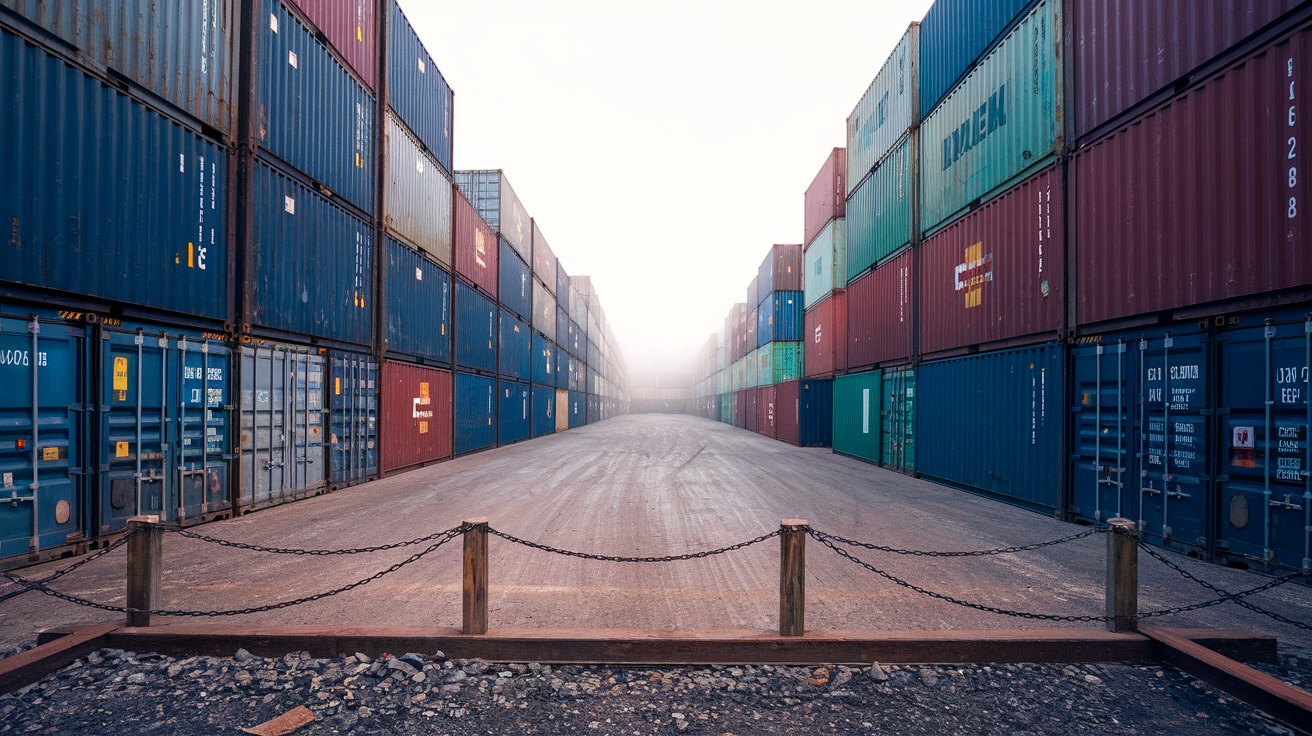
On a typical week our used inventory splits cleanly into units that are already in a Northeast depot and units that are still on the water, and the first group is the one that can quote a delivered price without a regulatory footnote. That is a pattern from how we quote and not a count of orders. The different types of shipping containers sit differently on that line, with one-trip units most likely to be inbound and cargo-worthy units most likely to be local.
How Big Is the Fee Against Today’s Freight Rates?
The fee is small against current ocean freight, about 1.5 percent of the Shanghai to New York rate at the $153 tier. Drewry’s World Container Index for the week of October 23 had Shanghai to New York at $10,166 per 40-foot container, up 1 percent, with the composite index at $4,585, up 2 percent. A one-trip 20-foot delivered to a Long Island driveway runs roughly $2,500 to $4,500 as of mid-2026 per Container Sales Group’s pricing guide, so a fee passed through in full would add between 2.7 and 6.1 percent to that delivered price.
Freight is moving more than the fee is. Xeneta’s October 1 update expected East Coast spot rates to ease to roughly $6,000 to $7,000 per 40-foot container in about three months, a drop of $4,500 to $5,500 from the $11,523 it recorded that day. If that happens by January, the fee would equal 1.7 to 2.6 percent of the freight rate, and a buyer comparing a January one-trip quote with an October one will see a larger gap from freight than from this rule. We sell containers and do not forecast freight, so read those figures as dated readings. Our guide to negotiating container prices covers which parts of a quote have give in them, and delivery terms usually have more than the unit price does.
What to Settle With Your Seller Before November 9
In the quotes we write, a regulatory pass-through clause tends to be the line a buyer reads last and disputes first, and the dispute usually arrives when a delivery date slips across a policy date. That is a pattern from our desk and not a count of orders. Three questions settle most of it before it becomes a dispute.
First, ask whether the unit is in a Northeast depot today or still inbound. A unit standing in a yard carries no vessel-fee exposure under any outcome. For an inbound unit, ask for the expected arrival date at a US port. Our guide to where to buy used shipping containers covers which sellers answer that question directly.
Second, ask whether the delivered price is fixed or subject to government-fee adjustments. If it is subject to adjustment, ask who pays when the vessel arrives after January 9 and what the cap is. A fixed delivered price with a delivery date attached is worth more than a percentage you negotiated against a headline. Our delivery and placement guide covers what the site has to be ready for once that date is set.
Third, decide whether the project needs one-trip or can take cargo-worthy. That answer determines whether the policy touches your purchase at all, and a clean cargo-worthy 20-foot stores tools and inventory as well as a one-trip unit does. Our inspection checklist shows how to separate a cosmetic problem from a structural one.

The Bottom Line
The Section 301 ship fee is $0 today. The proposal would hold it there through January 9, 2027, USTR has not yet made it final, and a restart would charge somewhere between $120 and $153 per container discharged on affected vessels. A cargo-worthy unit in a Northeast yard carries none of that risk, and a one-trip unit carries it only if its vessel arrives on January 10 or later.
Your step this week costs nothing. Pull the last container quote you received, find any line that mentions government fees, tariffs, or surcharges, and email the seller asking whether the delivered price is fixed and which arrival date it assumes. If the quote has no such line, that answer is already useful.
We can tell you which depot a unit is sitting in, whether it is domestic stock or inbound, and what the delivered number is for your address. For used containers across New York, New Jersey, and Pennsylvania, request a quote today.
A note on how this article was written: we use AI to help draft and research pieces like this, then a Giant Lockbox team member edits for accuracy and voice. Here’s how and why we use AI in our content.
Sources: Office of the United States Trade Representative, Request for Comments on Further Suspension of Section 301 Action, Federal Register document 2026-21755, docket USTR-2026-0694, October 26, 2026; GHY International, USTR Proposes Two-Month Extension of Section 301 Suspension on China Maritime Fees, October 2026; gCaptain, USTR Proposes Extending China Ship Port Fee Suspension Through January 2027, October 23, 2026; All About Shipping, USTR Proposes Two-Month Suspension of Section 301 Port Fees on China-Linked Vessels, October 26, 2026; CargoLinked, Trade Policy and Customs Update, October 2026; Tradlinx, What Returns on November 10 When the China Ship Fee Suspension Expires, August 14, 2026; Flexport and HFW summaries of the USTR April 2025 notice of action; Drewry World Container Index, week 43, October 23, 2026; Xeneta market update, October 1, 2026; Container Sales Group, 2026 pricing guide.