
The 2026 Atlantic hurricane season opens June 1, which is six days from now. NOAA released its official outlook on May 21 calling for a below-normal season — 8 to 14 named storms, 3 to 6 hurricanes, and 1 to 3 major hurricanes, with a 55% chance of below-normal activity overall. The forecast is quieter than the past several years, but quieter is not quiet, and the historical record is unambiguous: a single Category 1 storm tracking the wrong way up the Eastern Seaboard does more damage in one weekend than an average season does in six months.
For homeowners, contractors, and small businesses across the Northeast and Mid-Atlantic, this is the window. A container ordered today will be sited and anchored before the climatological peak in mid-August. A container ordered in July is competing with everyone else’s last-minute orders against an increasingly tight resale inventory already showing the first squeeze from an early peak shipping season. The cheapest insurance against a hurricane that lands is a steel box that’s already on site.
What NOAA’s 2026 Outlook Actually Says
NOAA’s Climate Prediction Center issued the May 21 forecast under a clear set of competing signals. A developing El Niño is expected to intensify through the season, which historically suppresses Atlantic tropical formation. Working against that, Atlantic sea-surface temperatures are running above the long-term average and trade winds are forecast to be weaker than normal — both factors that favor storms when they do develop.
The bottom-line probabilities: 55% chance of below-normal, 35% near-normal, 10% above-normal. An average Atlantic year produces 14 named storms, 7 hurricanes, and 3 major hurricanes, which puts 2026’s projected range modestly below baseline. The line that matters for buyers: NOAA explicitly noted that individual storms can still cause significant impacts regardless of the seasonal total. The 2012 season was below-normal on paper and gave us Sandy.
The 2026 season runs June 1 through November 30, with the established peak risk window from mid-August through mid-October. That gives buyers roughly ten weeks from today to plan, purchase, deliver, anchor, and load a storage container before the highest-probability storm window opens.
Why Shipping Containers Beat the Alternatives in a Storm
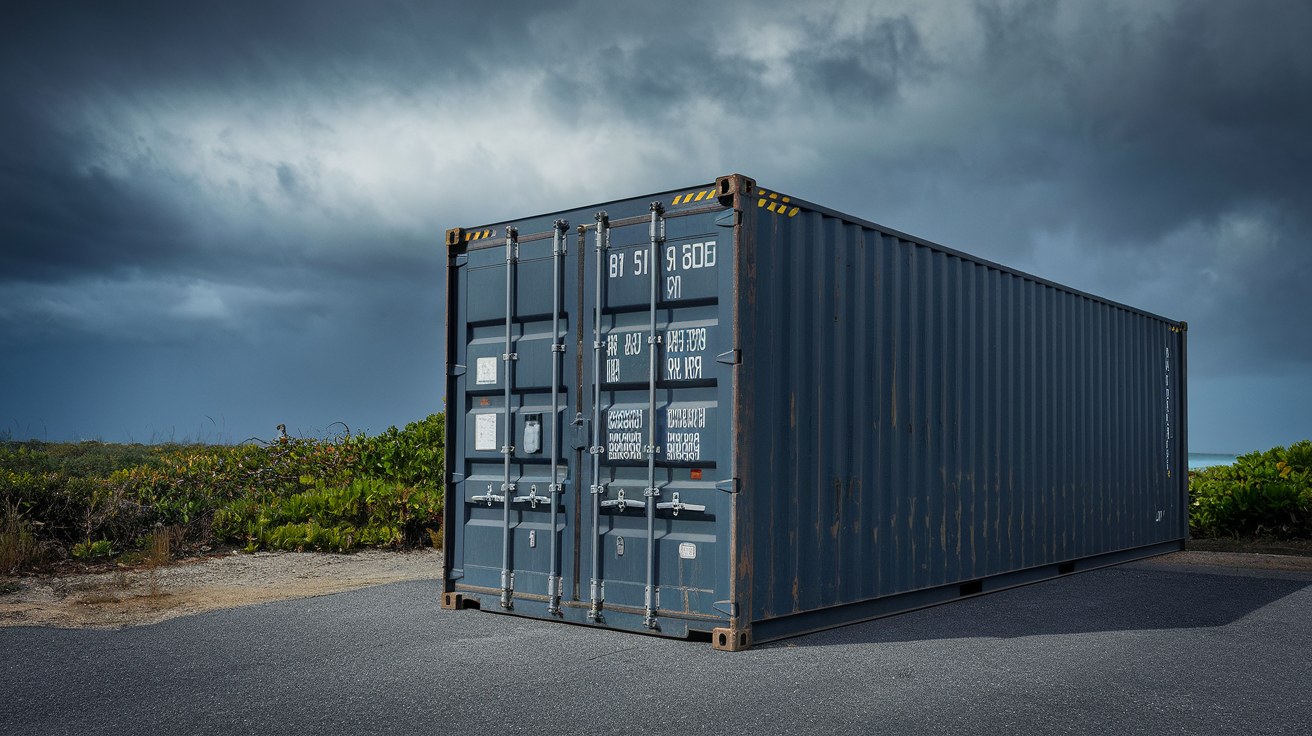
The reason container demand spikes every spring in coastal markets is structural — and we mean that literally. A standard intermodal container is engineered for ocean transit on a stacked vessel, which means corten steel, sealed door gaskets, marine plywood floors, and corner castings rated for thousands of pounds of dynamic load. Containers are routinely cited as able to withstand sustained winds over 100 mph when properly anchored, and the sealed envelope keeps wind-driven rain and debris out.
That structural envelope is the entire pitch versus the alternatives. A self-storage unit at a strip-mall facility is built to commercial light-frame standards and sits in a flood-prone parking lot. A portable plastic shed is gone in 60 mph gusts. A garage with a roll-up door is the most common failure point in residential hurricane claims — the door blows in, the wind pressurizes the roof from inside, and the structure goes from there. The practical advantages of using shipping containers for storage compound during storm season: lockable, weather-sealed, theft-resistant, and rated for the conditions you’re worried about in the first place.
The trade-off is honest. Containers cost more upfront than a season of self-storage. They take a delivery date, a level pad, and tilt-bed access to place. They take a few hours of conversation about ground prep, overhead clearance, and orientation before the truck arrives. None of that is a deal-breaker — it’s the work that gets done in May so the unit is sitting there when the National Hurricane Center first puts a yellow X in the central Atlantic.
Use Cases Driving Demand This Spring
The buyers calling our yards in May fall into a few distinct patterns, and the use case shapes what to buy.
Homeowners storing irreplaceable contents. Heirlooms, photos, important documents, electronics, and seasonal equipment that would be impossible to replace if a basement floods or a roof opens. For most residential cases, a single used 20-foot container handles the load with room to spare and parks behind a garage or in a side yard without dominating the property. Wind-and-watertight grade is sufficient when the contents will be moved in and out a few times a year.
Contractors and small businesses moving equipment off active sites. Tool theft on U.S. construction sites runs over $1 billion annually per the National Equipment Register, and contractors heading into hurricane season are pulling generators, compressors, and power tools off remote sites and consolidating them at owner-controlled yards. The same applies to landscapers and marine contractors with mowers, outboards, and trailers that can’t sit in a flood zone for a week. The lockable steel envelope deters routine theft year-round and protects against storm displacement when it counts.
Marina operators and waterfront businesses staging emergency supplies. Sandbags, plywood, fuel cans, pumps, tarps, generators — the things you need before the storm warning goes up and can’t get after. Coastal businesses along Long Island Sound, the Jersey Shore, and the Chesapeake are pre-staging this gear in secure container storage rather than rolling the dice on supplier availability when forecasts tighten. Agricultural operations from upstate New York through eastern Pennsylvania are doing the same for feed and equipment, including insulated units where the contents demand it.
Delivery, Anchoring, and Site Prep Before the Season Peaks
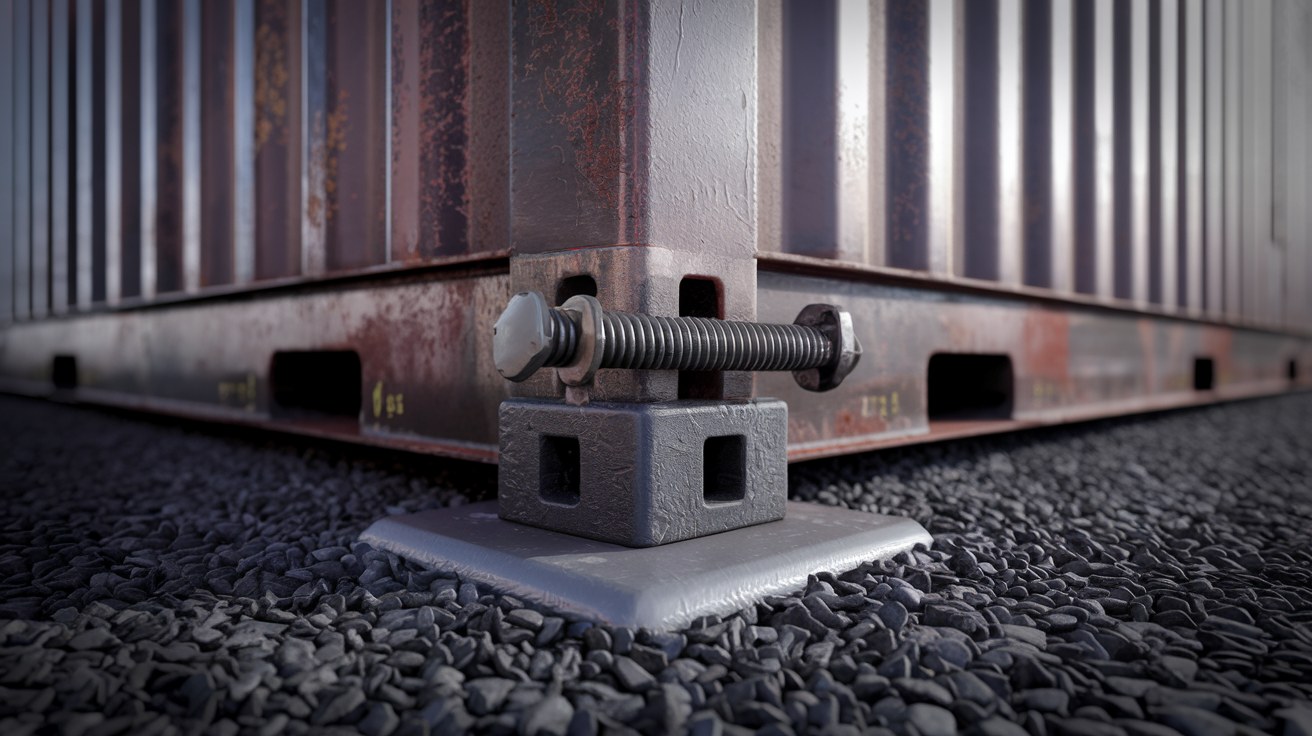
The structural envelope only does the job if the container is sited and prepared correctly. The work is straightforward, but it’s the work most first-time buyers underestimate.
Footprint and access. A 40-foot container needs roughly 100 feet of straight-line clearance for tilt-bed delivery, level ground, and overhead clearance free of branches and power lines. A 20-foot is more forgiving on access but still needs honest measurement before you commit. Our shipping container dimensions page lays out exact external footprints, door clearances, and turning radii so you can measure your site before scheduling delivery rather than after.
Ground prep and leveling. Containers placed on uneven ground rack the doors out of square, which compromises the seal and makes the unit harder to open under load. Compacted gravel pads, railroad ties, or concrete blocks at the four corners are the standard solution. The full prep checklist lives in our delivery and placement guide — the relevant section is the one most buyers skim and regret.
Anchoring and orientation. A 20-foot container weighs roughly 5,000 pounds empty; a 40-foot, about 8,500. That mass holds it down in normal weather. In sustained hurricane-force winds, ground anchors — auger anchors at the corner castings or twist locks tied to a concrete pad — are what keep the unit in place when the load shifts. For sites in mandatory evacuation zones or coastal high-hazard areas, check with the local building department before delivery; some jurisdictions require permitted anchoring for any structure left on site through the season. Doors should face away from prevailing storm winds — for most of the Northeast and Mid-Atlantic, that means doors facing north or northwest. The door seal is the most vulnerable point in the envelope; pointing it into the wind is the most common avoidable mistake.
The Early Peak Shipping Season Is Squeezing Delivery Windows
The other thing happening this spring is on the freight side. Drewry’s World Container Index climbed 6% in the week ending May 21 to $2,712 per 40-foot box, the third consecutive weekly increase. Transpacific rates are firming, carriers are running blank sailings to tighten capacity, and peak shipping is arriving earlier than usual. None of that directly sets the price on a U.S. resale lot, but it affects how quickly new and one-trip inventory cycles in, and the secondary effect on used supply is real.
For a residential or small-business buyer, the takeaway is simple: the favorable window to order, deliver, and anchor a container before the mid-August peak is open today and starts narrowing in early July. Buyers who order in June still have a clean path. Buyers who wait until August are looking at compressed delivery slots and the same regional yards trying to clear the same backlog. Our overview of the trends shaping the shipping container sales industry lays out the broader 2026 pricing context.
Regional inventory in New York, New Jersey, and Rhode Island is solid in both used and new condition as of this week, with tilt-bed delivery available across the service area. Buyers comparing condition grades should run through our walkthrough of what to look for when buying a shipping container — corner posts, door gaskets, roof seams, floor condition — before any money changes hands. A wind-and-watertight used unit at $1,800 to $2,400 handles most storage cases, and the modest premium for cargo-worthy grade is worth it when the contents are irreplaceable.
The Bottom Line
NOAA’s 2026 forecast is below-normal on paper. That is not the same as safe. Twelve named storms in a quiet year still hit somewhere, and the historical record is full of below-average seasons that produced the storm everyone remembers. The buyers who treat the next two weeks as the decision window get a container sited, anchored, and loaded before the peak shipping season squeezes delivery slots and before the climatological storm peak opens in August. The buyers who wait either pay more, wait longer, or do without.
If you’re sizing up a shipping container for emergency storage, equipment lockup, or small-business preparation ahead of the 2026 hurricane season, our team can walk you through current inventory in the Northeast and Mid-Atlantic, delivery and anchoring logistics for your specific site, and the condition grade that fits the use case. Request a quote today and put the container on site while the favorable window is open.