
The build is the easy part. Ask anyone who’s actually put a container home or backyard ADU on their property, and the story is almost never about the steel — it’s about the two approvals that come before and after it: the lender who has to agree to fund it, and the insurer who has to agree to cover it. That’s where container projects stall in 2026, and it’s the part most buyers don’t price until they’re standing in it.
The good news is that both approvals have gotten more reachable this year. Mortgage giant Freddie Mac refreshed its accessory-dwelling-unit financing rules in February 2026, and specialty insurers have quietly widened their appetite for permanent, code-built container structures. If you’re weighing a container home as a residence, a rental, or a backyard income unit, here’s how the money side actually works — and how to set the project up so a lender and an insurer both say yes.
What the Numbers Are Saying
Start with the lending update, because it changed the math this year. Freddie Mac now allows financing on properties with accessory dwelling units across all of its mortgage offerings, and its CHOICERenovation program lets low- and moderate-income borrowers add a factory-built ADU to an existing property, according to Freddie Mac’s February 2026 ADU fact sheet. The headline figure buyers care about: eligible borrowers can finance up to $200,000 toward an ADU, and — critically for anyone treating the unit as a rental — you can count up to 30% of your qualifying income from the projected rent the unit will generate. That last provision is what lets a middle-income homeowner qualify for a unit that pays for itself.
The cost picture explains why the demand is there. Container homes typically run $80,000 to $250,000 all-in, per 2026 lender data, with compact backyard units landing at the low end of that band. That’s a smaller loan than most conventional builds, which is part of why the financing conversation is happening at all — a $75,000 ADU is a very different underwriting question than a $400,000 house.
Insurance is the number moving the other way. Homeowners premiums have climbed 21% nationally over the past three years and are projected to rise another 8% in 2026, according to industry market coverage. Container homes carry a further premium on top of that — most buyers should budget 10% to 20% more than a comparable stick-built home, because fewer carriers underwrite them and those that do often classify the structure as a “specialty” build. None of that makes a container home uninsurable. It makes documentation the whole game.
Why Lenders Treat Container Homes Differently
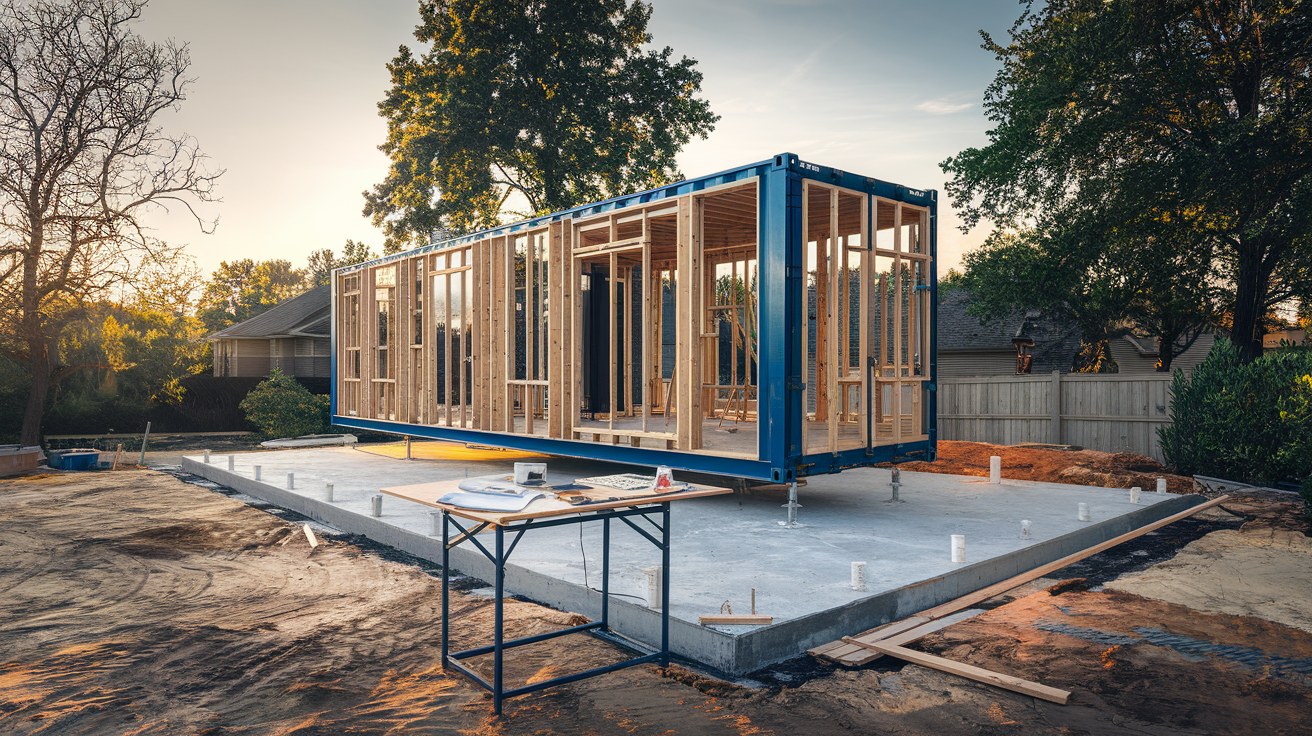
A container home isn’t unusual to build. It’s unusual to appraise. Conventional mortgage underwriting leans on comparable sales — recent transactions of similar homes nearby — and in most markets there simply aren’t enough sold container homes to build a clean comp set. That single gap is the root of most financing friction, and it’s why many banks still file container homes under “non-standard construction.”
The workaround isn’t exotic; it’s paperwork done early. Lenders financing a container home in 2026 commonly want engineered plans, stamped structural certifications, permits, contractor bids, proof of code compliance, and a clear, documented path to a certificate of occupancy before they’ll commit. A project that arrives with all of that reads as a house that happens to be built from steel. A project that arrives as “I bought a box and I’m figuring it out” reads as a risk. The difference in outcome is entirely in the file, not the container.
This is also where the build process and the financing process have to talk to each other. Because the customization process starts from a standardized structural shell, the scope of work is easier to document and quote than a ground-up custom build — and that documentation is exactly what a lender’s file needs. Our overview of modification options covers the line items an underwriter will want spelled out: insulation, windows, entry doors, electrical, and HVAC. Line items you can price are line items a bank can lend against.
The Financing Routes That Actually Work in 2026
There’s no single “container home loan,” but four routes carry most projects, and the right one depends on whether you own the land and how finished the unit will be.
First, the construction-to-permanent loan. This funds the build in draws and then converts to a standard mortgage once the unit is complete and passes final inspection. It’s the cleanest path for a permanent, foundation-set home, though these loans commonly ask for 20% to 25% down and a lender comfortable with the construction phase. For a homeowner building a primary residence or a foundation-permanent ADU, this is usually the first door to knock on.
Second, the ADU-specific programs. This is the lane Freddie Mac widened in 2026, and it’s the strongest fit for a backyard rental unit on a property you already own. Because these programs let you count projected rental income toward qualifying, they solve the exact problem that stops most homeowner-investors — the debt-to-income wall — and they’re built for the sub-$200,000 unit that a container ADU tends to be.
Third, the one-time-close build-to-rent loan for investors holding the finished unit as a rental. These combine construction and permanent financing into a single transaction and, in 2026, commonly reach 85% to 90% of loan-to-cost, which keeps an investor’s cash outlay low relative to the finished value. This is the route the small investors we’re hearing from this summer tend to land on.
Fourth, the personal or renovation loan for smaller or non-permanent projects. These often require little or no down payment but carry higher rates and shorter terms — commonly up to 12 years against a mortgage’s 30 — so they fit a modest unit or a bridge better than a full home. The tradeoff is simple: faster and easier to get, more expensive to carry. For a budget-first buyer, our overview of affordable options for buying shipping containers is a useful companion for keeping the base-unit cost down so the loan is smaller in the first place.
Insurance: The Second Approval You Need

Financing gets you the unit. Insurance keeps it, and it’s the approval buyers most often leave to the last minute. The rule that governs everything: a permanent container home built to code, on a proper foundation, with full utility connections, can usually be written on a standard homeowners policy. A unit that’s ambiguous about any of those — no permanent foundation, incomplete code sign-off, murky occupancy status — gets kicked into specialty coverage or declined outright.
Insurers underwriting a container home in 2026 typically ask for structural documentation, foundation type, roof and wind-mitigation details, flood-zone status, replacement-cost figures, and proof the home meets applicable codes. It’s nearly the same documentation package the lender wanted, which is the practical takeaway here: assemble it once, use it twice. The buyers who get clean quotes from both sides are the ones who treated permits, engineered plans, and the certificate of occupancy as the real deliverables of the project — not the finish work.
One number worth planning around: because container homes sit in a thinner insurance market, expect to shop harder and pay that 10% to 20% premium over a comparable conventional home. Build it into the pro forma from the start, the same way you’d build in insulation or delivery. An insurance line you planned for is a rounding error. An insurance line you discover after closing is a problem.
What Northeast Buyers Should Set Up First
The financing and insurance rules are national, but a few regional realities move the Northeast to the front of the line. First, insulation and code compliance aren’t cosmetic here — they’re underwriting. A year-round rental in New York, New Jersey, or Pennsylvania needs a real thermal package to pass code and to satisfy an insurer’s habitability standard, which is why many buyers start from an insulated container base rather than retrofitting a standard box. The alternative living spaces built from containers that hold up in this climate are the ones that budgeted the envelope on day one.
Second, the certificate of occupancy is the long pole, not the build. Accessory-dwelling and short-term-rental rules vary town to town across the region, and both your lender and your insurer are ultimately waiting on that CO. Investors who start the permit process early — before the container is even ordered — are the ones who hit their lease-up dates and their loan-conversion dates on schedule.
Third, delivery and siting feed straight into the appraisal. A container ADU has to arrive, land level, and sit on an approved foundation, which our delivery and placement guide walks through in detail, and the shipping container dimensions page lets you confirm setbacks and clearances before you commit. Getting the foundation and placement right the first time is also what makes the structure appraise and insure as permanent rather than portable. For buyers shopping the region, current inventory is solid across our New York, New Jersey, and Pennsylvania markets, and our guide on what to look for when buying a shipping container covers picking a donor unit sound enough to pass a structural certification.
The Bottom Line
The container home has crossed into the mainstream fast enough that the financing and insurance systems are finally catching up to it — Freddie Mac’s 2026 ADU rules and a widening pool of specialty carriers are proof. But neither approval is automatic, and both hinge on the same thing: a documented, code-compliant, permanently sited structure with a clear path to a certificate of occupancy. Assemble that package once and you clear the lender and the insurer with the same file. Skip it and you’ll stall on both.
If you’re weighing a container home or ADU and want the money side mapped before you commit, our team can walk you through base-unit selection, insulation and modification scope, foundation and delivery logistics, and the documentation your lender and insurer will ask for. Request a quote today and we’ll help you line up the paperwork before the first draw.
Sources: Freddie Mac Single-Family Accessory Dwelling Unit fact sheet (February 2026); Container Stop and Fairway 2026 container home financing guides; Bob’s Containers 2026 ADU financing overview; Discover Containers and Manns 2026 container home insurance guidance; industry 2026 homeowners insurance market coverage.