
Xeneta put the average spot rate for a 40-foot container from the Far East to the US East Coast at $11,523 on October 1, 2026, and its chief analyst, Peter Sand, said the market has reached its post-Hormuz peak. The same update priced the West Coast at $8,346, which leaves the East Coast paying $3,177 more per box, up from a $772 gap on February 28.
A Northeast buyer reading that headline wants to know whether a falling freight rate means a cheaper container and how soon. Below are the October 1 numbers from Xeneta and Drewry, where Xeneta expects East Coast rates to land by winter, how long a lower rate takes to reach a one-trip quote, why used inventory sits outside the freight market, and four moves to make before Thanksgiving. Our running read on the trends shaping the container sales industry has tracked ocean freight and Northeast yard prices moving on separate clocks all year.
What the October 1 Freight Numbers Show
Xeneta’s October 1 market averages ran $11,523 per 40-foot container to the East Coast and $8,346 to the West Coast, up 0.7 percent and 1.4 percent on the week. Both sit more than four times their February 28 levels, the date Xeneta uses as its pre-crisis baseline for the Strait of Hormuz disruption. The published changes since then imply an East Coast rate near $2,651 and a West Coast rate near $1,879 before the crisis.
Drewry’s World Container Index for October 1 shows the same direction from a different basket. The composite slipped 1 percent to $4,434 per 40-foot container, Shanghai to New York rose 1 percent to $10,428, and Shanghai to Los Angeles held at $7,835, per Drewry’s assessment published October 3. Xeneta averages the whole Far East market and Drewry prices Shanghai departures, which is why the East Coast figures differ by about $1,100 while agreeing on direction.
Carriers are still trimming supply. Drewry counted 13 blank sailings in the current week and 10 announced for the next, and it expects transpacific rates to ease in its next reading while Chinese factories sit idle for the holiday. Sand described the demand side plainly: “Demand is not strong and rates have now peaked, but they will not collapse.” Northeast port volume is holding up, with the Port Authority of New York and New Jersey reporting 4,427,159 TEUs in the first half of 2026, virtually even with last year, and 769,422 TEUs in June alone, up 11.9 percent.
Will East Coast Container Freight Keep Falling Into Winter?
Xeneta expects East Coast spot rates to fall to roughly $6,000 to $7,000 per 40-foot container in about three months, a drop of $4,500 to $5,500 from the October 1 level. Sand gave that range in Xeneta’s update and put the West Coast near $4,500 to $5,500. A Bergen County buyer whose one-trip box was booked at today’s $11,523 and a Bergen County buyer whose box is booked in January at $6,500 are paying for the same steel on two very different voyages.
Sand ties the peak to easing congestion at Asian ports as typhoon season winds down and to the early October holidays cutting Chinese exports. He expects the East Coast to fall harder than the West Coast, which narrows the $3,177 spread, and he warned that new disruption or conflict could change the picture again. We sell containers and do not forecast freight, so treat every figure here as a dated reading rather than a promise.
One dated event sits inside that window. The USTR’s suspension of its Section 301 port fee on Chinese-built vessels runs out at 11:59 p.m. Eastern on November 9, and Annex II sets the charge at $153 per container, or $18 per net ton when that is higher. We have not seen an extension announced as of October 9.
How Long Until Lower Freight Reaches a One-Trip Quote?
In our experience, lower ocean freight reaches a Northeast one-trip quote six to ten weeks after the rate falls, because the boxes sitting in a depot today sailed under the old rate. Drewry had Shanghai to New York at $9,587 per 40-foot container on September 3, so the units landing in Northeast depots this fall were booked while rates were still climbing. A Lehigh Valley buyer who calls in November for a one-trip 20-foot unit is looking at stock booked in August and September, and a buyer who calls in February is looking at stock booked after any December drop.
The pass-through is also small. After a rate move we typically see a couple hundred dollars on a one-trip quote. Container Sales Group’s 2026 pricing guide puts one-trip 20-foot units at roughly $2,500 to $4,500 delivered and one-trip 40-foot high cubes at $3,500 to $5,500 as of mid-2026. A $4,500 to $5,500 swing in the headline freight rate is larger than the whole delivered price of the box, so only a slice of it can reach a buyer.
The timing runs into the Northeast calendar. Used and one-trip inventory in our region tends to tighten each March as ADU and construction season starts, and a $200 to $400 move on a 20-foot cargo-worthy unit is common in those weeks. A buyer who waits for freight relief may find that spring demand absorbs it. Our overview of the different types of shipping containers explains what separates one-trip units from the rest of the market.
Does Falling Ocean Freight Change Used Container Prices?
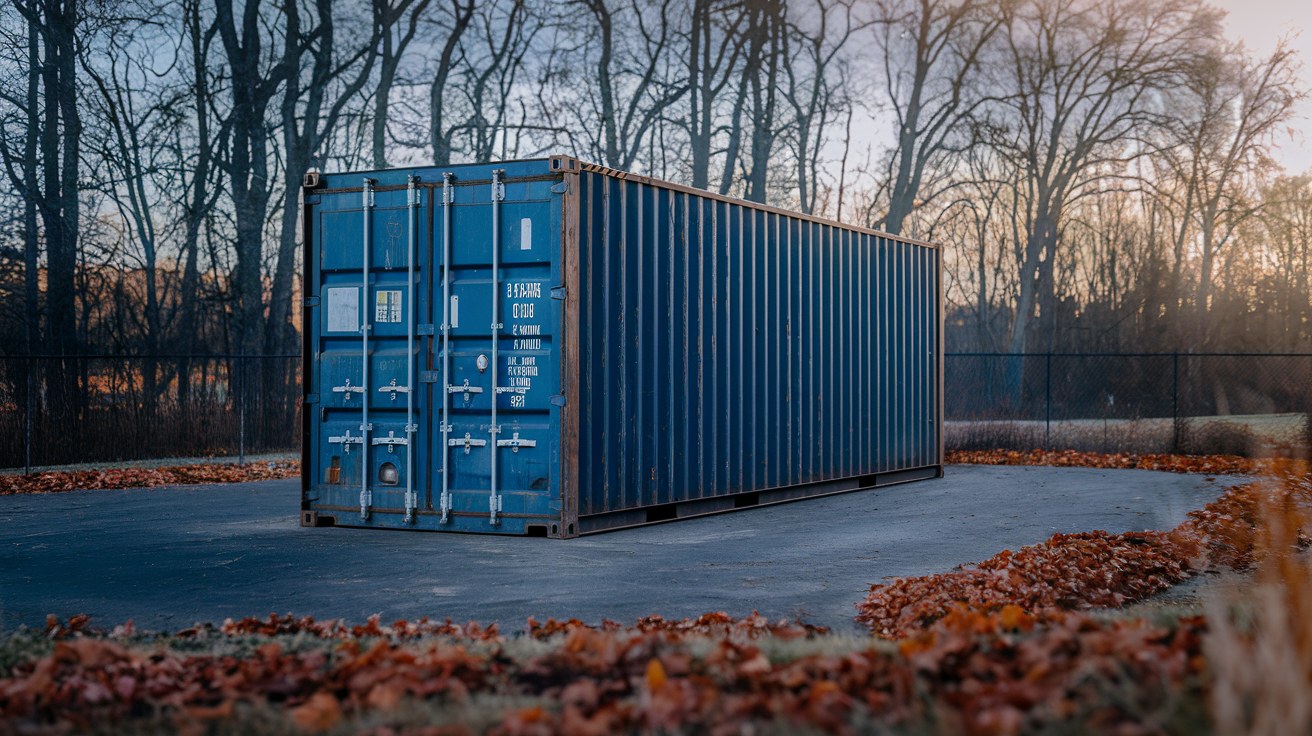
Falling ocean freight barely changes used container prices, because a used unit already in a North American depot has no ocean voyage ahead of it. Container Management’s 2026 cost guide puts the nationwide average for a used 20-foot unit at $1,786 as of September 2026, up roughly 2.6 percent over twelve months, while Singamas reported that its average selling price on new 20-foot dry boxes fell to $1,613 from $1,845 in the first half of 2026. A Hudson Valley landscaper buying a used cargo-worthy 20-foot unit this month is pricing depot stock, unit grade, and a trucking leg, and none of those moves with the Far East rate.
Delivery is the line that does move, and it follows fuel and distance instead of freight. Container Management puts delivery within 100 miles of a depot at $350 to $850 as of September 2026, which on a $1,786 box is a large share of the invoice. Our guide to affordable ways to buy shipping containers covers where used pricing lands by grade, and our current used shipping containers inventory shows what is on the ground now.
Four Moves for Northeast Buyers Before Thanksgiving
First, price a used unit and a one-trip unit on the same day. Ask the same seller for a delivered quote to your address on both. The gap between the two columns is the part of your budget exposed to ocean freight, and our guide to where to buy used shipping containers covers which sellers will put both numbers in writing.
Second, ask when the one-trip unit landed. A unit that arrived in September was booked near the peak, and a unit arriving in January was booked after any drop. A seller who knows the arrival date can tell you where that unit sits in the freight cycle, and a seller who cannot is quoting a list price.
Third, decide whether the project can wait until March. Storage that must be in service before winter should come from stock already on the ground. A build that needs permits and pad work through spring can ask for a refreshed quote in January and compare. Our delivery and placement guide lists the pad, clearance, and access checks that decide whether delivery takes one visit or two.
Fourth, lock the delivered price, including trucking and placement. Trucking, permits, and placement equipment sit on top of the container and do not fall with ocean rates. Our piece on negotiating container prices covers which lines on a quote have room, and the inspection checklist applies to any unit whichever coast it came through.

The Bottom Line
By Xeneta’s read, East Coast ocean freight peaked at $11,523 per 40-foot container on October 1, and its forecast gives back $4,500 to $5,500 of that by winter. Almost none of it reaches a used-container quote, and a modest share reaches one-trip quotes in late winter, around the same weeks that Northeast spring demand starts to firm up prices.
Your step this week costs nothing. Measure the gate width and overhead clearance on your delivery approach, write down the pad dimensions, and request the two same-day quotes from your seller. Then check Drewry’s World Container Index next Thursday and note whether Shanghai to New York has dropped below $10,428. If it has, ask for the one-trip quote again in a month.
We can tell you which Northeast depot a unit is sitting in, when it landed, and the earliest delivery date to your site, with used containers and 20-foot units delivered across New York and New Jersey. Request a quote today.
A note on how this article was written: we use AI to help draft and research pieces like this, then a Giant Lockbox team member edits for accuracy and voice. Here’s how and why we use AI in our content.
Sources: Xeneta, ocean container spot rate data of October 1, 2026, and Peter Sand’s commentary as reported by WorldCargo News (October 8, 2026) and FreightWaves; Drewry World Container Index, assessment of October 1, 2026 (published October 3) and September 3, 2026; Port Authority of New York and New Jersey, first-half 2026 facility volumes, as reported by AJOT; Container Management 2026 cost guide and delivery cost data; Container Sales Group 2026 pricing guide; Singamas interim results of August 25, 2026, as reported by Container News; USTR Section 301 maritime action, Annex II.