
The Port of New York and New Jersey handled 789,875 TEUs in August 2026, down 5.5 percent from August 2025, yet the empty containers arriving there ran 29 percent higher for January through August than in the same eight months of last year. A Northeast buyer shopping for a used 20-foot or 40-foot high cube this winter is shopping inside that number, because empties that arrive and do not leave are the units that end up on regional yards.
Below are the August port figures, why empty boxes are collecting in the region, how much a fuller depot changes what you pay, where ocean freight fits this week, and four checks to run before you put down a deposit. Our running read on the trends shaping the container sales industry has followed ocean freight and Northeast yard supply moving on separate clocks all year.
What the August Port Numbers Show
The Port Authority of New York and New Jersey reported 789,875 TEUs (429,757 containers) for August 2026, against 835,845 TEUs (455,904 containers) in August 2025. Imports came to 404,080 TEUs, down 2.9 percent, and exports to 118,417 TEUs, down 7.2 percent. Through the first eight months the port has moved 5,983,310 TEUs, down 1.07 percent from 2025. The release attributes the dip to a shift away from last year’s surge, when importers rushed cargo in ahead of rising tariffs and fuel surcharges.
Two lines further down the same release matter more to a used-box buyer than the headline total. Export empties, the empty boxes leaving for Asia, totaled 265,653 TEUs in August, down 8.5 percent, and 2,000,050 TEUs for January through August, down 0.2 percent. Import empties, the empty boxes arriving, rose 29 percent over those eight months. The release gives no absolute figure for import empties, so the size of the gap is unknown, and it does not count depot inventory at all.
Why Are Empty Containers Collecting in the Northeast?
Empty containers collect in the Northeast when more of them arrive than carriers send back to Asia, and the port’s January to August numbers show that gap opening. The Port Authority of New York and New Jersey’s August 2026 release reports import empties up 29 percent while export empties are essentially flat at 2,000,050 TEUs. In August alone, loaded exports were 118,417 TEUs against 265,653 TEUs of export empties, which means about 2.2 empty boxes left the port for every loaded one.
Carrier schedules and vessel space set how many empties leave. When arrivals climb 29 percent and departures hold flat, the surplus has to sit somewhere, and the yards within trucking distance of the port in New Jersey, eastern Pennsylvania, and the Hudson Valley are the first places it lands. Treat the port data as a direction. Whether a given yard near you is fuller than it was a year ago is a question for the yard, and our guide to where to buy used shipping containers covers what to ask.
Does a Fuller Depot Make a Used Container Cheaper?
A fuller depot gives you more units to choose from and more room to negotiate, but it moves the price of the box only modestly, because grade and trucking set most of the invoice. Container Management’s 2026 cost guide puts the nationwide average for a used 20-foot unit at $1,786 as of September 2026, up roughly 2.6 percent over twelve months, and puts delivery within 100 miles of a depot at $350 to $850. On a Rockland County storage purchase built from those figures, the arithmetic is $1,786 plus $350 to $850, or $2,136 to $2,636 before any site prep.
Where a crowded yard shows up is in the terms around the box. A seller holding six matching cargo-worthy 20-foot units has less reason to hold firm on a deposit date, a free delivery radius, or a second inspection visit than a seller holding one, and our piece on negotiating container prices lays out which of those terms usually move. Our guide to affordable ways to buy shipping containers covers how price changes by grade.
In the quotes we write for Northeast buyers, the delivery leg changes between quotes more than the box does. It follows the distance from the yard to your gate and the access on the final approach, and our shipping container delivery and placement guide walks through the clearance and ground checks that decide it.
Do Ocean Freight Rates Still Matter for a Used Box?
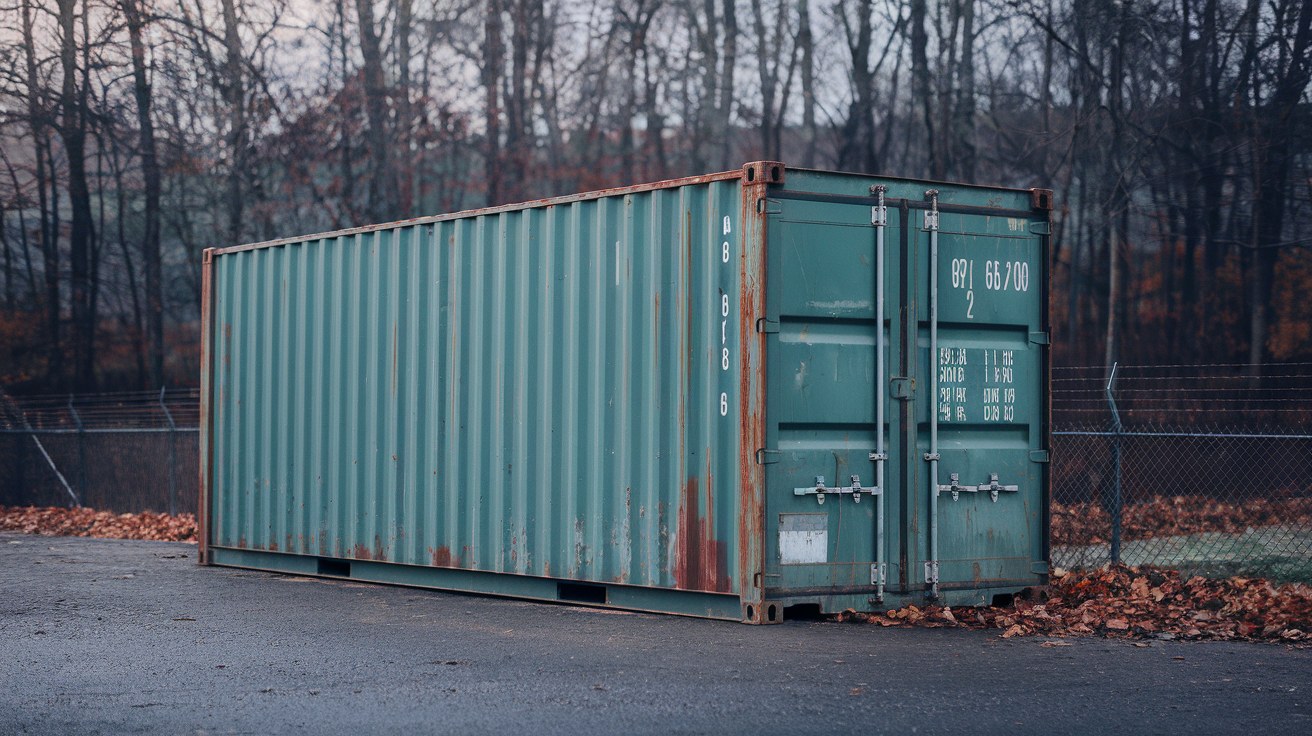
Ocean freight rates matter little for a used container already in a Northeast depot, because that unit has no voyage left to price. Drewry’s World Container Index for week 42 of 2026 put the composite at $4,485 per 40-foot container, up 3 percent, with Shanghai to New York at $10,075, down 1 percent, and Rotterdam to New York at $3,075, down 1 percent. A one-trip unit still on a ship from Shanghai carries that freight in its landed cost, while a used unit standing in a Pennsylvania depot carries none of it.
The week before, Drewry’s October 8 assessment had the composite at $4,351, and Drewry said the market is likely to stay volatile near term, with a faster-than-expected return of Suez traffic the largest risk to carriers trying to firm up rates, as reported by Global Trade Magazine. That volatility lands on the box that is still at sea. Our overview of the different types of shipping containers for sale explains how one-trip and used units differ in what they carry into the price.
Four Checks Before You Pay a Deposit on a Used Unit
More units on the ground lets you be selective, and four checks turn that choice into a better purchase.
First, get the grade in writing. One-trip, cargo-worthy, and wind-and-watertight units carry different prices and different expectations, and the grade belongs on the quote. Our checklist on what to look for when buying a shipping container covers floors, doors, gaskets, and roof condition.
Second, ask for photos of the exact unit. Request the roof, the floor, the door seals, and the corner posts of the box you are buying, identified by its container number, and not a stock photo of a similar one.
Third, confirm the delivery leg before you confirm the box. Measure your gate width, the overhead clearance on the approach, and the turning room at the site, and ask the yard what the delivery charge assumes. Winter ground that has frozen unfinished is the usual reason a late-fall delivery slips to spring, so finish the base first.
Fourth, price two or three yards in the same week. A region with more empties on the ground gives you comparable units to line up side by side. Our look at using shipping containers for storage covers the setups that fit most Northeast storage jobs.
The Bottom Line
The Port of New York and New Jersey took in 29 percent more empty containers through August than a year ago and sent roughly the same number back, which points to a deeper pool of used units in Northeast yards this winter. That depth buys you choice and negotiating room on delivery and deposit terms, and it buys less on the price of the box, which stays tied to grade at around $1,786 for a used 20-foot unit as of September 2026.
Your step this week costs nothing. Call two yards, ask each for the grade and the exact unit’s photos, and ask what its delivery quote assumes about your gate.
We can match a unit to your site and quote the delivery leg with it, with used containers and 20-foot units delivered across New York, New Jersey, and Pennsylvania. Request a quote today.
A note on how this article was written: we use AI to help draft and research pieces like this, then a Giant Lockbox team member edits for accuracy and voice. Here’s how and why we use AI in our content.
Sources: Port Authority of New York and New Jersey, August 2026 facility volumes, as published on Breaking Waves; Drewry World Container Index, week 42 of 2026, as reported by Shipping Telegraph; Drewry World Container Index of October 8, 2026, as reported by Global Trade Magazine; Container Management 2026 shipping container cost and delivery cost guides.