
If you’ve spent any time hunting for a used shipping container on Facebook Marketplace or Craigslist this year, you’ve already seen the bait: a “barely-used 40-foot high cube” listed for $850 with free delivery anywhere in the country. It’s not too good to be true. It’s just not true at all.
The boom in demand for used shipping containers for storage, modular construction, agricultural use, and container-home builds has brought a parallel boom in fraudulent listings. Scammers lift photos from legitimate dealers, mimic real company names, and disappear the second a deposit clears. The result: buyers out four-figure sums, no container, no recourse, and a slim chance of ever seeing the money again.
Here’s a practical guide to spotting fraud before it costs you, plus the verification steps every reputable container dealer in the country will pass without complaint.
The Rise of Online Container Scams
Container fraud isn’t new, but the scale in 2026 is. Facebook Marketplace, Craigslist, and a long tail of pop-up websites with stolen branding now host hundreds of fake container listings at any given time. The pattern is consistent: a seller posts photos pulled from a real dealer’s website, prices the unit 40 to 70% below market, demands a deposit via Zelle or Cash App, and then ghosts. The “delivery date” comes and goes, the phone number stops answering, and the listing disappears.
The targets are split between retail buyers — homeowners and small businesses making their first container purchase — and B2B buyers in construction, agriculture, and small-format retail who are buying multiple units. The scams work on both groups because the underlying psychology is the same: a deal that feels just barely possible, combined with pressure to act before you can think.
Two factors made 2026 particularly bad. First, demand is high and visible. News coverage of container homes, tariff stories, and a hot resale market drew new buyers into the category who don’t know what normal prices look like. Second, payment apps designed for friend-to-friend transfers — Zelle, Venmo, Cash App — became standard ways to “lock in” a purchase, and none of them offer the dispute protections of credit cards or wire-routed corporate ACH.
Red Flags That Should Make You Walk Away

A few signals appear in almost every container scam. Any one of them is reason to slow down. Two or more together, walk away.
The price is unrealistically low. A used 20-foot container under $1,000 with free delivery is not a deal, it’s bait. Pricing in our affordable options for buying shipping containers overview shows used 20-foot units cluster around $1,786 nationally in 2026, and that’s before delivery. Sellers offering 40-foot high cubes for $1,200 delivered are either lying about the container’s existence or about the delivery, and usually both.
The seller demands an unsecured payment method. Real container companies invoice you, accept credit cards, run ACH transfers, or take a standard corporate check. Scammers want Zelle, Venmo, Cash App, wire transfers, or cryptocurrency — anything fast, anonymous, and irreversible. If a seller refuses any payment method that gives you dispute rights, that refusal is the entire story.
No conversation about delivery logistics. Moving a 10,000-pound steel box requires actual logistics. A real vendor asks about ground firmness, tilt-bed access, overhead clearance from trees and power lines, and where exactly the unit needs to land. Our delivery and placement guide covers what those conversations should look like. A seller who says “just send the deposit, we’ll figure out delivery later” doesn’t have a container to deliver.
High-pressure timing tactics. “I have someone else driving over to buy it right now.” “This deal expires at 5 PM Friday.” “Send a deposit in the next hour or I’ll take the next offer.” Any reputable dealer will hold a quote for at least 14 days. Manufactured urgency is the single most reliable scam indicator across every fraud category, not just containers.
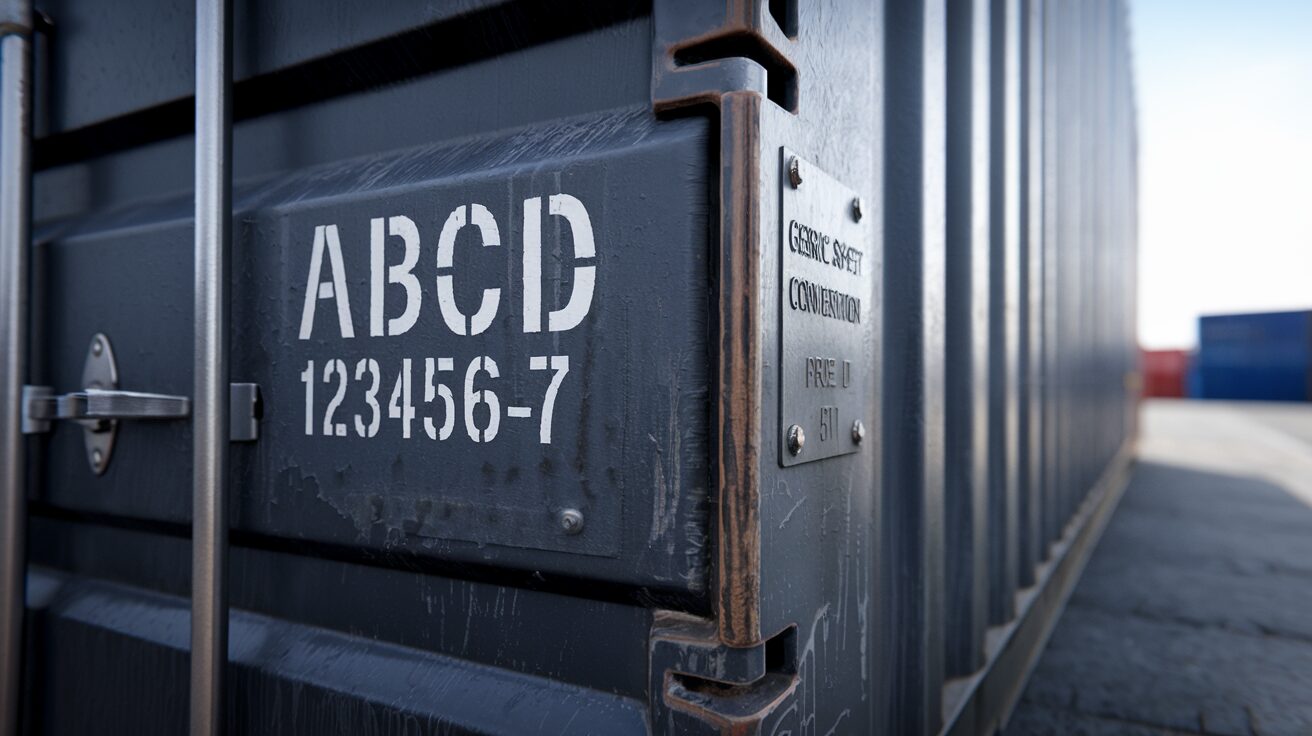
No container ID or CSC plate photo. Every legitimate intermodal container carries a unique 11-character ID (a four-letter owner code plus seven digits, like ABCD 123456-7) and a Container Safety Convention (CSC) plate riveted to the door frame. Ask the seller for a clear photo of both. A real dealer can produce these in minutes from yard inventory. A scammer can’t, because they don’t have the container — they have a photo of someone else’s container.
How to Verify a Container Seller Before You Pay
Before any money moves, run three quick verifications. Each takes about two minutes.
Audit the physical address on Google Maps. Real container yards are large gravel or paved lots in industrial corridors, usually visible from satellite view with rows of stacked containers. They are not strip malls, residential houses, P.O. boxes, or empty fields. If the address on the seller’s website resolves to a Mailbox Etc. or doesn’t show any yard equipment, that’s a problem.
Test the email domain. Legitimate quotes come from @companyname.com addresses, not Gmail, Yahoo, or Outlook. If a seller representing “ABC Containers” emails you from [email protected], you’re not dealing with ABC Containers — you’re dealing with someone who set up a free email account this morning.
Match the paperwork. The company name on the invoice should match the website, the phone number, and the banking details exactly. Scammers commonly use slight misspellings of real company names — an extra letter, a swapped “1” for an “l” — that look right at a glance and break the audit trail when you try to dispute. If anything’s off by a character, dig deeper.
For most buyers, our walkthrough of what to look for when buying a shipping container and our practical guide on where to buy used shipping containers cover the questions to ask any dealer before you hand over money. The combination of a sketchy seller and a buyer who’s never bought a container before is where scams convert. Closing either gap closes the trap.
How Giant Lockbox Eliminates the Risk
We’ve built the business so the safe choice is also the simplest one.
We don’t use stock internet photos. The photos and container IDs on our site represent actual equipment sitting in our yards across the Northeast and Mid-Atlantic — the New York, New Jersey, Pennsylvania, Ohio, Rhode Island, Connecticut, and Texas markets we serve. If you want to confirm a specific unit before purchase, we’ll send you a current photo with the container ID and CSC plate visible.
We invite walk-throughs. Schedule an appointment and you’re welcome to inspect any unit in our yard before paying a dollar. Check the marine plywood floors, test the locking rods, verify the seals and roof seams. The inspection checklist is the same one we use internally, and the same one we walk new buyers through when they ask. If you’d rather know what to look for before you visit, our overview of shipping container security features covers the structural and locking details most buyers should check first.
We coordinate delivery the right way. Every order includes a logistics conversation: ground prep, access route, tilt-bed placement, overhead clearance. We don’t quote delivery as an afterthought because delivery is half the job.
We invoice formally. Standard corporate billing, credit cards, fraud-protected ACH transfers, and a paper trail that survives any dispute. We never ask for Zelle, Venmo, Cash App, or wire transfer to a personal account. If anyone reaches out claiming to represent Giant Lockbox and asks for payment through a personal mobile app, hang up and call our main line directly.
The Bottom Line
The cost of a container scam isn’t just the deposit. It’s the wasted weeks of waiting for a delivery that never comes, the project schedule blown up around a no-show unit, and the second round of buying that has to happen anyway. Reputable dealers cost a little more than the bait price scammers post. They also actually deliver containers.
If you’re buying online, slow down. Verify the address. Test the email domain. Demand the container ID and CSC plate photo. Refuse to pay with Zelle. The buyers who lose money to container scams almost never describe the disappearing seller as a surprise. Most of them describe the pressure to skip exactly these steps.
For new and used shipping containers you can inspect, photographed in our actual yards, with delivery handled by our team and invoicing that won’t disappear — request a quote today. The buying process should be the easy part.