
Innovative and Eco-Friendly Ways to Repurpose Shipping Containers
As the demands of sustainable living rise against climate change, innovative minds are turning to shipping containers as a resourceful tool to address this challenge.
No longer just steel boxes for transporting goods, shipping containers are being repurposed into environmentally friendly structures that range from cozy homes to bustling retail spaces.
The durability of steel, combined with the creativity of modern architects, has resulted in a revolution in sustainable architecture, reducing both waste and ecological footprint.
Keep reading to unearth the myriad of ways these ubiquitous containers are being transformed to lead the charge in eco-conscious construction and living.
Key Takeaways
- Shipping Containers Offer Robust and Sustainable Solutions for Diverse Applications, Including Homes, Retail Spaces, and Emergency Shelters
- Integrating Renewable Energy Sources Like Solar Panels Is Essential for Reducing Carbon Footprint and Promoting Sustainable Development
- Sustainable Architecture With Shipping Containers Involves Creative Reuse of Materials and Efficient Energy Conservation Strategies
- Container-Based Urban Farms Demonstrate Innovation in Agriculture, Optimizing Space and Leveraging Natural Ecosystems for Productivity
- Shipping Containers Can Be Rapidly Deployed as Emergency Shelters With Amenities and Design Focused on Sustainability and Comfort
Transforming Shipping Containers Into Eco-Friendly Homes
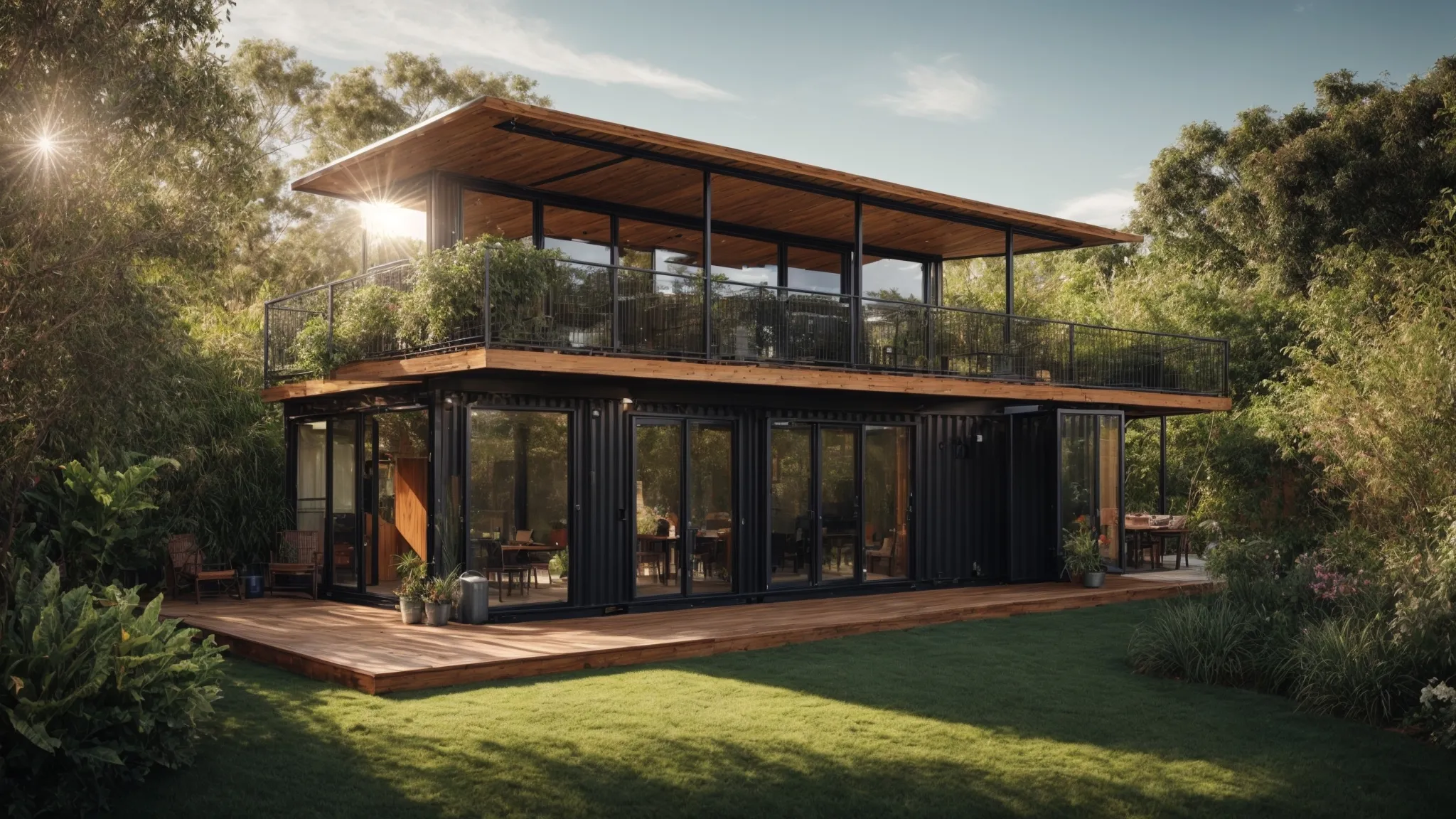
Embarking on transforming a robust shipping container into your eco-friendly abode necessitates a fusion of creativity, innovation, and a commitment to sustainability.
As an architect of sustainable living, you must meticulously plan your design to ensure every corner of your new home aligns with energy conservation principles and ecological footprint reduction.
Imagine opening the door to a home insulated for thermal efficiency, powered by renewable energy, and constructed with environmentally friendly materials.
As you envision your ideal shipping container transformation, consider how you can combine resource conservation, security, and efficiency.
This introductory guide will set the stage to explore options from effective insulation strategies, integrating renewable energy sources, and utilizing eco-friendly building materials catering to aesthetics and the planet’s well-being.
Planning Your Sustainable Container Home Design
Embarking on the innovative path of container home conversion begins with thoughtful planning, emphasizing sustainable architecture and efficient space utilization. Prioritize defining your needs to tailor a layout that balances privacy with open, breathable spaces, implicating a conscious effort to shape a living environment that harmonizes with the tenets of sustainable living and energy efficiency.
Consider the climate in which your container home will reside; strategic placement of solar panels can harness electricity while installing a green roof can contribute to insulation and air purification. Collaborate with an architect to integrate features such as rainwater harvesting and energy-conserving systems that mitigate your residence’s carbon footprint while aligning with resource-savvy construction practices.
Insulation Options for Thermal Efficiency
Choosing the proper insulation for your shipping container home is paramount for achieving thermal efficiency that goes hand in hand with sustainable living. Spray foam insulation emerges as a top contender, filling every crevice and providing a vapor barrier, significantly reducing the energy needed to heat or cool your home and curtailing greenhouse gas emissions.
Another consideration is incorporating sustainable materials like wool or recycled denim, offering a greener alternative to traditional fiberglass. These options excel in insulation and contribute to a healthier indoor climate, effectively lowering your reliance on heating and cooling systems and reducing overall energy consumption.
Incorporating Renewable Energy Sources
Integrating renewable energy sources into your shipping container home is not just a nod to sustainability; it’s a meaningful stride toward independence from unpredictable energy costs and a step toward reducing carbon dioxide emissions. Harnessing the sun’s power with solar panels affords you a renewable source of energy that complements the modular nature of container homes and contributes to a cleaner, greener environment.
Elevating energy conservation, consider the potential of wind turbines, incredibly if your location is blessed with a generous wind resource. Not only do they provide an alternative to solar power on overcast days, but paired with solar technology, they form a robust system ensuring a steady, environmentally friendly energy supply while diminishing your ecological footprint.
Utilizing Eco-Friendly Building Materials
As you consider the materials for your shipping container home, aim for those with minimal environmental impact. Steel, a core component of shipping containers, stands out for its strength and durability while being fully recyclable, reducing waste and demand for virgin resources.
Expand your vision to include building materials like bamboo, cork, or recycled wood – each possessing unique attributes that promote sustainability. These materials not only reduce the consumption of non-renewable resources but also offer a reduction in carbon footprint through their life cycle, from manufacturing to installation:
| Material | Benefits | Sustainability Factor |
|---|---|---|
| Steel (Recycled) | Durable, Strong | Reduces landfill waste, fully recyclable |
| Bamboo | Versatile, Aesthetic Appeal | Fast-growing, renewable resource |
| Recycled Wood | Character, Upcycling Potential | Prevents deforestation, reuses existing material |
Captivating ingenuity doesn’t end inside the home; it sprouts vibrantly into our communities. Witness space revitalization as upcycled shipping containers bloom into lush community gardens.
Upcycling Containers Into Community Gardens

Revolutionizing your approach to community greening initiatives involves a key step: repurposing shipping containers into lush, vibrant community gardens.
You can harness innovation to support ecological balance and foster sustainable development.
By selecting the right container size, your dream garden can accommodate an array of plants and flowers, creating a green oasis in an urban setting.
Preparing the container ensures a conducive environment for plant cultivation, giving life to your verdant vision.
Furthermore, installing an efficient watering system is imperative not only for plant vitality but also as a testament to resourceful water management and energy conservation.
With these elements thoughtfully executed, your community garden will flourish and become a beacon of environmentally friendly practices and collective effort.
Selecting the Right Container Size for Your Garden
Choosing the optimal container size for your community garden requires considering both the intended site’s spatial constraints and the anticipated scale of your horticultural aspirations. Tailoring the container to fit the location’s parameters ensures that your green space is a perfect fit, maximizing efficiency while catering to community needs.
Factor in the diversity of plants and their growth habits when selecting your container; a larger container allows for greater variety and more complex arrangements, whereas a smaller one may be suitable for more focused gardening projects. Your selection sets the stage for an ecosystem supporting collective nurturing and urban agriculture education.
Preparing the Container for Plant Cultivation
Transforming a shipping container into a nurturing environment for plants begins with meticulous retrofitting for adequate drainage and soil containment. Ensuring excess water can escape, and roots thrive without waterlogging is paramount to creating a sustainable and productive garden ecosystem within a steel structure.
Next, select the right soil type and nutrients to give your plants a rich foundation. Your endeavor to cultivate a thriving garden hinges on this choice—opt for organic and nitrogen-rich soil that bolsters growth and encourages a flourishing green canopy in what was once a simple cargo space.
Installing an Efficient Watering System
Creating an oasis within your upcycled container garden requires an intricate dance between nature and technology. To that end, implementing an efficient watering system is essential; it’s about precision and eco-consciousness, which is why a drip irrigation system stands out. It targets the root zones directly, minimizing evaporation and runoff and ensuring every drop of water is used effectively in nurturing your garden.
Embrace the symbiosis of rainwater harvesting with your watering setup for an impactful conservation strategy. By collecting and storing rainwater, you’re crafting a cost-effective and environmentally responsible reserve. This practice not only eases the strain on municipal water supplies but also aligns your garden with the broader goals of sustainable living and resourcefulness.
Now, let’s switch gears to explore the versatility of containers beyond green thumbs. Imagine transforming these robust steel boxes into dynamic retail hubs that pop up wherever the market beckons.
Creating Pop-Up Retail Spaces With Containers

In the dynamic retail realm, shipping containers are redefining the landscape, serving as an innovative vessel for pop-up shop ventures that prioritize the draw of passersby and environmental stewardship.
As you convert these steel structures into bustling retail spaces, it’s essential to orchestrate the internal layout to facilitate seamless foot traffic flow, ensuring patrons can easily navigate your offerings.
Within these compact footprints, champion using recycled materials for constructing shop fixtures that echo your commitment to sustainability.
Moreover, your pop-up’s design can integrate sustainable waste management practices, setting a standard for responsible consumption and waste reduction in transient retail environments.
Acknowledge your choices’ powerful influence; from the shop floor to the disposal of goods, your decisions resonate with the pillars of sustainable development.
Designing for Maximum Foot Traffic Flow
Designing your shipping container pop-up for maximum foot traffic flow involves a strategic approach that incorporates the space’s compact nature and the need for customer engagement. Careful consideration of the interior layout, with clear pathways and an intuitive arrangement of goods, will ensure that shoppers move seamlessly through the space, encouraging them to explore every product without bottlenecks or confusion.
It’s essential to judiciously utilize every square inch of the container’s footprint, creating an inviting and navigable retail environment that enhances the shopping experience. By placing your merchandise in a thoughtful pattern and employing signage that directs flow, you elevate shopping efficiency and provide a retail experience that’s enjoyable and conducive to sales.
Using Recycled Materials for Shop Fixtures
Delving into outfitting your shipping container retail space, you can lead by example in sustainable development: utilize recycled materials to craft your shop fixtures. Sustainable materials bring a unique narrative and positively impact greenhouse gas emissions.
| Fixture Element | Recycled Material | Environmental Benefit |
|---|---|---|
| Display Shelves | Reclaimed Wood | Reduces deforestation and waste |
| Counters | Recycled Steel | Minimizes energy consumption in steel production |
| Seating | Upcycled Metals | Lowers landfill impact and resource use |
By transforming materials with history—like aged wood from deconstructed buildings or surplus steel from manufacturing—you’re giving rise to shop fittings that are not only environmentally friendly but replete with character, blending storied materials with modern-day retail needs. Encourage this transformation to invigorate your retail setting while committing to resource efficiency and waste reduction.
Implementing Sustainable Waste Management
Adopting sustainable waste management in your container-based pop-up retail space turns a critical eye toward minimizing environmental impact. You’ll embark on this by setting up recycling stations for customers and ensuring all packaging is biodegradable or recyclable, reinforcing a cycle of responsible consumption and disposal that resonates with eco-conscious shoppers.
Operate with an eye towards zero-waste, selecting products and materials that support your sustainability ethos and encouraging suppliers to follow suit. This commitment reduces the volume of waste that would otherwise find its way to landfills, solidifying your pop-up operation as not just a commercial venture but a model for environmental stewardship in retail.
Imagine taking a dip in your backyard oasis with no construction crew required. Container pools bring the revolution of sustainable living right to your doorstep, effortlessly blending luxury with eco-conscious design.
Building Portable and Sustainable Container Pools
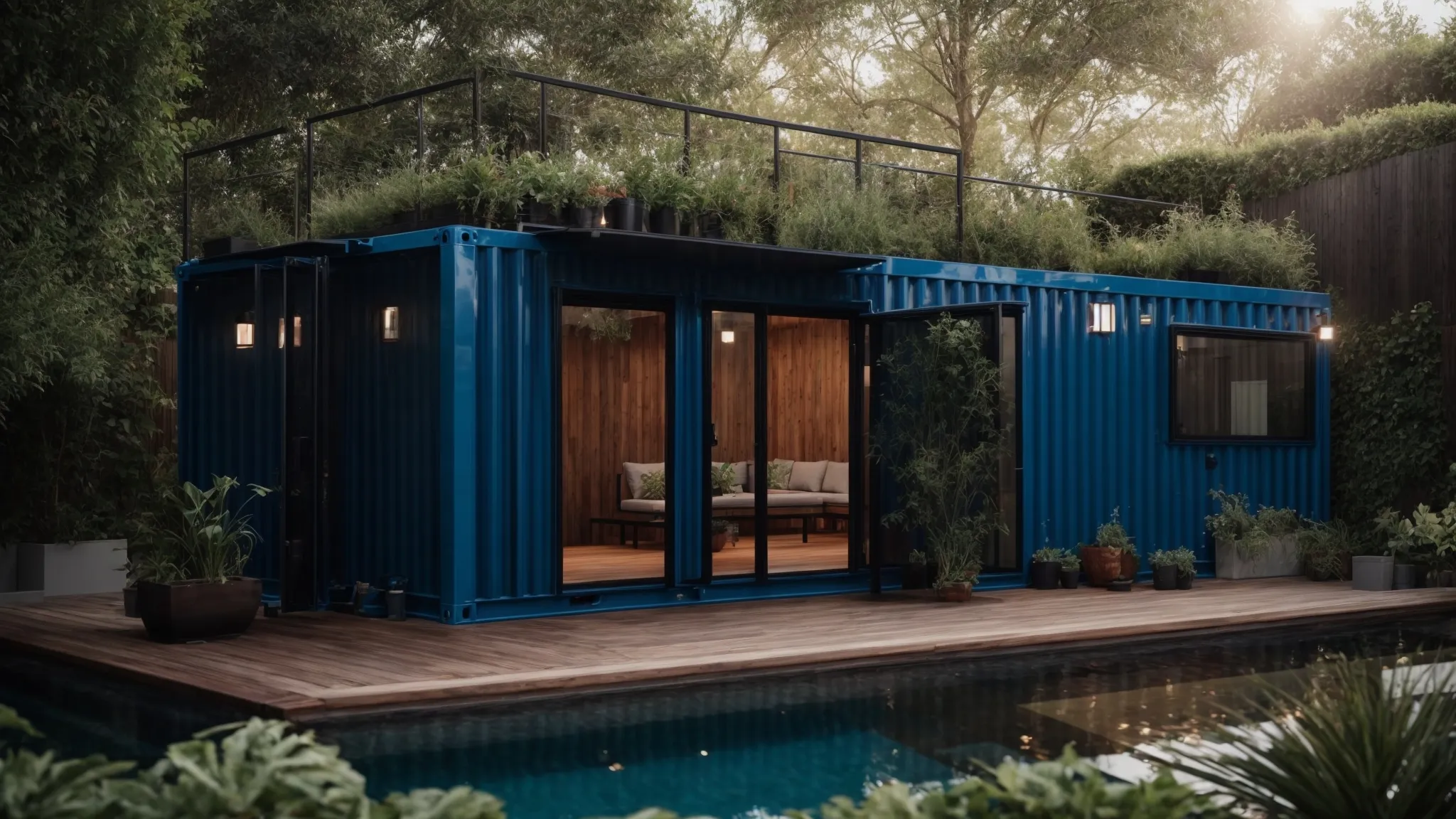
Imagine diving into the refreshing waters of your private oasis with the added satisfaction that you’ve upheld the highest sustainable living standards.
Repurposing a shipping container into a swimming pool is a bold aesthetic choice and a commitment to environmentally friendly architectural innovation.
As you contemplate constructing this unique feature, begin by selecting the appropriate size container for your pool, ensuring the fit suits your space and leisure needs.
Next, delve into the intricacies of insulating your pool to optimize energy conservation – a vital step to maintaining comfortable water temperatures without taxing the planet.
Finish with the integration of an eco-friendly filtration system, a centerpiece that purifies without causing undue harm to the environment.
These pioneering steps will anchor your shipping container pool as a sustainable yet luxurious addition to your lifestyle.
Choosing the Right Size Container for Your Pool
Selecting the ideal shipping container to convert into a pool demands attention to detail and a practical assessment of spatial considerations: finding that sweet spot between your space requirements and the limitations of your surroundings. Larger containers offer a more expansive swimming space, suitable for families or those who love to entertain, while smaller ones fit neatly into more compact yards without sacrificing the luxury of a private dip.
| Container Size | Swimming Area | Suitable For |
|---|---|---|
| 20 ft | Cozy and intimate | Solo swimmers or small backyards |
| 40 ft | Spacious for laps or play | Family use or social gatherings |
Contemplate the container’s depth as it affects both the volume of water you’ll enjoy and the feasibility of diving in. Standard containers typically offer around 8 feet in height, allowing for a substantial depth suitable for swimming and playful plunging into the water. Your choice tailors the pool experience: deeper pools for diving enthusiasts and shallower options for those preferring lounging and wading.
Insulating the Pool for Energy Conservation
Insulating your container pool is a pivotal step toward ensuring energy conservation, and it begins with choosing the right insulation materials. Opt for closed-cell foam to line the interior, a solution that not only prevents heat loss but also bolsters the structural integrity of your pool, delivering long-term savings on heating costs.
Maintaining an energy-efficient pool also depends on the implementation of a pool cover. Beyond keeping debris out, a quality thermal cover reduces evaporation—a significant cause of heat loss—thereby conserving energy and keeping your pool warm with minimal environmental impact.
Installing an Eco-Friendly Filtration System
When installing an eco-friendly filtration system for your container pool, prioritize systems that harness natural purification processes. Saltwater chlorinators, for instance, offer a gentler alternative to traditional chlorine, creating a more natural swimming environment while requiring less chemical handling and storage, thus ensuring both your welfare and the environment are preserved.
Incorporate advanced filtration technology that economizes on both water and electricity. Variable speed pumps paired with cartridge filters operate more efficiently and require less frequent cleaning than their counterparts. They provide crystal-clear water and reduce the pool’s overall energy footprint, keeping your oasis pristine with sustainable operations.
The transformation from sustainable swimming havens to inspiring creative sanctuaries is a testament to the versatility of shipping containers. Brace yourself for exploring container art studios and workspaces that redefine the essence of innovation.
Crafting Unique Container Art Studios and Workspaces
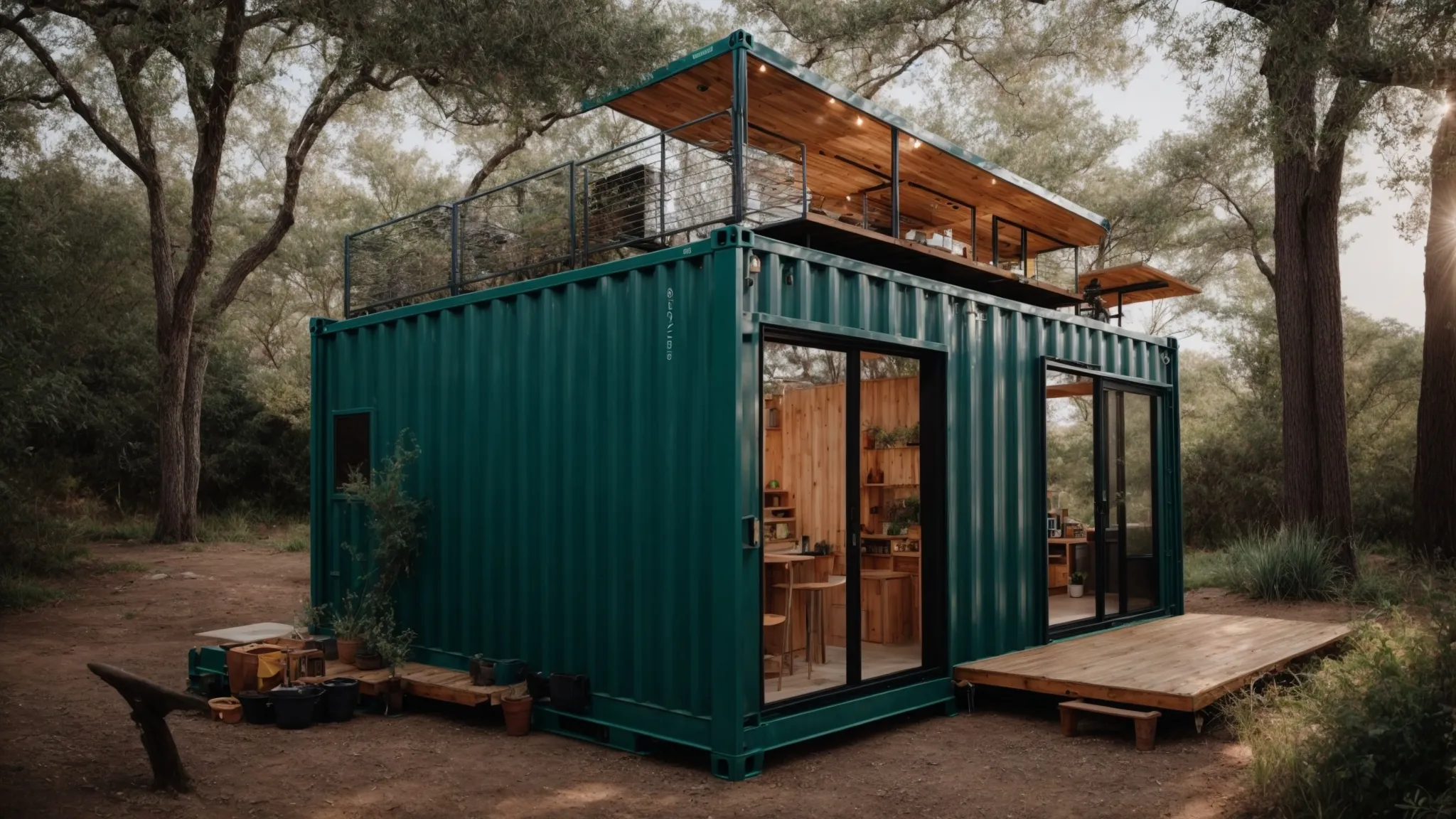
As you step into creative expression, consider the untapped potential of shipping containers—solid, spacious, and ripe for reinvention as art studios and workspaces championing sustainability principles.
When you reconfigure these steel canvases into productivity hubs, you’re not just building a room but cultivating an environmentally conscious sanctuary for imagination.
In your journey to construct a workspace that reflects both your craft and eco-friendly values, focus on maximizing natural light, repurposing old materials for a unique aesthetic, and ensuring the space breathes with sustainable ventilation solutions.
The result is a tailor-made studio that elevates the concept of sustainable development through innovative design and mindful practices.
Maximizing Natural Light With Glass Installations
Grasping the concept of maximizing natural light in your container art studio ensures a connection to the outside world while preserving energy. Strategic glass installation, such as skylights or large windows, transforms the shipping container’s steel walls into ambient light sources that enhance your workspace and reduce the need for artificial lighting during the day.
Your vision of a vibrant workspace comes to life when daylight flows freely through these glass installations, providing a well-lit environment conducive to creativity and focus. By tapping into this natural resource, you’re committing to an energy-efficient studio space attuned to sustainable living and inviting outdoor inspiration.
Repurposing Old Materials for Interior Furnishings
In the creative conversion of shipping containers into art studios, you’ll find many opportunities to integrate old materials for interior design elements. By repurposing items such as seasoned tanker desks, vintage lockers, or reclaimed barn doors, you instill a unique character into your workspace and minimize the demand for new materials, reducing your environmental impact.
Imagine the rich history etched into a workbench fashioned from old railway sleepers or the rugged charm of a storage system crafted from aged wine barrels: these choices enrich your studio aesthetically and respect the mantra of sustainable development:
| Furnishing Element | Repurposed Material | Character Advantage |
|---|---|---|
| Work Bench | Railway Sleepers | Time-worn Durability |
| Storage System | Wine Barrels | Rustic Appeal |
Your adept use of these repurposed materials contributes to a story of conservation and environmental stewardship and portrays a deep respect for the heritage each piece brings to your space, merging historical narratives with contemporary functional use.
Ensuring Proper Ventilation With Sustainable Practices
Proper ventilation ensures your container art studio is sustainable and healthy. By embracing technology such as solar-powered exhaust fans, you’re effectively circulating air without burdening your electricity consumption: an intelligent fusion of comfort, health, and energy efficiency.
| Ventilation Feature | Type | Eco-Friendly Aspect |
|---|---|---|
| Exhaust Fans | Solar-Powered | Minimizes carbon footprint |
| Airflow Optimization | Strategic Window Placements | Leverages natural breezes to reduces AC reliance |
| Cooling System | Evaporative Coolers | Uses water’s natural cooling properties |
Consider natural strategies for ventilation: skylights and operable windows create a dynamic airflow pattern that harnesses breezes to renew the studio’s atmosphere. Such design choices assert your dedication to an eco-friendly, creative space that breathes with the rhythm of nature and the pulse of innovation.
Moving beyond the realm of art, the modular marvels of container innovation forge new paths in education. Picture your local community, now enhanced with container classrooms that promise sustainability and a fresh approach to learning.
Developing Modular Container Classrooms
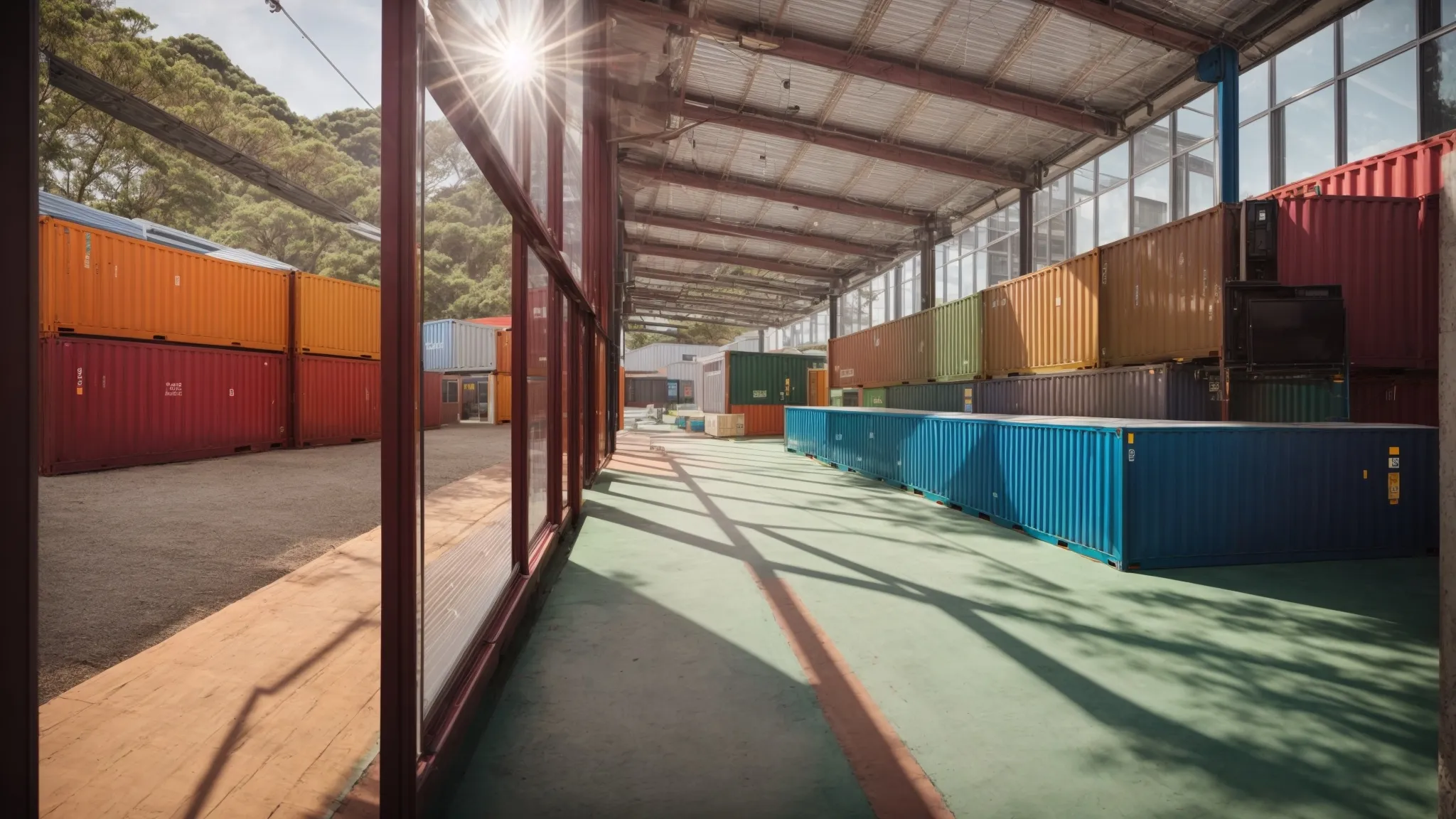
In a world where education shapes the minds of tomorrow, rethinking the spaces we learn in is just as critical as reshaping the curriculum.
With their inherent modularity and durability, shipping containers are reimagined as dynamic classrooms, spearheading innovation in educational infrastructure.
As you design these modern learning environments, consider their potential to be adaptable and eco-conscious reflections of forward-thinking education.
You aim to craft interactive learning havens that ingeniously incorporate green roof systems for superior thermal regulation and artfully weave in reclaimed materials for a touch of sustainability and character—each decision echoing the resounding call for responsible global citizenship.
Creating Adaptable Learning Environments
Conceiving learning environments within the steel walls of shipping containers challenges you to design functional and fully adjustable spaces for evolving education needs. Your vision will craft classrooms that morph effortlessly to support a variety of teaching styles and learning activities, positioning modular flexibility at the forefront of educational innovation.
Emphasize the versatility of the container classrooms by integrating features that allow for easy reconfiguration to suit different group sizes and types of interaction: think foldable partitions, mobile furniture, and technology-ready surfaces. These elements enable you to create an adaptive educational landscape, ready to evolve with the ever-changing dynamics of teaching and learning:
| Feature | Function | Impact on Learning |
|---|---|---|
| Foldable Partitions | Space segmentation | Facilitates focused groups or open discussions |
| Mobile Furniture | Layout adjustability | Supports collaborative or individual tasks |
| Technology-Integrated Surfaces | Enhances digital interaction | Encourages engagement with innovative tools |
Integrating Green Roof Systems for Insulation
An integral component of sustainable design includes integrating green roof systems into your container classroom project. This living roof provides more than an aesthetic appeal; it is a natural insulation layer, effectively reducing the need for artificial heating and cooling and slashing energy consumption and costs.
By choosing green roofs for your modular container classrooms, you create an insulation barrier that maintains a comfortable indoor climate throughout the year: cool in summer and warm in winter. Your commitment to green building enriches the educational setting, teaching students the importance of sustainable infrastructure while enjoying the tangible benefits of your ecologically responsible choices:
- Green roofs absorb and retain rainwater, reducing runoff and promoting effective harvesting.
- These natural layers enhance the energy efficiency of your classrooms by minimizing heat loss during colder months.
- They provide a practical, hands-on learning experience for students, serving as a living laboratory for ecological and horticultural studies.
Sourcing Reclaimed Materials for Interior Designs
When sourcing materials for the interior design of your modular container classrooms, look beyond the conventional and towards the reclaimed. Materials with a past life, such as reconditioned wood from old barns or flooring from decommissioned factories, not only come infused with character but also contribute significantly to the classrooms’ stories of sustainability.
By choosing to fit out your educational spaces with furniture and decor sourced from repurposed elements, you’re not just cultivating a unique aesthetic—you’re investing in a narrative that celebrates the concepts of reuse and ecological consciousness. Each piece echoes a commitment to lessening the demand for new resources and underscores an important lesson in environmental stewardship:
| Interior Element | Reclaimed Material | Educational Value |
|---|---|---|
| Student Desks | Factory Flooring | Demonstrates Adaptive Reuse |
| Wall Art | Vintage Signage | Encourages Creative Recycling |
| Bookshelves | Repurposed Wood Planks | Teaches Resource Conservation |
As we shift focus from reshaping education spaces, the journey of repurposing continues to break new ground. Let’s explore how these versatile containers are revolutionizing urban agriculture.
Establishing Container-Based Urban Farms

Unlock the potential of urban agriculture through repurposing shipping containers, where innovation meets ecological responsibility.
You’re not just reconsidering underutilized urban spaces; you’re breathing life into them by establishing container-based farms.
These veritable green hubs can be configured to host vertical farming systems, optimizing space in a revolutionary manner.
Imagine a lush network of aquaponic ecosystems where fish and plants sustain one another, all powered by solar panels and clean, renewable energy.
As you embark on this journey, you’re not only growing food; you’re demonstrably cutting down on greenhouse gas emissions and advocating for an environmentally conscious future.
Setting Up Vertical Farming Systems Inside Containers
Envisage your urban space transforming into a lush vertical farm, all within the bounds of a repurposed shipping container. These modifications tap into the vertical dimension to amplify your growing potential, ensuring every inch contributes to an abundant harvest, marrying space-saving logistics with agricultural productivity.
Install sophisticated hydroponic systems inside your container to facilitate a controlled, soil-free growing environment that thrives on nutrient-rich solutions. This innovative approach to farming allows you to cultivate various crops year-round, minimizing water usage and circumventing the limitations of traditional farming methods, all while maximizing urban space.
Implementing Recirculating Aquaculture Systems
Embrace the world of aquaponics as a pivotal component of your urban container farm, where the synergy between fish and plants sets a precedent for self-sustaining agricultural ecosystems. By installing recirculating aquaculture systems, you circulate water from fish tanks to irrigate plant beds, where plants filter and clean the water that returns to the fish, creating a continuous loop of productivity.
Your role in establishing these innovative systems is to craft an environment where aquatic life and horticulture thrive together, exponentially enhancing your farm’s yield while conserving water. This integration exemplifies efficiency, leveraging the natural waste from fish as a resource to nourish your crops, thus championing a circular economy within your urban agricultural venture.
Using Solar Panels for Energy Requirements
Powering your urban farm with solar panels is a masterstroke in sustainable agriculture. You’re tapping into an inexhaustible resource that ensures your farming operations are not contributing to air pollution or greenhouse gas emissions.
By choosing solar panels, your container farm gains the resilience to operate off-grid, guaranteeing that energy needs are met through clean electricity. This strategic move reinforces your position as an eco-pioneer, robustly powering agricultural innovations without compromising the integrity of our environment.
Venturing beyond the green canopy of urban farms, we unveil another layer of resourcefulness with container-based emergency shelters. Brace yourself as we explore the marriage of necessity and innovation in this dynamic realm of architecture.
Innovating With Container-Based Emergency Shelters

At the forefront of sustainable innovation, repurposing shipping containers into emergency shelters is a testament to the resourcefulness of modern design.
As a trailblazer in the field, you play a pivotal role in responding to the urgent needs of disaster-affected communities with solutions that are not only rapidly deployable and easily assembled but also grounded in sustainability and comfort.
As you delve into the intricacies of outfitting these durable steel structures, your focus on equipping them with sustainable amenities and ensuring they offer the necessary resilience and solace for temporary needs reflects a deep commitment to humanitarian aid and environmental responsibility.
Designing for Quick Deployment and Assembly
When designing emergency shelters using shipping containers, emphasize a construction strategy centered on quick deployment and straightforward assembly. This ensures that your container can be transformed rapidly into a secure habitat in times of need, providing immediate relief with minimal on-site construction effort.
Assure the design facilitates easy transportation and assembly while retaining robustness. By meticulously planning the conversion, you’re enabling these versatile units to be promptly set up – a leg up for efficiency during critical situations where time and resources are at a premium.
Equipping Shelters With Basic Amenities Using Sustainable Resources
Within the steel confines of your container-based emergency shelters, prioritize incorporating amenities that fulfill basic human needs while drawing from sustainable resources. Equip these temporary homes with energy-efficient LED lighting and low-flow plumbing fixtures to minimize electricity and water use, ensuring comfort without excess consumption.
Ideally, every shelter harnesses the transformative power of solar panels, providing the inhabitants with a reliable renewable energy source. Such integration not only affords independence in off-grid scenarios but also upholds a commitment to environmental standards, even in the aftermath of unforeseen events.
Ensuring Durability and Comfort for Temporary Occupants
To ensure durability and offer comfort for occupants of emergency shelters, you need to focus on the sturdiness of shipping containers while infusing them with humane considerations. Opt for containers characterized by their resilient nature: crafted from weathering steel, they withstand harsh elements, ensuring long-term structural integrity for those seeking refuge.
Comfort transcends mere protection from the elements; it envelops the need for a semblance of normalcy amidst turmoil. Invest in insulation materials that ward off extreme weather, maintain a stable internal climate, and outfit shelters with ergonomic furnishings to create a solace and security space.
| Feature | Role | Impact |
|---|---|---|
| Weathering Steel | Structural Durability | Resists corrosion and extreme conditions |
| Insulation Materials | Climate Control | Maintains internal temperature, enhances comfort |
| Ergonomic Furnishings | Providing Comfort | Delivers a more livable and humane space |
Your dedication to these aspects guarantees more than mere survival; it promises a shelter that upholds dignity and resilience, allowing individuals to weather crises with greater strength and hope.
Final Thoughts on Environmentally Friendly Uses of Shipping Containers
The innovative repurposing of shipping containers into eco-friendly homes, gardens, retail spaces, pools, art studios, classrooms, urban farms, and emergency shelters is a powerful testament to sustainable development.
These creative transformations emphasize energy conservation, resource efficiency, and a reduced environmental footprint while offering versatile, cost-effective solutions for modern living and community development.
By harnessing renewable energy sources, utilizing sustainable materials, and implementing efficient systems, architects and builders create functional and inspiring spaces that address immediate needs and foster long-term ecological responsibility.
This movement towards adaptive reuse showcases the potential of shipping containers to contribute to a greener future, proving that sustainability and innovation can coexist to enhance our built environment.
Related Resources
- Exploring Effective Construction Uses of Shipping Containers
- Exploring Alternative Living Spaces Using Shipping Containers
- Exploring Innovative Methods of Shipping Container Reuse
- Exploring Environmentally Friendly Uses of Shipping Containers
- Exploring Emergency Housing Solutions With Shipping Containers