
The used shipping container coming off a U.S. depot truck this spring is, on average, about five years older than the one your neighbor bought during the 2020 boom. Supply is strong, prices are stable, and dealer lots from Pennsylvania to Texas are well-stocked — but the steel under the paint has more sea miles on it than it did a few years ago, and that changes the way buyers should be shopping in 2026.
The shift is straightforward to explain and easy to miss. With ocean carriers running lighter trans-Pacific schedules and fewer brand-new boxes flooding the leasing pool, the used market is being fed by containers that stayed in service longer before retirement. Buyers who understand what that means walk away with twenty more years of usable life. Buyers who don’t pay full price for a unit that needs $2,000 in welding by year three.
What the Numbers Are Saying
Used 20-foot containers are averaging $1,786 nationally and 40-foot units are running $2,187, with retail pricing stretching from roughly $999 on the low end to nearly $4,900 in the tightest markets, according to Eveon Containers’ 2026 Market Monitor. All three of the most common sizes — 20-foot standard, 40-foot standard, and 40-foot high cube — are trending modestly upward year over year, around 2.6% for the 20-footer.
Supply is the part of the story that’s changing. Dealer depots across the Midwest and Northeast carry healthy inventory through mid-2026, but Spinnaker Equipment’s 2026 industry outlook flags a structural shift in the age profile: containers are entering the resale pipeline at roughly 10 to 20 years old rather than the traditional 7 to 15 years. The reason is upstream. U.S. container imports from China fell 28% in 2025 per Container Magazine’s January 2026 coverage, which slowed the rate at which leasing companies cycled new equipment in and pushed retired units out. The boxes that did retire stayed in revenue service longer.
That’s the divergence that matters for buyers. Pricing softened or held flat. Average condition shifted. A buyer who shopped used inventory in 2022 was looking at units with 8 or 9 years of saltwater service. A buyer in 2026 is just as often looking at units with 12 or 15. The same dollar buys a container with more honest miles, and the inspection step is doing more work than it used to.
Why Older Doesn’t Automatically Mean Worse
The first thing to settle is what “older” actually means for a shipping container. These are Corten weathering steel boxes engineered to spend 20-plus years cycling through marine environments. The 12-year-old unit pulling into a Pennsylvania yard this month was built to a spec that assumed exactly the duty cycle it just finished. Plenty of those containers are dry, structurally sound, and have another two decades of useful life as on-site storage, mobile offices, or the shell of a modification build.
The wear that matters isn’t age — it’s exposure pattern. A container that ran trans-Pacific routes between Long Beach and Shanghai for 12 years saw heavy salt spray and constant rack-and-flex loads. A container of the same age that ran shorter intra-Asia routes saw less. The same goes for storage history at the end of the cycle: a unit that sat in a coastal depot for two years before retirement collected more corrosion than one that came straight off the ship into resale.
The practical implication is that “used 40-foot, 2026 vintage” tells you almost nothing on its own. The dealer’s grading does — and the grades buyers should be paying attention to are cargo-worthy (still seaworthy by CSC standards), wind-and-watertight (no longer rated for sea service but dry and sealed), and as-is (cosmetic and structural condition vary, priced accordingly). The further down that ladder a unit sits, the more inspection compensates for the discount.
The Inspection Step Is Doing More Work in 2026
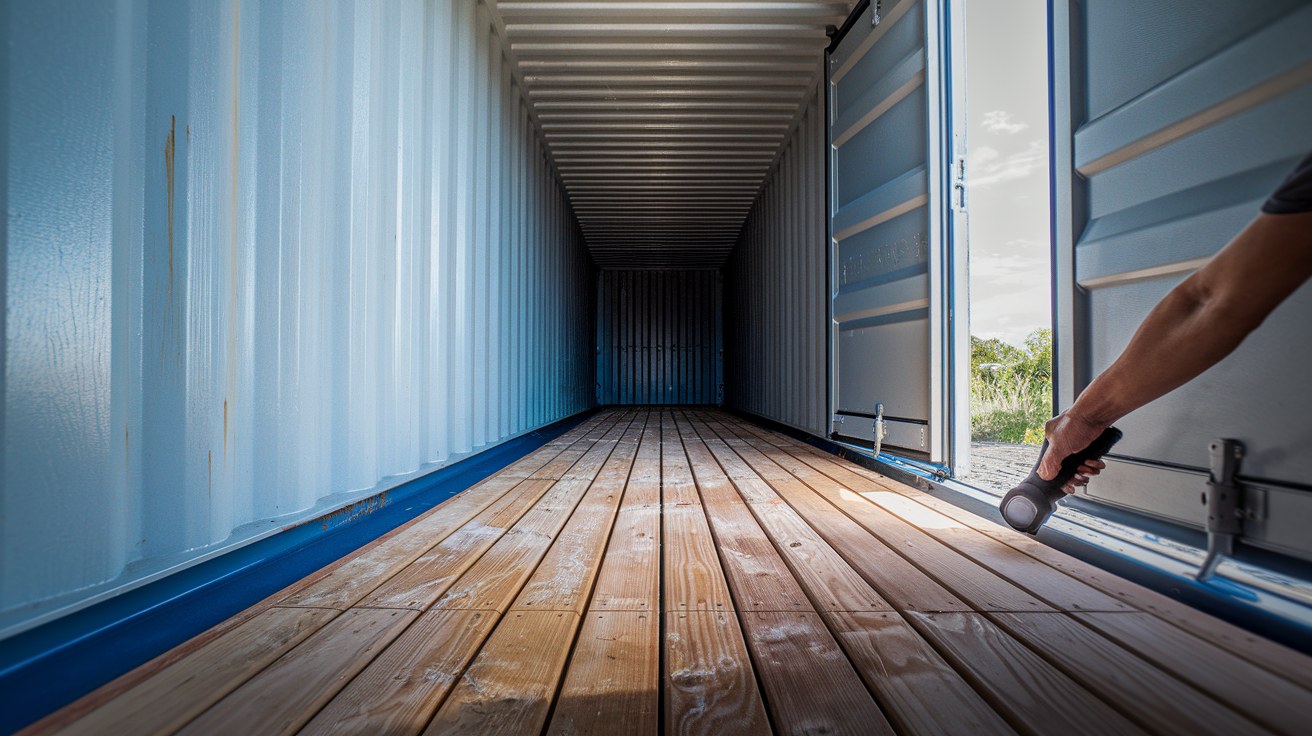
A walk-around inspection on a healthier vintage was forgiving. Surface rust on a 7-year-old box rarely indicated structural compromise. On a 15-year-old box, surface rust deserves a second look — usually it’s still cosmetic, occasionally it’s not. The checklist hasn’t changed. The weight each item carries has.
Floor condition is the highest-leverage check. The marine plywood floors in older containers carry every load the box has ever held, and they tell the truth about the unit’s life. Look for soft spots near the door entrance, water staining along seams, and any sign of replacement plywood that doesn’t match. A floor that pries up easily under a screwdriver tip is a multi-thousand-dollar repair. Our detailed walk-through in the guide on what to look for when buying a shipping container covers the floor, walls, doors, gaskets, and CSC plate in inspection order.
Door function is the second leverage point. Doors that bind, seals that have flattened, or locking rods that don’t seat cleanly mean the unit has racked over its life — either from uneven loads or from being stored on unlevel ground. A racked container is still usable for dry storage, but it complicates any modification that adds windows, partitions, or roll-up doors. Our overview of container modification options walks through which cuts a slightly racked box can tolerate and which it can’t.
Corner posts, roof seams, and the underside of the rails are the third pass. A flashlight under the rails reveals rust patterns the side walls hide. Pinholes overhead show up as floor wet spots after the next rain, not before. Buyers planning to modify the unit into a container home, ADU, or alternative living space should be more aggressive on this pass than buyers using the box for dry storage — modification builds need a dry shell to start with.
How the Aging Shift Changes the Used-vs-New Math
Through most of 2024, the gap between a one-trip 20-foot unit and a wind-and-watertight used one was hovering around $1,500. That gap has widened. New container availability has improved as carriers reposition idle equipment, but tariff policy on Chinese-manufactured units — covered in our overview of the key trends shaping the shipping container sales industry — has kept the floor under new pricing. The premium for new today runs closer to $2,000 in most U.S. markets and wider in tight ones.
That math still favors used for most use cases. On-site construction storage, agricultural cold storage, retail overflow, and the structural shell of a modification project all run on wind-and-watertight inventory at roughly half the cost of one-trip. The conditions where new makes more sense haven’t changed: showroom-quality builds where appearance matters, hospitality conversions, and projects that need a 25-year cosmetic warranty rather than a 25-year functional one. Our affordable options for buying shipping containers overview lays out the cost-conscious decision tree.
The shift in age profile means buyers should be more willing to pay a small premium within the used grade ladder — choosing cargo-worthy over wind-and-watertight, or wind-and-watertight over as-is — than they were two years ago. The grade premium buys a tighter inspection result and fewer surprises. On a 12-year-old box, that’s where the real money sits.
What This Means for Buyers Shopping This Spring
Three practical moves matter more in 2026 than they did when used inventory ran younger.
First, ask the dealer for the container’s age and last-service region before you negotiate. Reputable yards know — they bought the unit from a leasing company that knows. The four-letter prefix on the container ID identifies the prior owner, and dealers can usually trace the route history one phone call deep. A 14-year-old box that finished its life on intra-Gulf coastwise routes is a different unit from a 14-year-old box that just came off the trans-Pacific. Both might be priced the same. They shouldn’t be.
Second, insist on photos of the floor, the CSC plate, and any corner-post or rail repairs before you visit. Yards stock dozens to hundreds of units. A dealer who pulls three photos of three different boxes is doing the work for you. A dealer who pushes back on the request is telling you something. Buyers shopping the Northeast and Mid-Atlantic — including the New York, New Jersey, Pennsylvania, and Rhode Island markets — should have no trouble getting yard photos in 24 to 48 hours.
Third, plan delivery as if the unit is older. Older boxes are heavier on the suspension when fully loaded and unforgiving on uneven ground. Tilt-bed placement onto unlevel gravel telegraphs straight into the door alignment, and a unit that arrived square can leave a delivery site racked. The shipping container delivery and placement guide covers ground prep, clearance, and tilt-bed delivery — worth re-reading even if you’ve done it before.
The Bottom Line
The 2026 used shipping container market isn’t a scarcity story or a price-spike story. It’s an inventory-quality story. Supply is solid. Pricing is stable. The average box is older than it was a few years ago, and that single fact moves the inspection step from a nice-to-have to the most important part of the purchase. Buyers who do the work get the same twenty-year asset their neighbors got in 2020. Buyers who skip it pay for someone else’s salt history.
If you’re sizing up a used container this spring — for storage, modification, alternative living, or the front edge of a commercial build — our team can walk you through current inventory, age profile, grade options, and delivery logistics for your specific use case. Request a quote today and we’ll send yard photos and the relevant inspection details before you commit a dollar.
Sources: Eveon Containers 2026 Market Monitor (May 2026); Spinnaker Equipment 2026 Shipping Container Industry Trends Outlook; Container Magazine, “US-China Trade Contraction Reshapes Container Shipping” (January 15, 2026); Trading Economics Containerized Freight Index (May 29, 2026); Container Sales Group 2026 Pricing Guide.