
If you run a construction crew in 2026, the numbers are already in your bones — even if you haven’t seen them written down. At least 30 pieces of construction equipment are stolen every single day in the United States, and roughly 89% of tradespeople surveyed report being hit by jobsite theft at some point in their career, according to recent industry data. The recovery rate on individual tools is under 7%. The math doesn’t work, and contractors are responding by changing how they store equipment on active sites.
The fastest-growing on-site response is also the simplest: a steel shipping container, padlocked behind a lockbox shield, sited where the crew and the security cameras can see it. We’ve watched a clean shift in our construction storage inventory turnover in the Northeast and Mid-Atlantic over the last twelve months — general contractors and trade subs ordering containers earlier in the project cycle and keeping them on site longer than they used to. The economics now favor it.
What the 2026 Numbers Are Saying
The National Equipment Register and National Insurance Crime Bureau put U.S. construction equipment theft at roughly 11,000 to 12,000 reported incidents per year, with direct losses between $300 million and $1 billion depending on which categories you count. Material theft — copper especially — adds another billion on top of that, per Drone Strategic Partners’ 2026 data reference. Those are reported losses. Small-tool theft routinely goes unreported, so the real number is higher.
The composition of what gets stolen tells you where the exposure sits. Power tools account for 41% of jobsite theft, hand tools 23%, and small equipment another 15%, per industry surveys aggregated by Building Security Services. That’s roughly 80% of incidents targeting items small enough to fit in a duffel bag and valuable enough to fence within a day. Heavy equipment grabs the headlines, but the line items breaking project budgets are the cordless drills, miter saws, and generators that walk off overnight.
Recovery rates seal the case. Roughly 1 in 5 stolen pieces of heavy equipment is eventually recovered. For individual tools, the rate drops below 7%. Filing a police report is necessary for insurance, but it almost never gets the tool back.
Where Theft Is Concentrated
Texas leads the country at 24% of national construction equipment theft incidents, followed by Georgia at 11%, Louisiana at 9%, and North Carolina and Florida at 6% each. Northeast markets sit lower on the per-incident list but face a different problem — denser urban jobsites, narrower setbacks, and tighter parking that limit where a portable storage unit can actually go. Buyers in our New York and New Jersey markets routinely tell us the question isn’t whether to put a container on the site — it’s whether a 20-foot or a 40-foot unit will fit the lot once the dumpster and the porta-john are placed.
That’s the right question, and it’s also the easy one. A 20-foot container has a footprint of roughly 160 square feet and holds the tool and material load of a midsize crew for the duration of a typical residential or light commercial build. A 40-foot unit gives you the same secure envelope at roughly half the cost per square foot, but it needs about 100 feet of straight-line tilt-bed clearance and level ground to land cleanly. Our shipping container dimensions guide walks through the exact external and internal footprints for both, and our delivery and placement guide covers the site conditions that decide whether tilt-bed delivery will work for your location.
Why a Container Beats the Alternatives
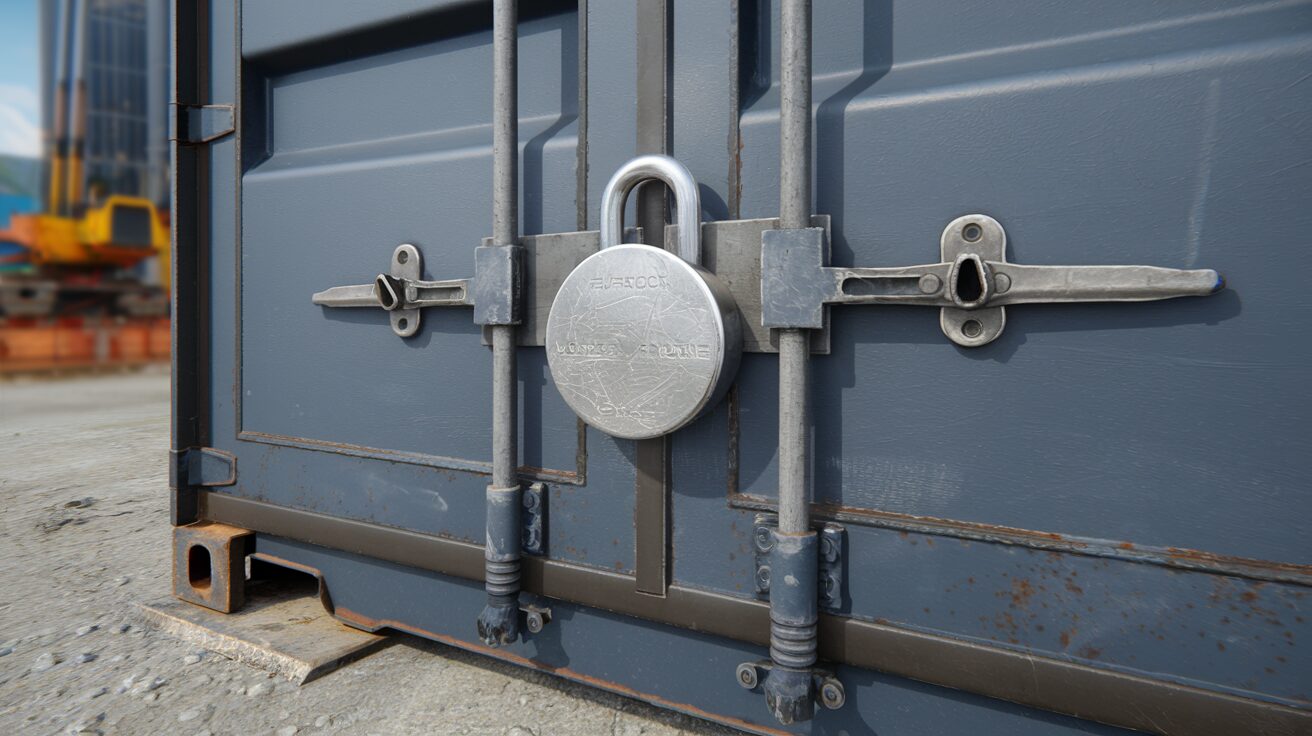
Contractors have three real options for on-site secure storage: a job trailer, a portable shed or jobsite box, or a steel shipping container. The first two share a common problem — sheet metal or plywood walls that pry, snip, or cut in under a minute with tools any thief already carries. A shipping container is 14-gauge to 16-gauge corten steel on the walls, 18-gauge on the roof, with a marine plywood floor, four reinforced corner posts rated to stack nine high, and door rods that engage four edges of the frame at once.
The lockbox shield is the part that converts that engineering into actual theft prevention. A welded steel cup over the padlock blocks bolt cutters from getting a bite on the shackle, and a hardened disc lock inside it resists drilling and pick attempts that defeat off-the-shelf padlocks. Our overview of shipping container security features covers the structural and locking details that separate a real security install from a unit that just looks secure from the road.
The second advantage is portability without compromise. A jobsite box that’s sturdy enough to deter theft is too heavy to move easily, and a job trailer that’s easy to move is too light to deter theft. A 20-foot container splits the difference — heavy enough to sit through a windstorm, light enough that a tilt-bed delivery truck can drop it on a prepped pad in twenty minutes and pick it back up at the end of the project. For buyers who want to keep capex flexibility, the different types of shipping containers for sale include wind-and-watertight used units in the $1,500 to $2,500 range that perform identically to new ones for jobsite security purposes.
What to Buy and What to Skip
For a construction-site storage container, you don’t need new, you don’t need painted, and you don’t need most modifications. You need structural integrity, working doors, a sealed roof, and a lockbox. That puts the budget squarely in the used shipping containers tier — wind-and-watertight or cargo-worthy grade, ten to fifteen years old, with the cosmetic wear that comes with prior ocean service but no structural damage. Our walkthrough of what to look for when buying a shipping container covers the inspection points: floor condition, door gaskets, corner post integrity, roof seam welds, and rust depth on the bottom rails. A unit that checks those boxes will outlast most of the projects it stores tools for.
The 20-foot footprint is the workhorse for most general contractors and trade subs. It fits inside most fenced lay-down areas, slides through narrower urban access lanes, and pairs well with a single jobsite chain-link fence on a residential remodel. The 40-foot becomes the right call when the project length stretches past six months, when the crew size grows past ten, or when materials staging needs to happen indoors. The price-per-square-foot math always favors 40-foot if the site can take it.
Where modifications help is at the margins. Roll-up doors at one end let crews load and unload faster without rotating tools through the original cargo doors. Ventilation kits prevent condensation in spring and fall transitions. Insulation packages matter only if the unit will hold temperature-sensitive materials or double as a break room. Our overview of container modification options walks through which add-ons actually return their cost on a construction-site application versus which are nice-to-have spends.
Three Decisions That Save Real Money
Three calls separate the contractors who buy once and use the container across five projects from the ones who replace storage every other job.
First, buy don’t rent on any project longer than nine months. Rental rates on a 20-foot container run roughly $125 to $200 per month in the Northeast in 2026. A used 20-foot purchase at $1,700 to $2,200 plus delivery breaks even somewhere between months ten and fourteen, after which every additional month is free secure storage. Project schedules slip; rental meters keep running. Buying caps the exposure.
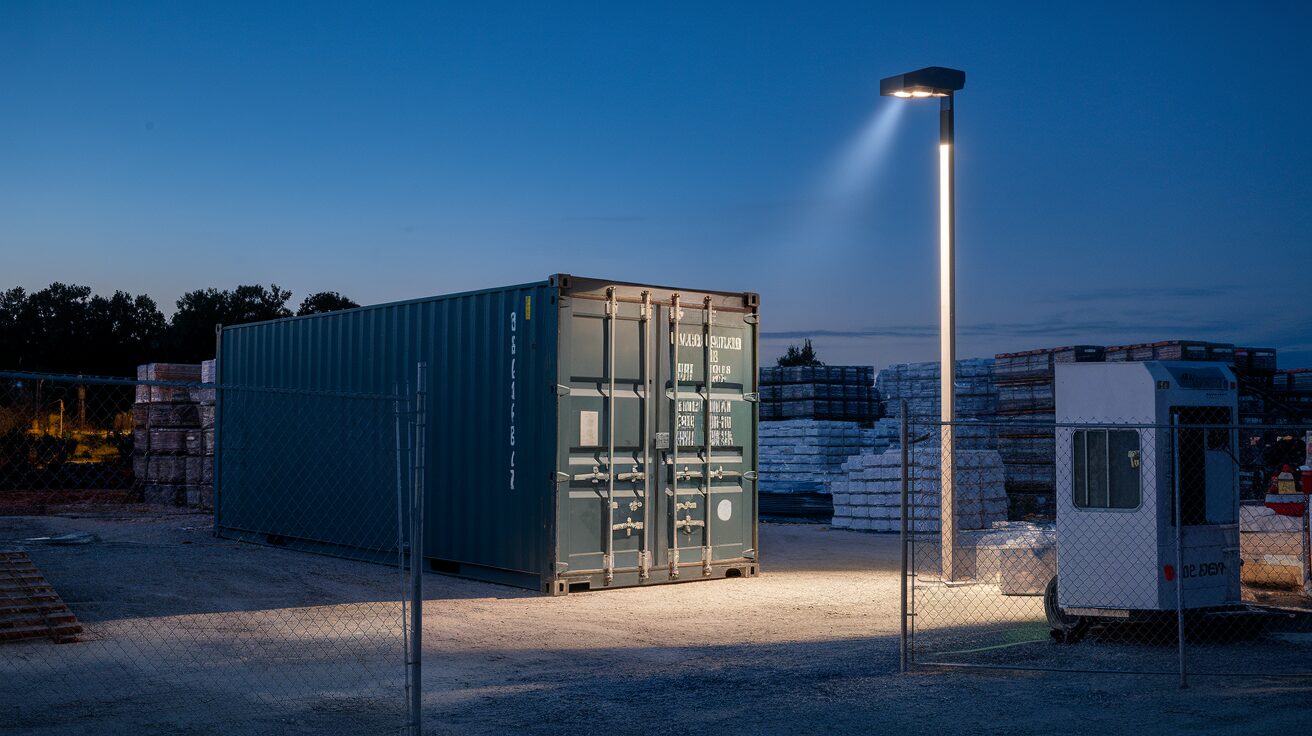
Second, site the container where you can see it. The single biggest factor in whether a unit gets attacked is visibility. Containers placed in the back of the lot, behind a slab pour, or in a low-traffic corner of the site take roughly three times the break-in attempts of units placed in the line of sight of the crew trailer and the site cameras. Manufactured darkness invites manufactured opportunity. Pick the spot that the foreman can see from the morning huddle, even if it means moving the unit twice during the project.
Third, pair the container with at least one camera and one motion light. A unit that’s locked, lit, and recorded is a hard target — and most jobsite thefts are crimes of opportunity, not sophisticated planning. The cost of a single battery-powered camera and a solar motion light is under $300 in 2026, and the combination shifts the cost-benefit math against the thief at a level that no purely passive container deterrent can match.
For buyers building out a multi-site fleet rather than buying one unit at a time, our guide on negotiating prices for shipping containers covers volume leverage points worth raising with any dealer.
The Bottom Line
Construction site theft in 2026 is not the kind of problem that gets solved by hoping. The volume is up, the recovery rates are low, and the loss profile is shifting toward the small power tools and hand tools that crews can’t operate without. A steel shipping container is the most cost-effective on-site deterrent on the market for protecting that inventory, and the math for buying versus renting tips toward purchase on any project running longer than a quarter or two.
If you’re sizing up storage for a 2026 project or building out a fleet across multiple jobsites, our team can walk you through current new and used inventory across the New York, New Jersey, Pennsylvania, Ohio, and Rhode Island markets, plus delivery logistics and security modifications for your specific use case. Request a quote today and lock in the unit before your project schedule does it for you.
Sources: National Equipment Register and National Insurance Crime Bureau equipment-theft estimates; Drone Strategic Partners 2026 Construction Equipment Theft Statistics; Building Security Services 2026 Construction Site Theft Statistics; LVT 2026 jobsite security analysis; Container Sales Group 2026 Pricing Guide.